


Effects of Long-Term Exercise on Age-Related Hearing Loss in Mice
- PMID: 27807171
- PMCID: PMC5148246
- DOI: 10.1523/JNEUROSCI.2493-16.2016
Effects of Long-Term Exercise on Age-Related Hearing Loss in Mice
Abstract
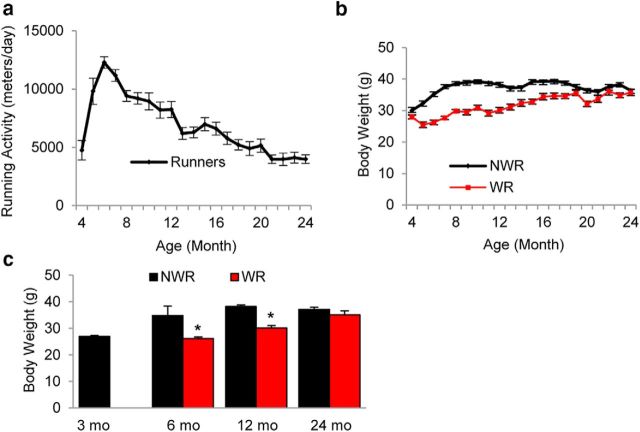
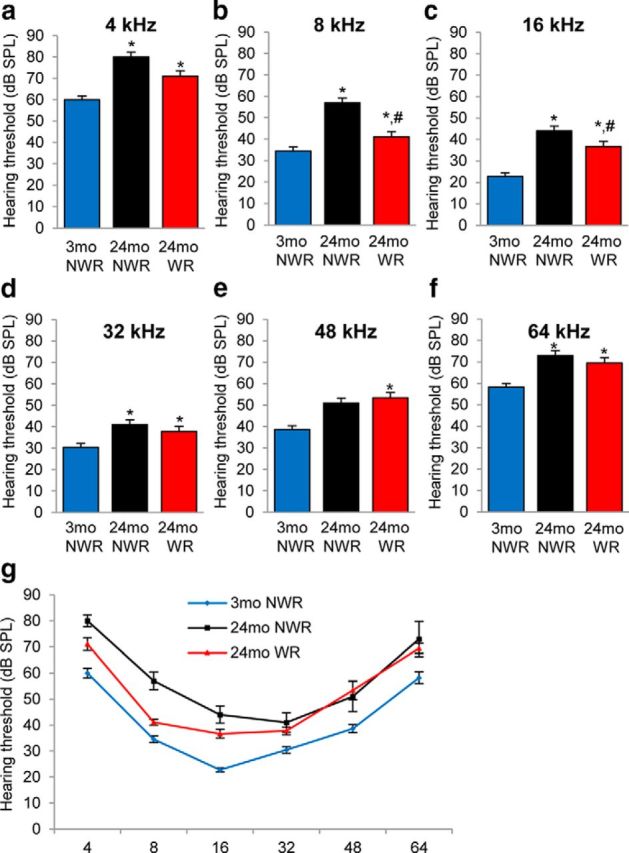
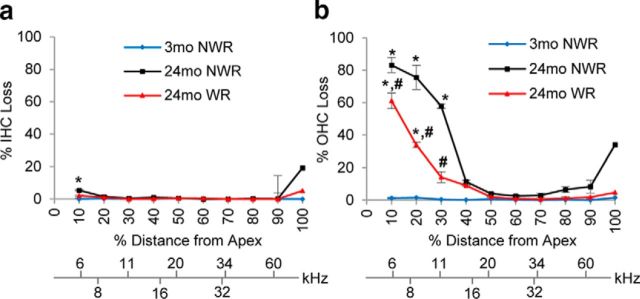
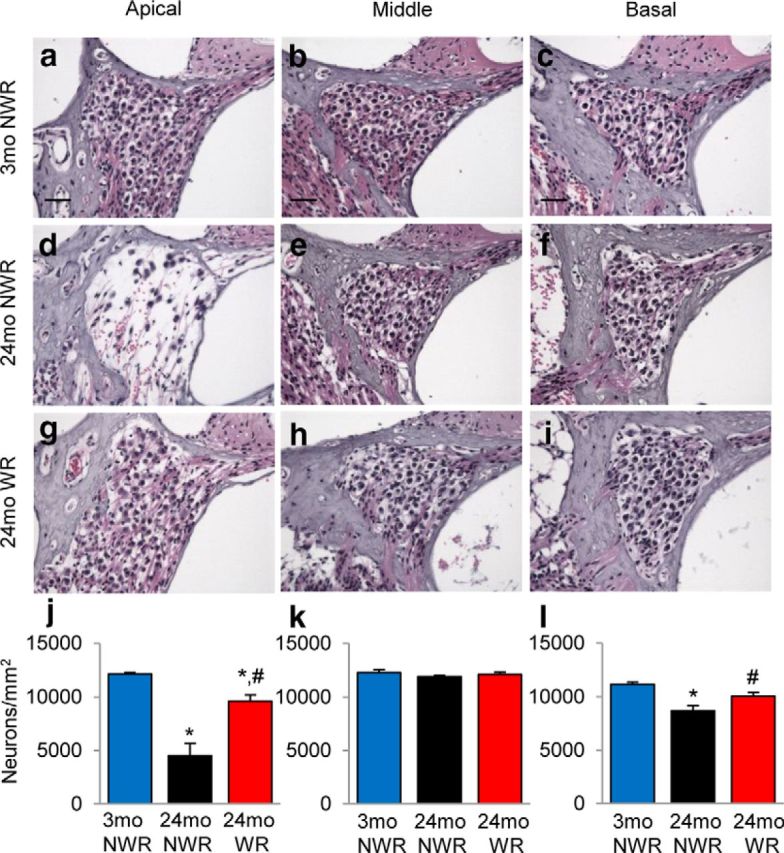
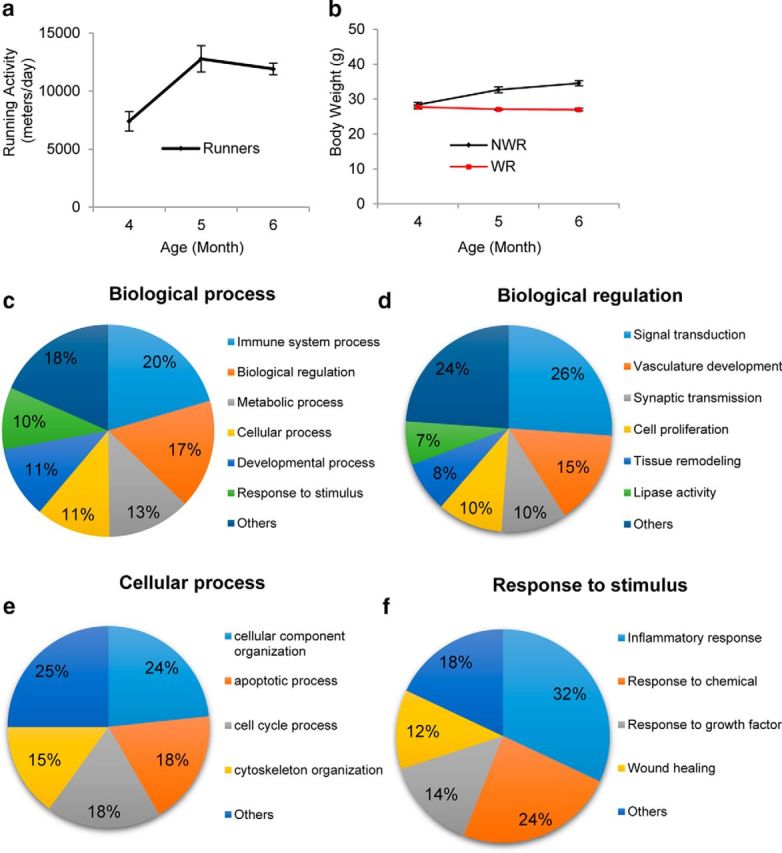
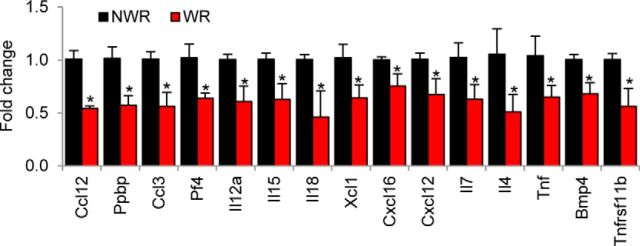
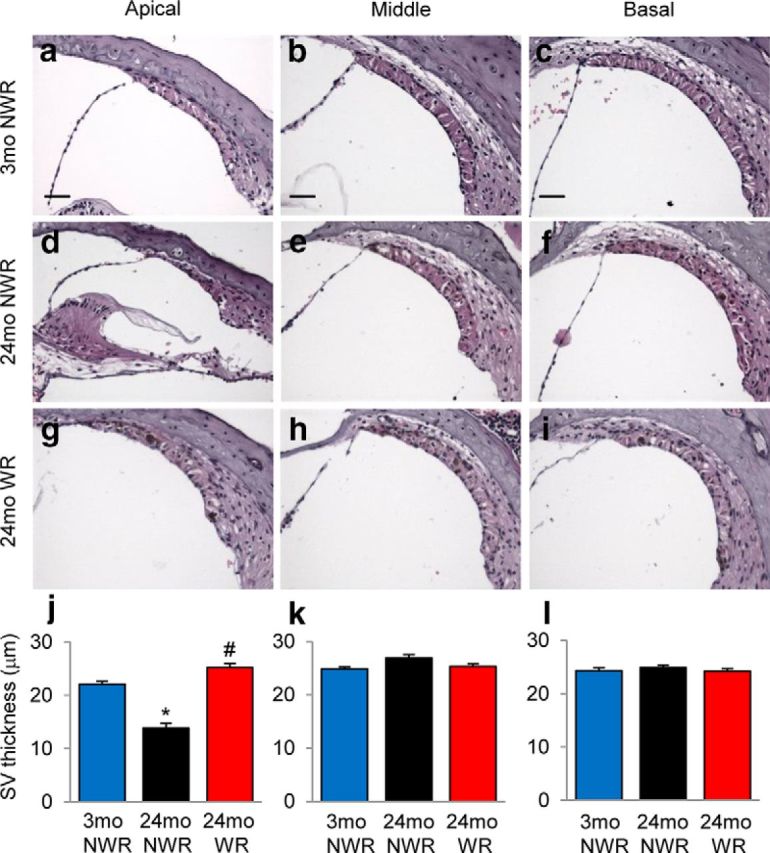
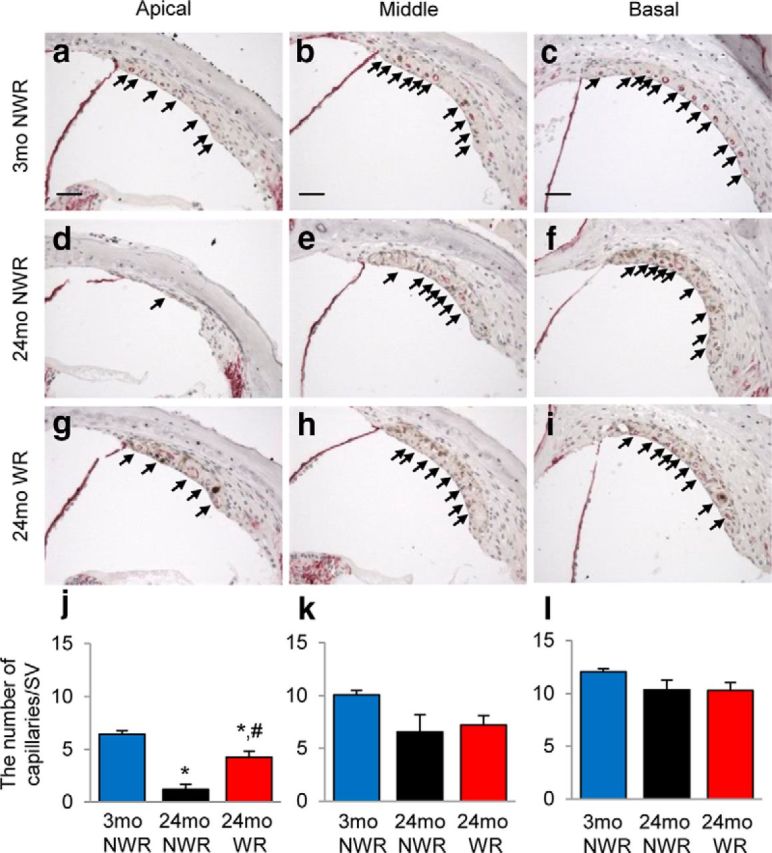
Regular physical exercise reduces the risk for obesity, cardiovascular diseases, and disability and is associated with longer lifespan expectancy (Taylor et al., 2004; Pahor et al., 2014; Anton et al., 2015; Arem et al., 2015). In contrast, decreased physical function is associated with hearing loss among older adults (Li et al., 2013; Chen et al., 2015). Here, we investigated the effects of long-term voluntary wheel running (WR) on age-related hearing loss (AHL) in CBA/CaJ mice, a well established model of AHL (Zheng et al., 1999). WR activity peaked at 6 months of age (12,280 m/d) and gradually decreased over time. At 24 months of age, the average WR distance was 3987 m/d. Twenty-four-month-old runners had less cochlear hair cell and spiral ganglion neuron loss and better auditory brainstem response thresholds at the low and middle frequencies compared with age-matched, non-WR controls. Gene ontology (GO) enrichment analysis of inner ear tissues from 6-month-old controls and runners revealed that WR resulted in a marked enrichment for GO gene sets associated with immune response, inflammatory response, vascular function, and apoptosis. In agreement with these results, there was reduced stria vascularis (SV) atrophy and reduced loss of capillaries in the SV of old runners versus old controls. Given that SV holds numerous capillaries that are essential for transporting oxygen and nutrients into the cochlea, our findings suggest that long-term exercise delays the progression of AHL by reducing age-related loss of strial capillaries associated with inflammation.
Significance statement: Nearly two-thirds of adults aged 70 years or older develop significant age-related hearing loss (AHL), a condition that can lead to social isolation and major communication difficulties. AHL is also associated with decreased physical function among older adults. In the current study, we show that regular exercise slowed AHL and cochlear degeneration significantly in a well established murine model. Our data suggest that regular exercise delays the progression of AHL by reducing age-related loss of strial capillaries associated with inflammation.
Keywords: aging; exercise; hearing loss; stria vascularis.
Copyright © 2016 the authors 0270-6474/16/3611308-12$15.00/0.
Figures
References
-
- Arem H, Moore SC, Patel A, Hartge P, Berrington de Gonzalez A, Visvanathan K, Campbell PT, Freedman M, Weiderpass E, Adami HO, Linet MS, Lee IM, Matthews CE. Leisure time physical activity and mortality: a detailed pooled analysis of the dose-response relationship. JAMA Intern Med. 2015;175:959–967. doi: 10.1001/jamainternmed.2015.0533. - DOI - PMC - PubMed
-
- Brinkley TE, Leng X, Miller ME, Kitzman DW, Pahor M, Berry MJ, Marsh AP, Kritchevsky SB, Nicklas BJ. Chronic inflammation is associated with low physical function in older adults across multiple comorbidities. J Gerontol A Biol Sci Med Sci. 2009;64:455–461. doi: 10.1093/gerona/gln038. - DOI - PMC - PubMed
-
- Browning GG, Gatehouse S, Lowe GD. Blood viscosity as a factor in sensorineural hearing impairment. Lancet. 1986;1:121–123. - PubMed
Publication types
MeSH terms
Grants and funding
LinkOut - more resources
Full Text Sources
Other Literature Sources
Medical
Molecular Biology Databases
