


Inhibition of autophagy increased AGE/ROS-mediated apoptosis in mesangial cells
- PMID: 27809300
- PMCID: PMC5260901
- DOI: 10.1038/cddis.2016.322
Inhibition of autophagy increased AGE/ROS-mediated apoptosis in mesangial cells
Abstract
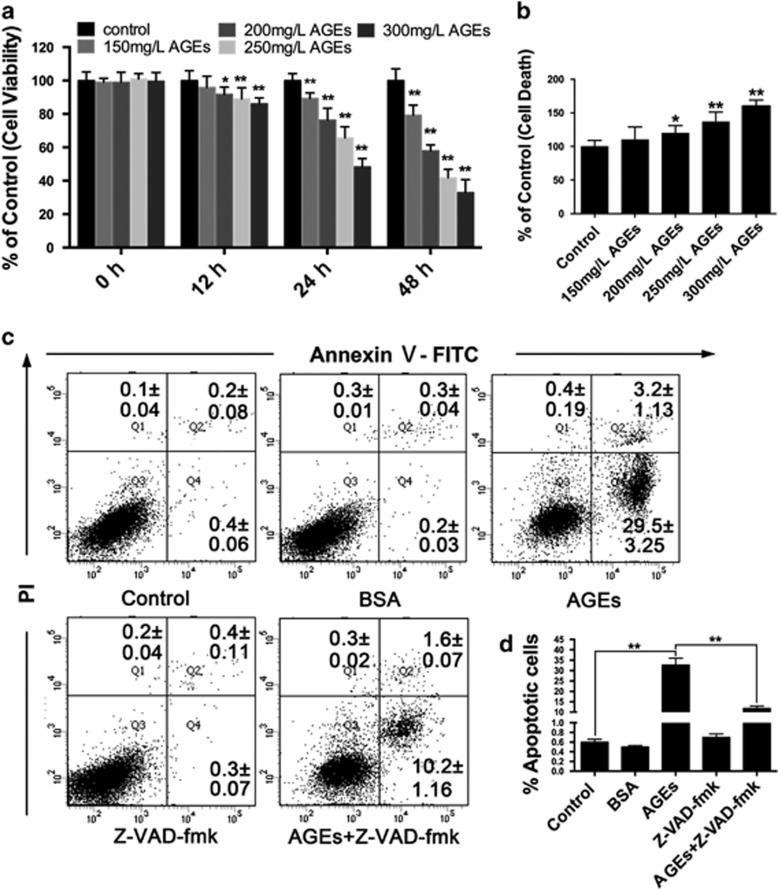
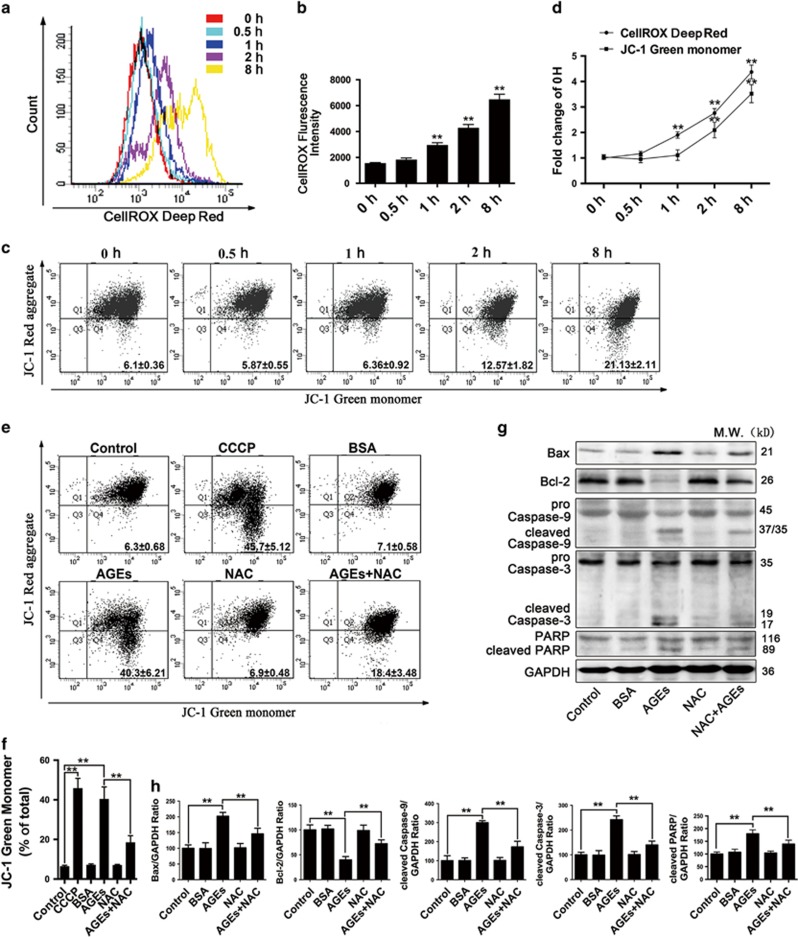
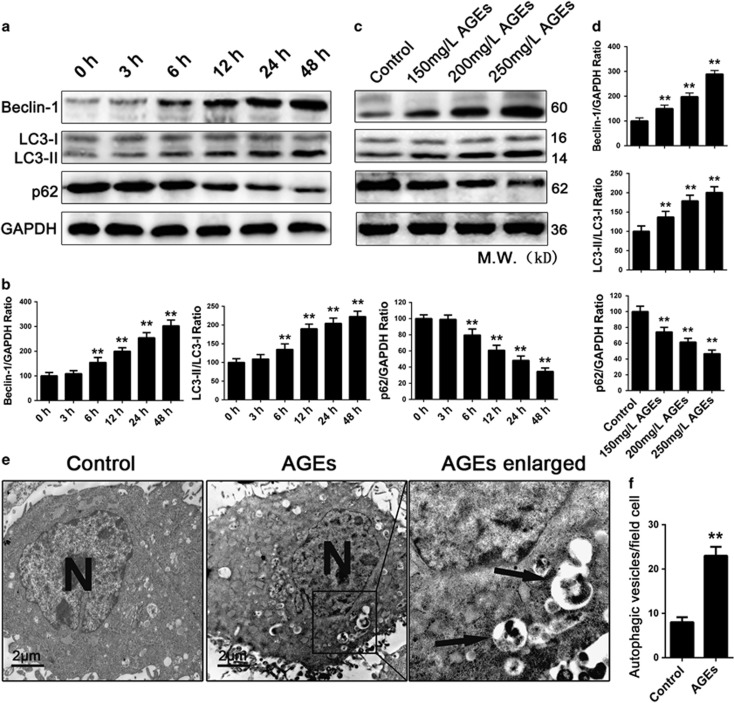
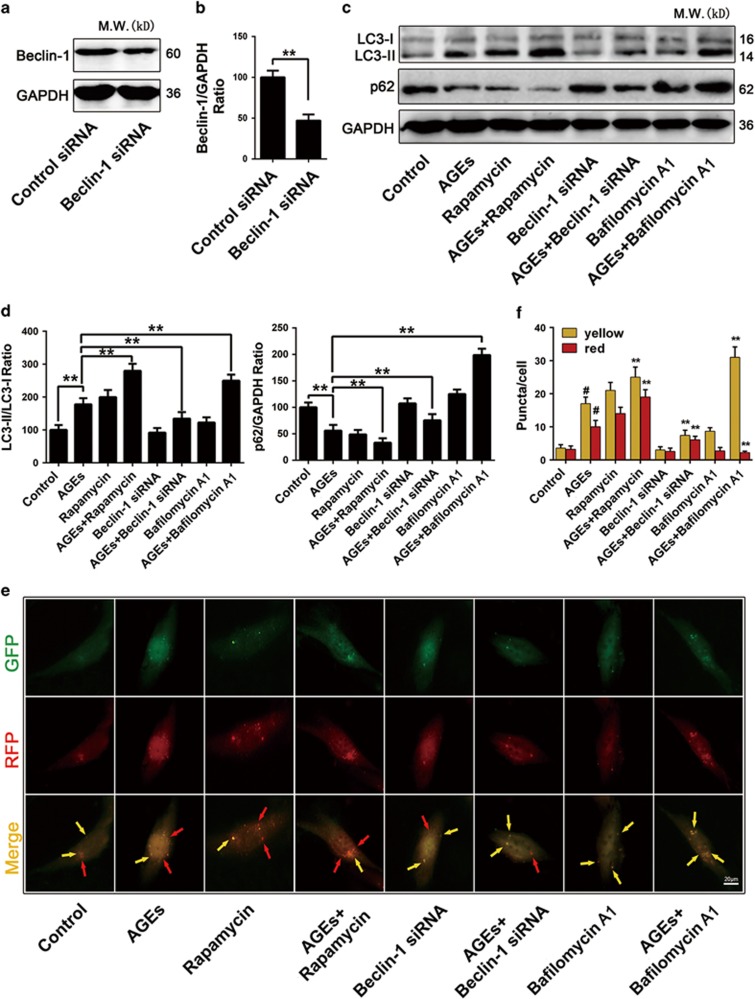
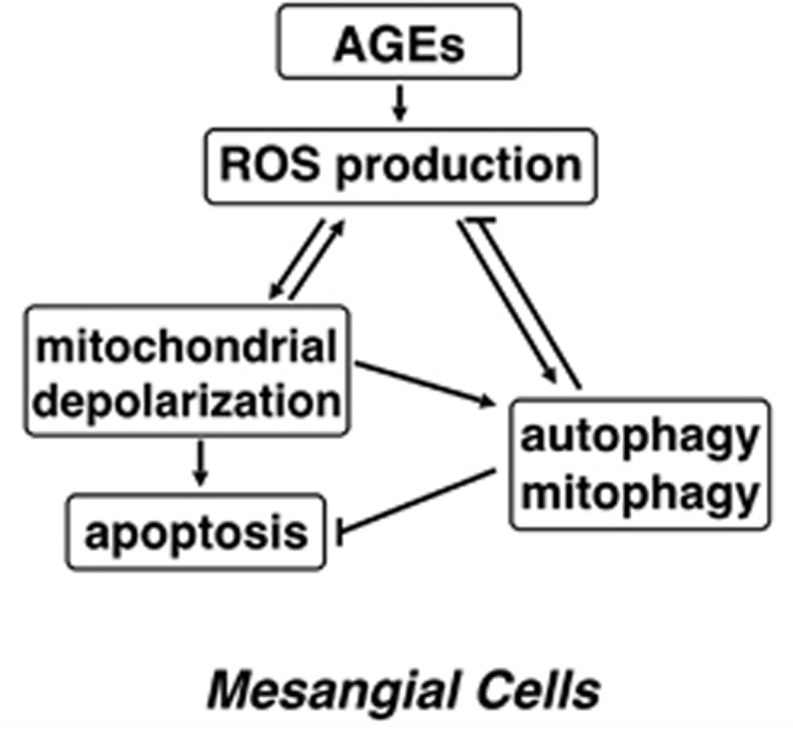
The aim of our study was to investigate the role of autophagy, a homeostatic process involved in the lysosomal degradation of damaged cell organelles and proteins, in regulating the survival of mesangial cells treated with advanced glycation end products (AGEs). In the present study, AGEs induced mitochondrial depolarization and led to mitochondrial-dependent apoptosis in mesangial cells, as shown by the loss of the mitochondrial membrane potential; increased Bax processing; increased Caspase-9, Caspase-3 and PARP cleavage; and decreased Bcl-2 expression. Meanwhile, AGEs also triggered autophagy flux in mesangial cells, as confirmed by the presence of autophagic vesicles, the conversion of LC3II/LC3I and the increase/decrease in Beclin-1/p62 expression. Interestingly, this study reported apparent apoptosis and autophagy that were dependent on reactive oxygen species (ROS) production. Scavenging ROS with N-acetyl-l-cysteine could prevent the appearance of the autophagic features and reverse AGE-induced apoptosis. Moreover, AGE-triggered mitophagy, which was confirmed by the colocalization of autophagosomes and mitochondria and Parkin translocation to mitochondria, played a potential role in reducing ROS production in mesangial cells. Additionally, inhibition of autophagy significantly enhanced AGE-induced cell apoptosis. Taken together, our data suggest that ROS were the mediators of AGE-induced mesangial cell apoptosis and that autophagy was likely to be the mechanism that was triggered to repair the ROS-induced damage in the AGE-treated cells and thereby promote cell survival. This study provides new insights into the molecular mechanism of autophagy involved in AGE-induced apoptosis in mesangial cells.
Figures
References
-
- Shi Y, Hu FB. The global implications of diabetes and cancer. Lancet 2014; 383: 1947–1948. - PubMed
-
- Mishra R, Emancipator SN, Kern T, Simonson MS. High glucose evokes an intrinsic proapoptotic signaling pathway in mesangial cells. Kidney Int 2005; 67: 82–93. - PubMed
-
- Hornigold N, Johnson TS, Huang L, Haylor JL, Griffin M, Mooney A. Inhibition of collagen I accumulation reduces glomerulosclerosis by a Hic-5-dependent mechanism in experimental diabetic nephropathy. Lab Invest 2013; 93: 553–565. - PubMed
-
- Yao F, Li Z, Ehara T, Yang L, Wang D, Feng L et al. Fatty Acid-Binding Protein 4 mediates apoptosis via endoplasmic reticulum stress in mesangial cells of diabetic nephropathy. Mol Cell Endocrinol 2015; 411: 232–242. - PubMed
-
- Goh SY, Cooper ME. Clinical review: the role of advanced glycation end products in progression and complications of diabetes. J Clin Endocrinol Metab 2008; 93: 1143–1152. - PubMed
MeSH terms
Substances
LinkOut - more resources
Full Text Sources
Other Literature Sources
Molecular Biology Databases
Research Materials
