Alcohol consumption and risk of fatty liver disease: a meta-analysis
- PMID: 27812428
- PMCID: PMC5088606
- DOI: 10.7717/peerj.2633
Alcohol consumption and risk of fatty liver disease: a meta-analysis
Abstract
Background: Observational studies have shown inconsistent results regarding alcohol consumption and risk of fatty liver. We performed a meta-analysis of published literature to investigate the association between alcohol consumption and fatty liver disease (FLD).
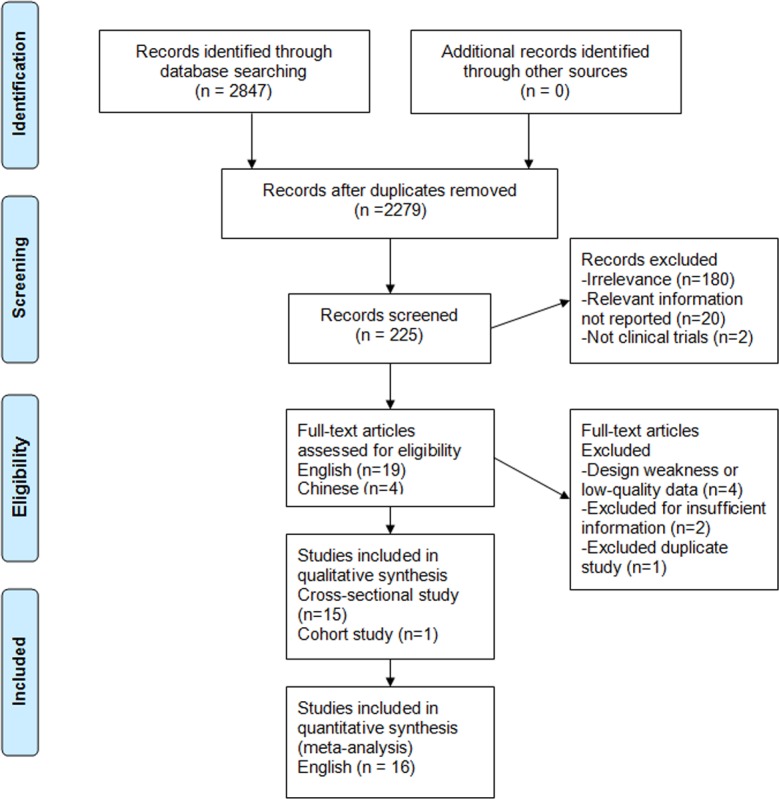
Methods: We searched Medline, Embase, Web of Science, and several Chinese databases, identifying studies that reported an association between alcohol consumption and the risk of FLD.
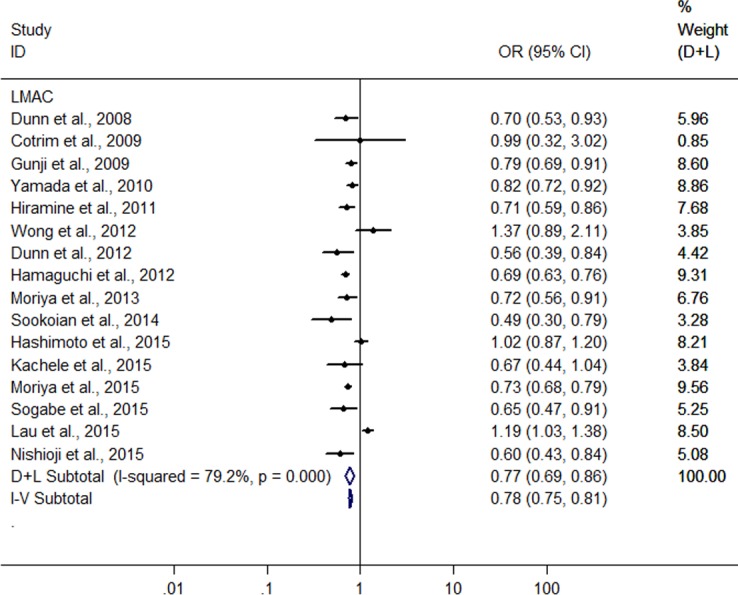
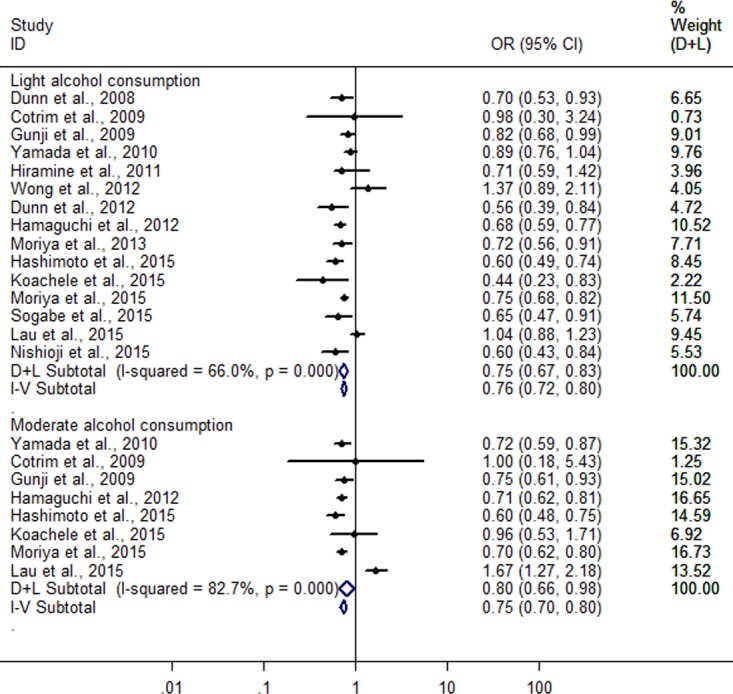
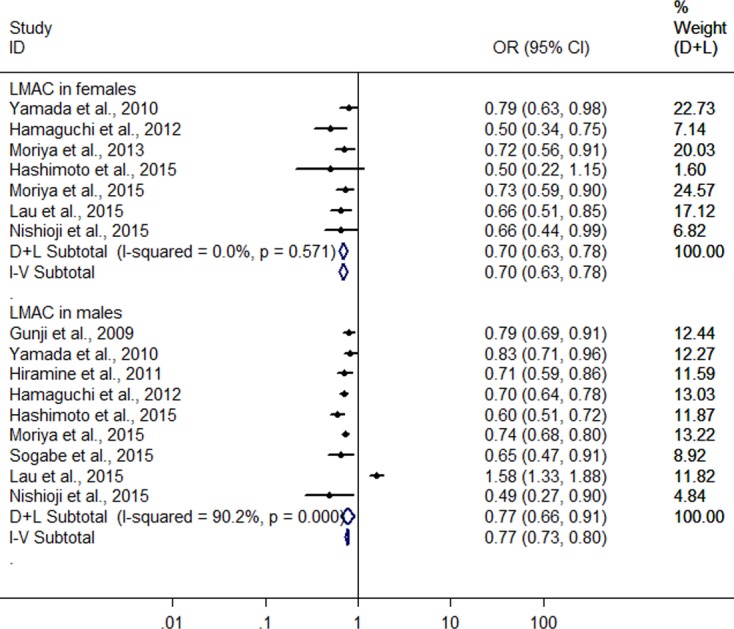
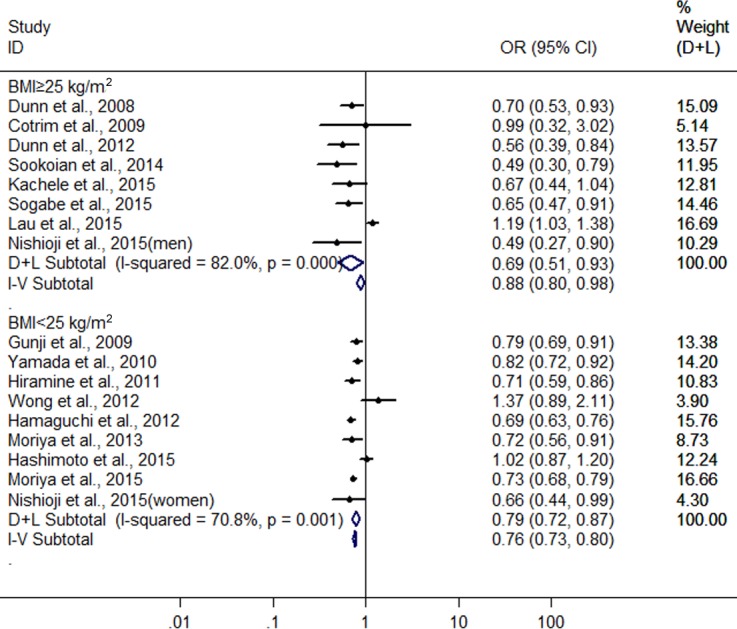
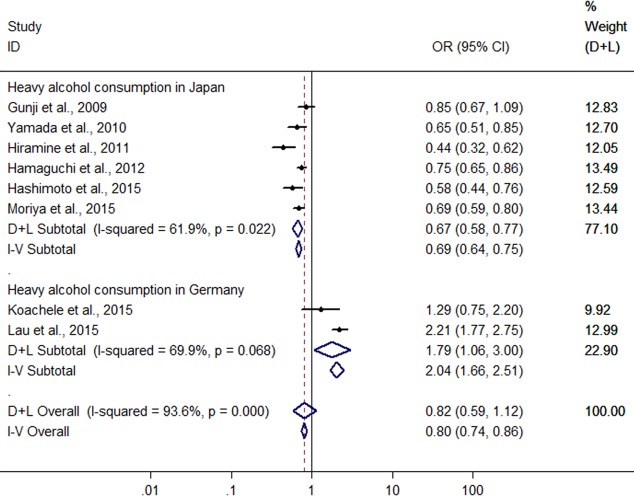
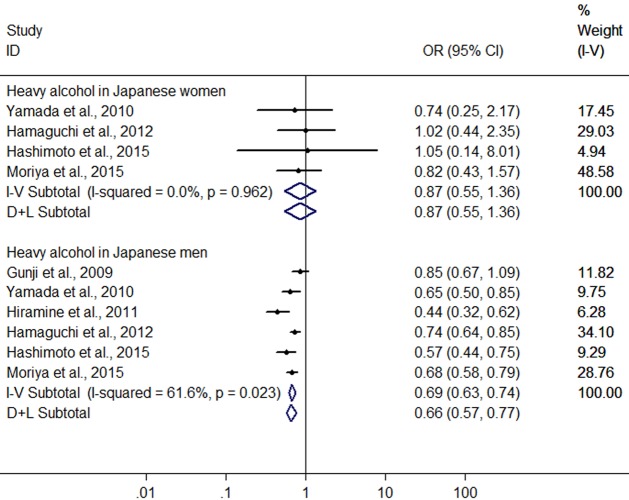
Results: A total of 16 studies with 76,608 participants including 13 cross-sectional studies, two cross-sectional following longitudinal studies, and one cohort study met the inclusion criteria. For light to moderate alcohol consumption (LMAC), there was a 22.6% reduction in risk of FLD (odds ratio [OR] = 0.774, 95% confidence interval CI [0.695-0.862], P <0.001), and subgroup analysis showed that a greater reduction in risk of FLD was found in the female drinkers (30.2%) and the drinkers with BMI ≥25 kg/m2(31.3%) compared with the male drinkers (22.6%) and the drinkers with BMI <25 kg/m2(21.3%), respectively. For heavy alcohol consumption, there was no significant influence on risk of FLD (OR = 0.869, 95% CI [0.553-1.364], P = 0.541) in Japanese women, but there was a 33.7% reduction in risk of FLD (OR = 0.663, 95% CI [0.574-0.765], P < 0.001) in Japanese men and a significant increased risk of FLD (OR = 1.785, 95% CI [1.064-2.996], P = 0.028) in Germans.
Conclusion: LMAC is associated with a significant protective effect on FLD in the studied population, especially in the women and obese population. However, the effect of heavy alcohol consumption on FLD remains unclear due to limited studies and small sample sizes.
Keywords: Alcohol; Fatty liver disease; Meta-analysis; Risk.
Conflict of interest statement
The authors declare there are no competing interests.
Figures
References
LinkOut - more resources
Full Text Sources
Other Literature Sources
Miscellaneous