


Continuous intra-arterial nimodipine infusion in refractory symptomatic vasospasm after subarachnoid hemorrhage
- PMID: 27812447
- PMCID: PMC5069241
- DOI: 10.1186/s40064-016-3495-4
Continuous intra-arterial nimodipine infusion in refractory symptomatic vasospasm after subarachnoid hemorrhage
Abstract
Introduction: Vasospasm still is a major cause of morbidity after aneurysmal subarachnoid hemorrhage. The purpose of this report is to describe the successful management of severe refractory vasospasm with continuous intra-arterial nimodipine (IAN) treatment.
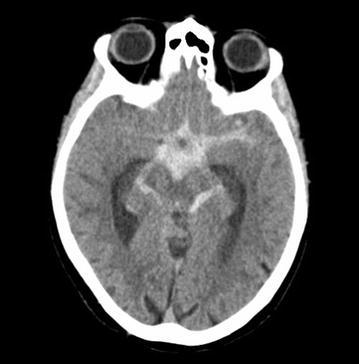
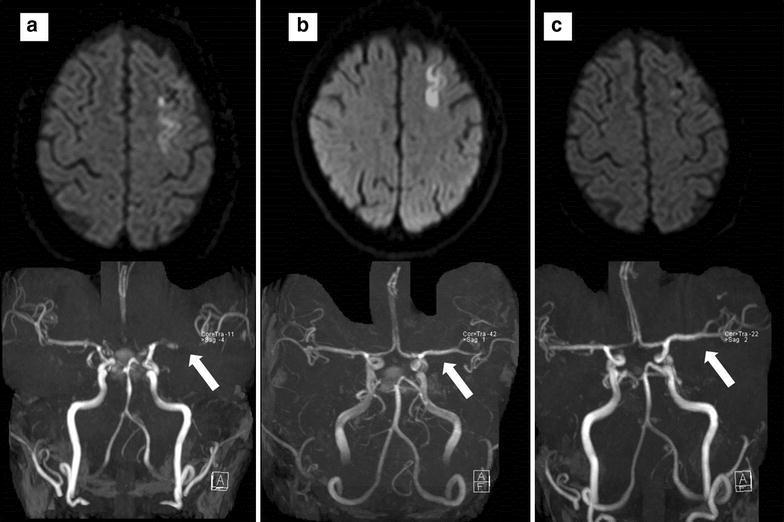
Case description: A 72-year old right handed woman was admitted with non-traumatic SAH WFNS grade 1. Cerebral computed tomography demonstrated thick blood filling of the basal cisterns, and intraventricular hemorrhage. Cerebral angiogram failed to detect a vascular abnormality. After an uneventful initial course the patient developed symptomatic left middle cerebral artery vasospasm with aphasia and corresponding restriction in diffusion weighted images in the left frontal lobe. Bolus IAN only transiently improved cerebral circulation and clinical signs and symptoms. Continuous-IAN was started and led to full clinical recovery and normalisation of MRI diffusion restrictions.
Discussion and conclusions: Continuous selective intra-arterial infusion of nimodipine may be an option in selected patients with symptomatic vasospasm refractory to conventional treatment after careful consideration of benefits and procedure-related risks.
Keywords: Delayed cerebral ischemia; Nimodipine; Subarachnoid hemorrhage; Vasospasm.
Figures
References
-
- Ackermann H, Hertrich I, Ziegler W, Bitzer M, Bien S. Acquired dysfluencies following infarction of the left mesiofrontal cortex. Aphasiology. 1996;10:409–417. doi: 10.1080/02687039608248420. - DOI
-
- Diringer MN, Bleck TP, Claude Hemphill J, III, Menon D, Shutter L, Vespa P, Bruder N, Connolly ES, Jr, Citerio G, Gress D, Hanggi D, Hoh BL, Lanzino G, Le Roux P, Rabinstein A, Schmutzhard E, Stocchetti N, Suarez JI, Treggiari M, Tseng MY, Vergouwen MD, Wolf S, Zipfel G. Critical care management of patients following aneurysmal subarachnoid hemorrhage: recommendations from the neurocritical care society’s multidisciplinary consensus conference. Neurocrit Care. 2011 - PubMed
-
- Dorsch N. A clinical review of cerebral vasospasm and delayed ischaemia following aneurysm rupture. Acta Neurochir Suppl. 2011;110(Pt 1):5–6. - PubMed
LinkOut - more resources
Full Text Sources
Other Literature Sources
