


Optimum stem length for mitigation of periprosthetic fracture risk following primary total knee arthroplasty: a finite element study
- PMID: 27812774
- PMCID: PMC5907626
- DOI: 10.1007/s00167-016-4367-8
Optimum stem length for mitigation of periprosthetic fracture risk following primary total knee arthroplasty: a finite element study
Abstract
Purpose: Due to age-related changes to the material properties and thinning of the cortical bone structure, older patients with osteoporosis may be at greater risk of femoral fracture following total knee arthroplasty. This study investigates whether there is a potential role for stemmed prostheses in such scenarios to help mitigate peri-implant fracture risk, and if so what should the optimum stem length be to balance surgical bone loss with reduced fracture risk.
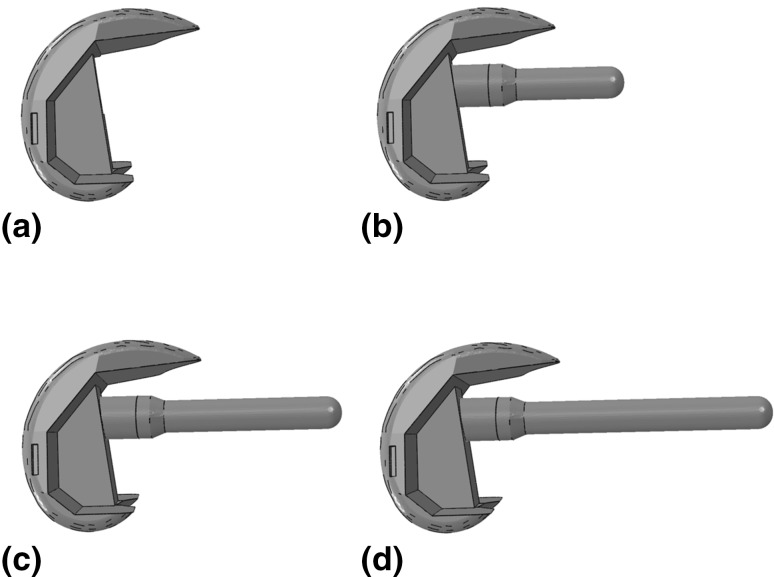
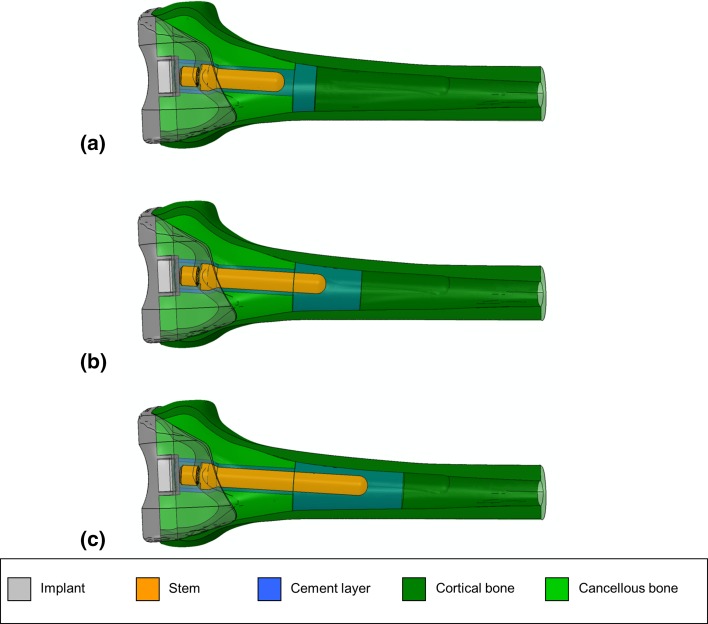
Methods: Finite element models of the distal femur implanted with four different implant types: a posterior stabilising implant, a total stabilising implant with short stem (12 mm × 50 mm), a TS implant with medium stem (12 mm × 75 mm), and a TS implant with long stem (12 mm × 100 mm), were developed and analysed in this study. Osteoporotic properties were applied to the implanted femurs and the periprosthetic stresses and strains of each were recorded.
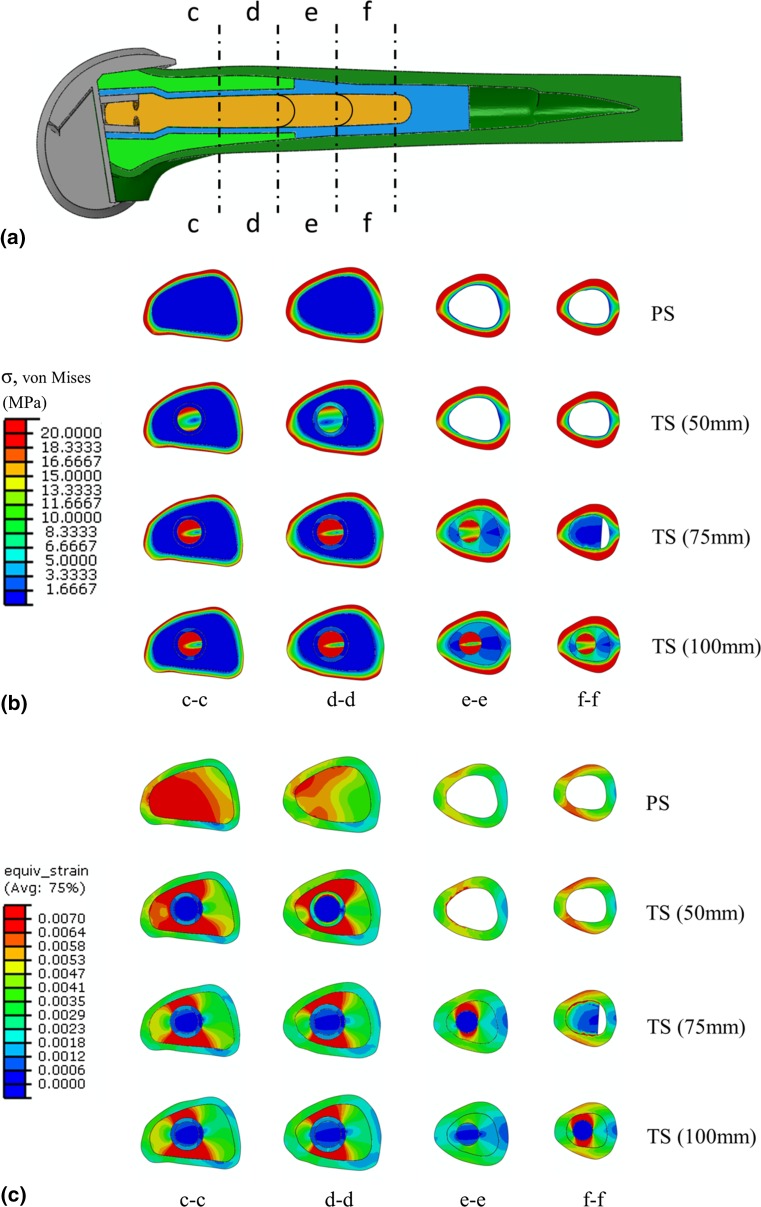
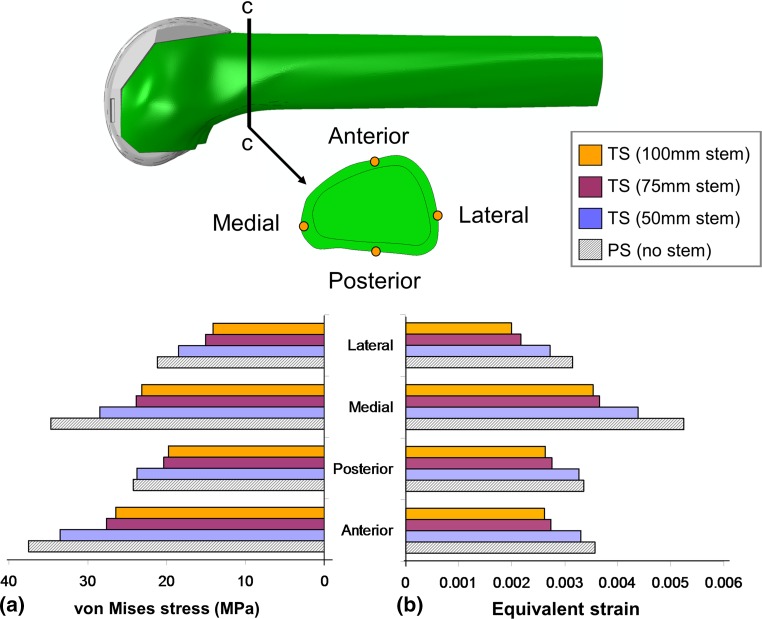
Results: All stem lengths examined were found to lead to a reduction in periprosthetic stress in comparison with a primary stemless implant, with short-, medium-, and long-stemmed implants leading to an 11, 26, and 29% reduction in stress, respectively.
Conclusion: The results of this study show that periprosthetic stress and therefore fracture risk in old osteoporotic patients may be reduced through the use of stemmed femoral components. Of the three stems investigated, a medium-length stem is found to represent the best balance between bone preservation at the time of surgery and reduction in periprosthetic stress following implantation.
Keywords: Distal femur; Finite element; Optimum stem length; Periprosthetic stress; Total knee arthroplasty.
Conflict of interest statement
Conflict of interest
None.
Funding
Financial support from the Lothian University Hospitals NHS Trust Brown and Ireland Estates Fund and The University of Edinburgh is gratefully acknowledged, although they had no part in the conception, analysis or reporting of results.
Ethical approval
Not required.
Informed consent
None.
Figures
References
-
- Barlow BT, Oi KK, Y-Y Lee, Joseph AD, Alexiades MM. Incidence, indications, outcomes, and survivorship of stems in primary total knee arthroplasty. Knee Surg Sports Traumatol Arthrosc. 2016 - PubMed
-
- Fourth generation femur model, BEL Repository (2008). http://www.biomedtown.org/biomed_town/LHDL/Reception/datarepository/repo...
-
- Bergmann G (2008) Orthoload. Charite—Universitaetsmedizin Berlin. http://www.OrthoLoad.com
MeSH terms
LinkOut - more resources
Full Text Sources
Other Literature Sources
Medical
