. 2016 Nov 15;45(5):975-987.
doi: 10.1016/j.immuni.2016.10.011. Epub 2016 Nov 1.

Deleting an Nr4a1 Super-Enhancer Subdomain Ablates Ly6Clow Monocytes while Preserving Macrophage Gene Function

Affiliations

Deleting an Nr4a1 Super-Enhancer Subdomain Ablates Ly6Clow Monocytes while Preserving Macrophage Gene Function

Graham D Thomas et al. Immunity. .

Abstract

Mononuclear phagocytes are a heterogeneous family that occupy all tissues and assume numerous roles to support tissue function and systemic homeostasis. Our ability to dissect the roles of individual subsets is limited by a lack of technologies that ablate gene function within specific mononuclear phagocyte sub-populations. Using Nr4a1-dependent Ly6Clow monocytes, we present a proof-of-principle approach that addresses these limitations. Combining ChIP-seq and molecular approaches we identified a single, conserved, sub-domain within the Nr4a1 enhancer that was essential for Ly6Clow monocyte development. Mice lacking this enhancer lacked Ly6Clow monocytes but retained Nr4a1 gene expression in macrophages during steady state and in response to LPS. Because Nr4a1 regulates inflammatory gene expression and differentiation of Ly6Clow monocytes, decoupling these processes allows Ly6Clow monocytes to be studied independently.


Figures

Figure 1
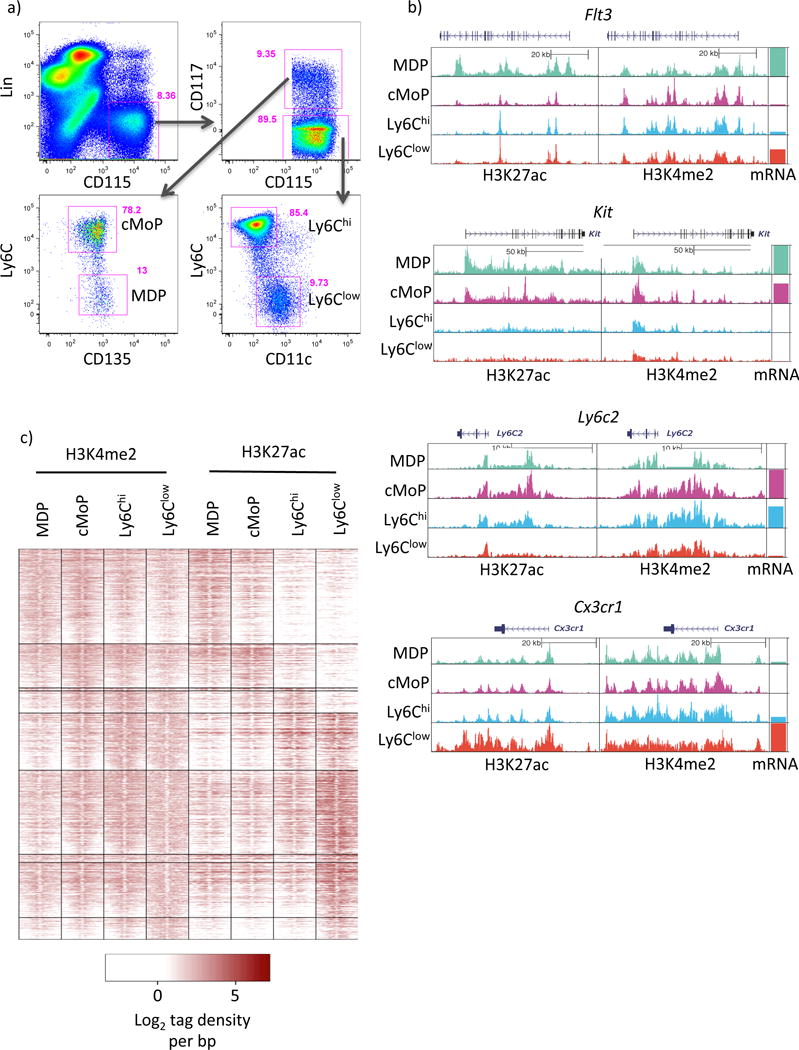
Figure 1. Epigenomic profiling of Mo subsets and progenitors supports the model of Ly6Chi to Ly6Clow Mo conversion
a) Gating strategy used to sort monocytes and upstream progenitors. Cells were previously gated on live singlets (using a FSC-W versus FSC-A gate). b) UCSC genome browser screenshots showing H3K27ac and H3K4me2 tag distributions at key lineage genes. c) Distribution of H3K4me2 and H3K27ac tags ±1kb from PU.1 peak centers in DE enhancers. Please see supplementary figures S1 and S2.
Figure 2
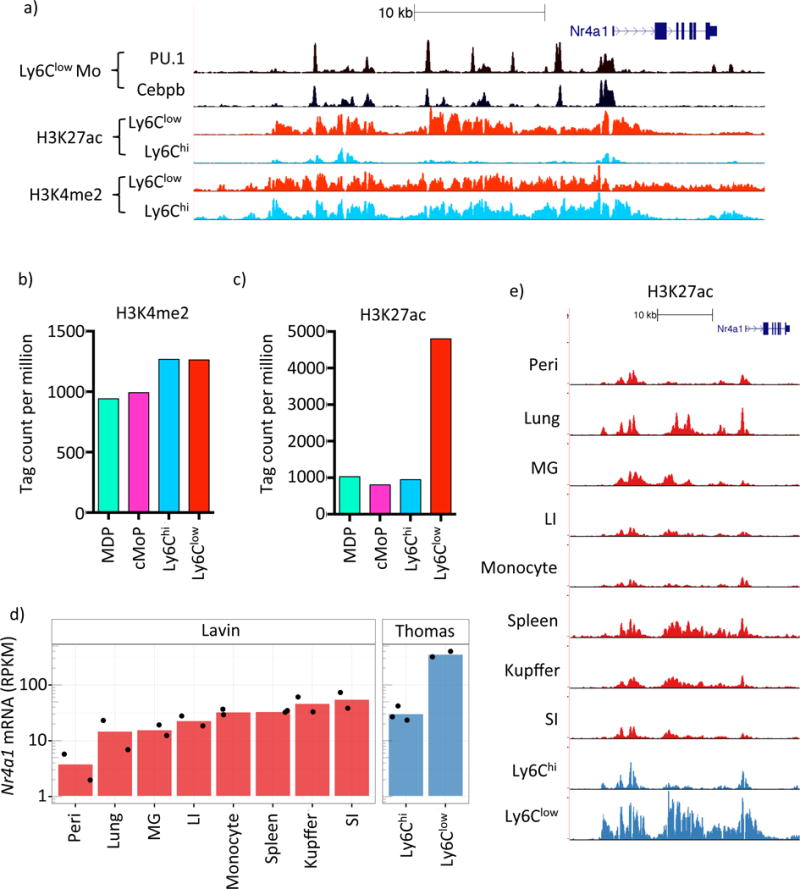
Figure 2. Ly6Clow Mo possess a cell-specific SE at the Nr4a1 locus
a) UCSC genome browser screenshot of the Nr4a1 locus depicting Ly6Clow Mo PU.1 and C/EBPβ binding and H3K4me2 and H3K27ac in both Ly6Chi and Ly6Clow Mo. b) and c) H3K4me2 and H3K27ac tag counts at Nr4a1se in MDP, cMoP, Ly6Chi and Ly6Clow Mo. d) mRNA-Seq expression of Nr4a1 in various tissue macrophage subsets taken from Lavin et al (2014), labeled ‘Lavin’, and from our data, labeled ‘Thomas’ (Peri= peritoneal macrophage, MG= microglia, LI= large intestine, SI= small intestine). e) H3K27ac at Nr4a1se for the same MP populations as in d). Please refer to supplementary figure S3.
Figure 3
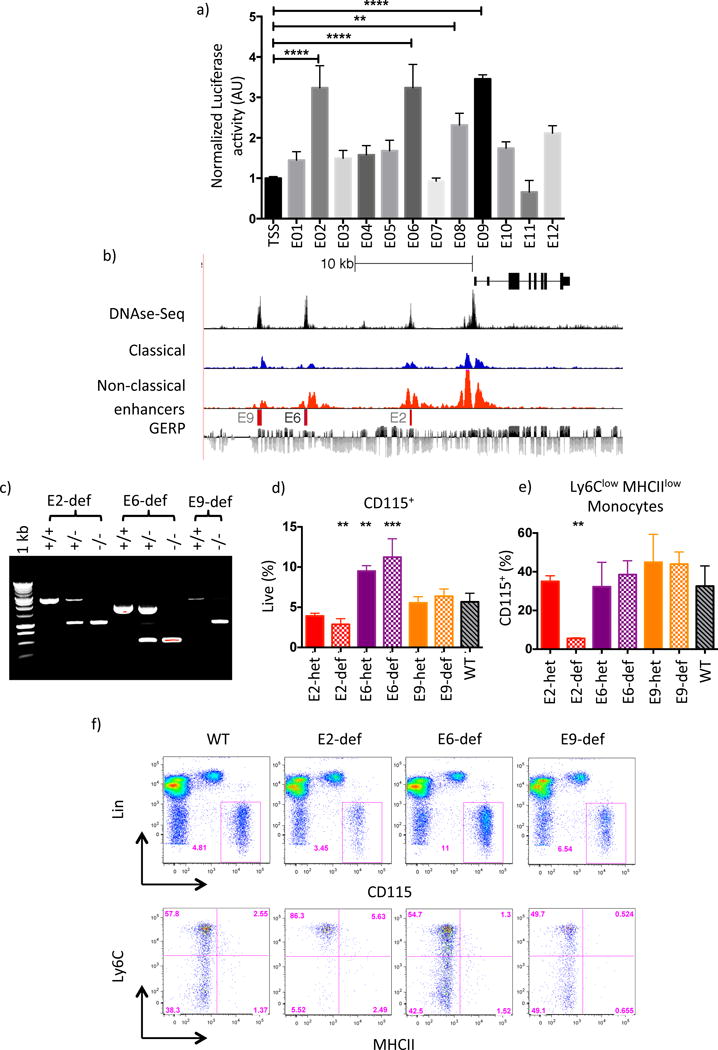
Figure 3. Identification of a conserved SE sub-domain essential for Ly6Clow Mo development
a) Relative luciferase activity in RAW264.7 cells of candidate enhancer regions cloned into pGL4.Nr4a1 vector. Results shown are averaged over 2 independent experiments. Error bars represent SD, P-values calculated by 2-way anova * P<0.05, **P<0.01, ****P<0.0001. b) UCSC genome browser screenshot of the human Nr4a1 locus. H3K27ac tracks for CD14+CD16dim (classical) and CD14dimCD16+ (non-classical) Mo are shown alongside BLAT alignments of nucleosome-free DNA sequence obtained from mouse E2, E6 and E9. Mo DNase-Seq data were taken from (Boyle et al, 2008); nucleotide sequence conservation is indicated using the GERP track. c) PCR Genotyping of E2, E6 and E9 heterozygous (het) and deficient (def) mice. d) and e) Enumeration of peripheral blood Mo in WT, E2, E6 and E9 domain-heterozygous (het) and -deficient (def) mice. Parametric t-tests performed relative to WT, ** p< 0.01 *** p<0.001. f) FACS gating and representative flow plot for each genotype in d) and e). Please refer to supplementary figure S4.
Figure 4
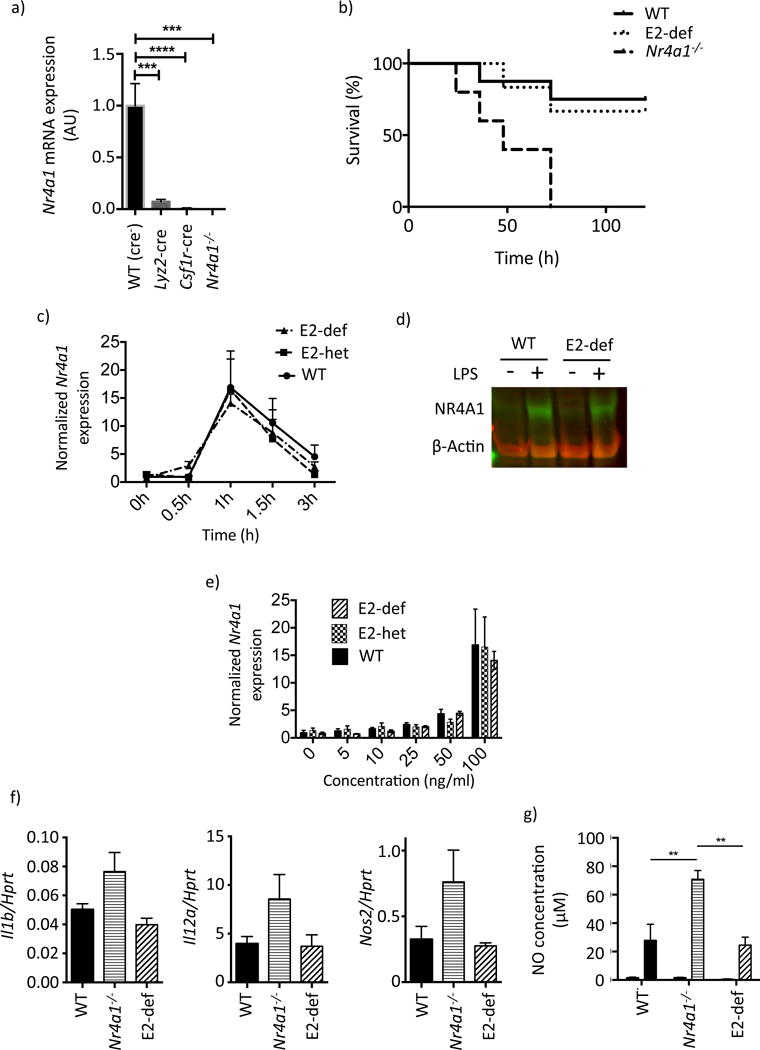
Figure 4. E2 does not regulate Nr4a1 mRNA expression in response to inflammatory stimuli
a) Nr4a1 mRNA expression in thioglycollate-elicited macrophages obtained from Nr4a1flox/flox mice crossed to Lyz2-cre and Csf1r-cre, WT (Cre littermates) are shown as control. b) Kaplan-Mayer curve showing survival of WT, E2 domain-deficient and Nr4a1/ mice in response to a single dose of 2.5mg/kg LPS I.P. Mantel-Cox (Log rank) test results: WT vs. Nr4a1−/− p<0.01, E2 domain-deficient vs. Nr4a1/ p<0.05, E2 domain-deficient vs. WT p>0.05. c) RT-PCR time course of Nr4a1 mRNA in primary thioglycollate-elicited macrophages following LPS stimulation (100ng/ml). d) Immuno blot showing Nr4a1 expression 1h post LPS stimulation (100ng/ml). e) Nr4a1 mRNA expression in dose escalation at 1h post LPS stimulation. f) Inflammatory cytokine mRNA expression in primary peritoneal macrophages 1h post injection of 1ug LPS I.P. g) Nitric oxide in culture supernatant 96h after LPS stimulation.
Figure 5
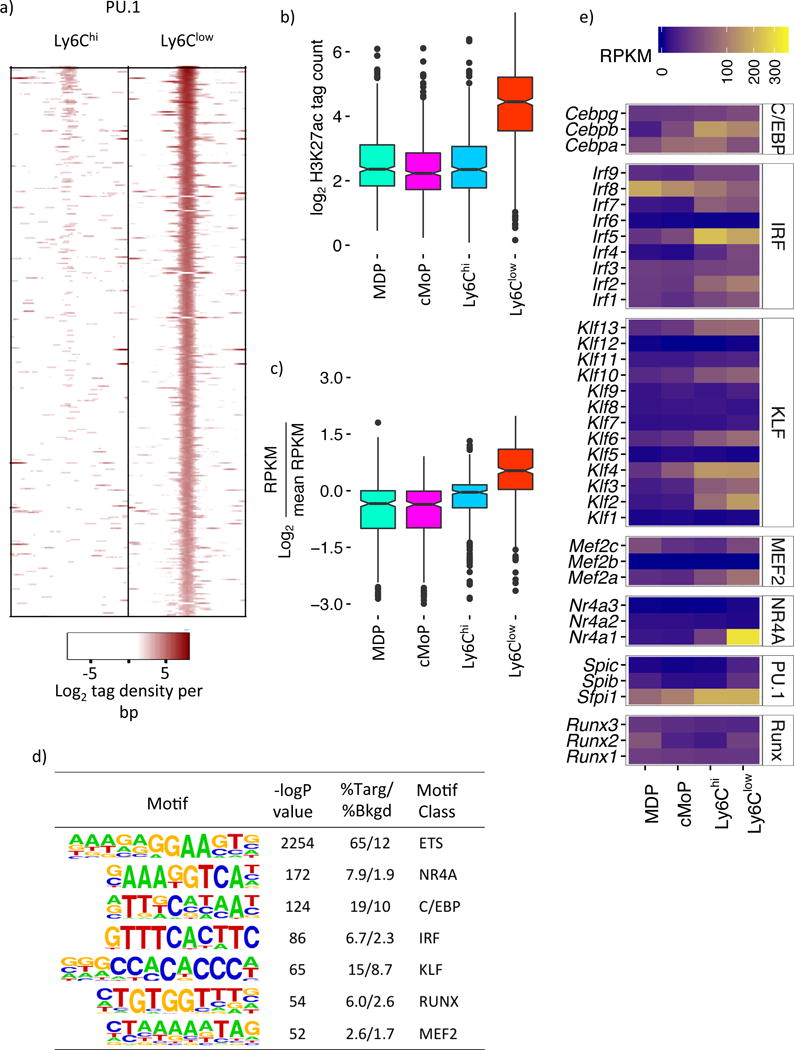
Figure 5. Identification of motifs associated with Ly6Clow Mo development
a) Normalized PU.1 ChIP-Seq signal in Ly6Chi and Ly6Clow Mo of Ly6Clow Mo-specific PU.1 sites ±400 bases from PU.1 peak center. b) H3K27ac ±500 bases of Ly6Clow Mo-specific PU.1 peaks. c) Relative expression of genes proximal to Ly6Clow Mo-specific PU.1 peaks. d) Overrepresented motifs in Ly6Clow Mo specific PU.1 peaks identified by de novo enrichment analysis. e) RNA-Seq expression amounts of TFs predicted to bind motifs in d). Please refer to supplementary figure S5a.
Figure 6
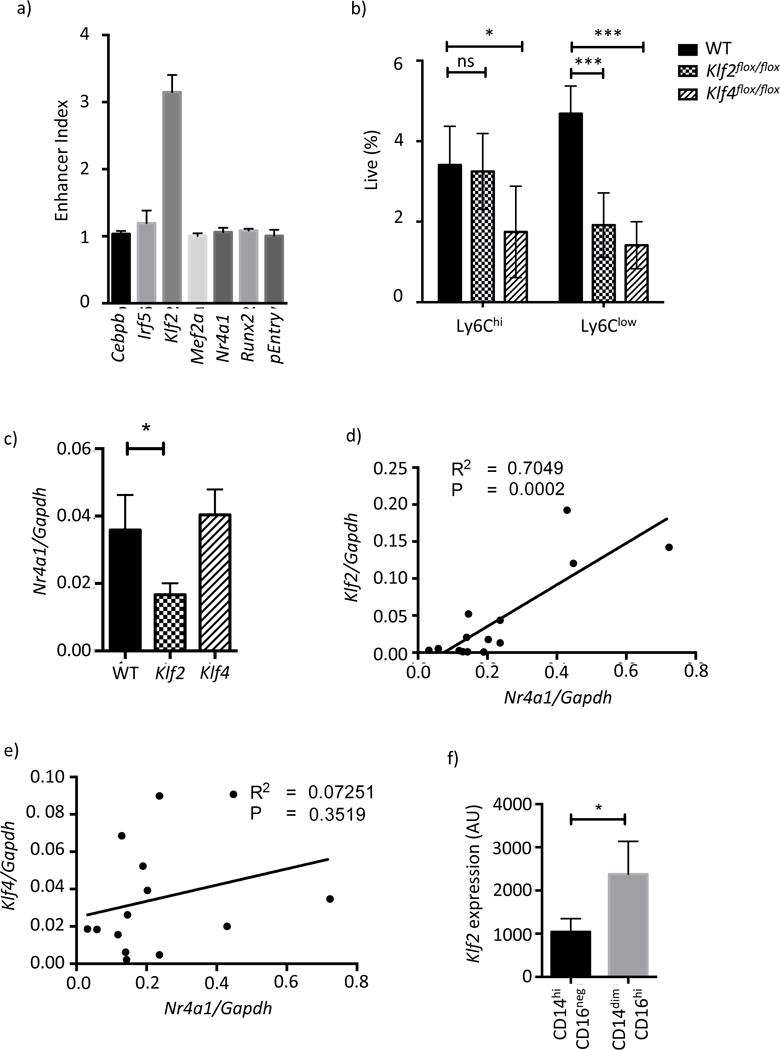
Figure 6. Klf2 drives Ly6Chi to Ly6Clow Mo conversion via E2
a) Overexpression of candidate TFs in the presence of pGL4.Nr4a1_E2 and pGL4.Nr4a1 reporter vectors in RAW264.7 cells. The enhancer index is calculated as described in the methods. b) Blood Mo frequencies in Lyz2-cre Klf2flox/flox and Lyz2-cre Klf4flox/flox mice. c) Nr4a1 mRNA expression amounts in primary Ly6Chi Mo d) Klf2 mRNA correlated against Nr4a1 in Ly6Clow Mo e) the same data as d) for Klf4 mRNA. f) Klf2 mRNA expression amounts in primary human Mo subsets as measured by microarray. Please refer to supplementary figures S5b and S6.
Figure 7
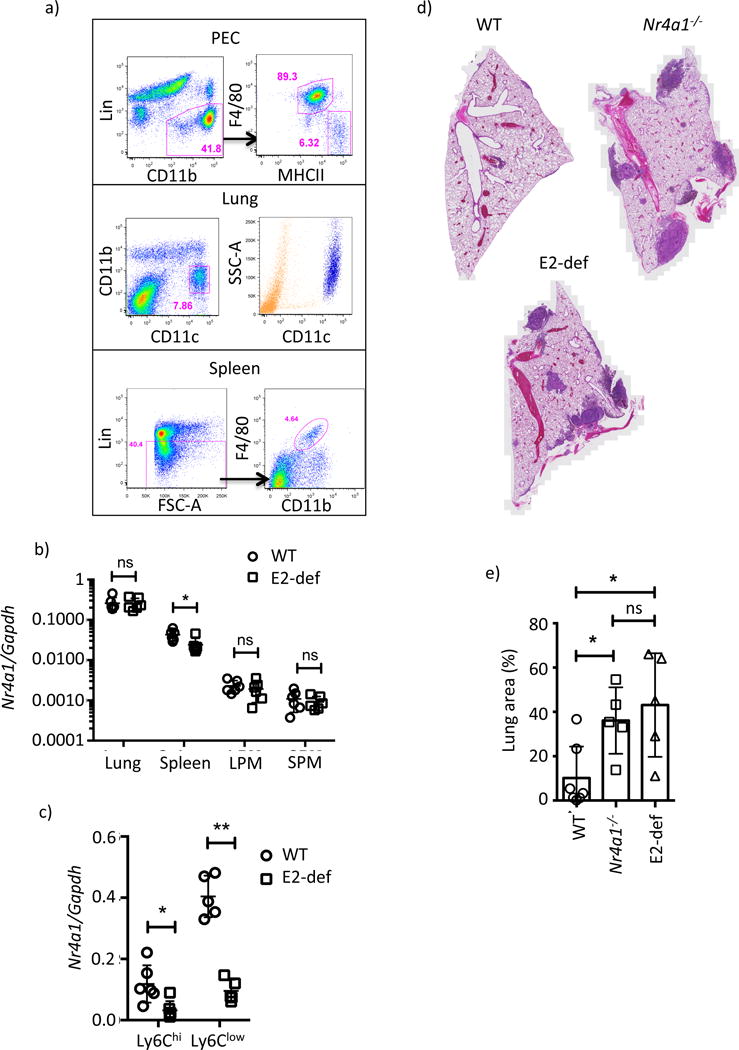
Figure 7. E2 is a monocyte-specific enhancer
a) Gating scheme for tissue macrophage sorting. All cells were previously gated on live singlets. The side scatter high profile of lung CD11c+ macrophages is shown in the right panel (blue). b and c) Relative Nr4a1 mRNA expression in tissue macrophages and blood Ly6Chi and Ly6Clow Mo. Statistics for b) and c) measured by students t-test * p<0.05, ** p<0.01. d) Representative sections of B16F10 tumors in WT, Nr4a1/ and E2 domain-deficient mice. e) and f) Quantification of cancer metastasis area, error bars represent SD statistics were analyzed by ANOVA * p<0.05. Please refer to supplementary figure S7.

Comment in

References

    1. Alder JK, Georgantas RW, Hildreth RL, Kaplan IM, Morisot S, Yu X, McDevitt M, Civin CI. Kruppel-Like Factor 4 Is Essential for Inflammatory Monocyte Differentiation In Vivo. J Immunol. 2008;180:5645–5652. - PMC - PubMed
    1. Amit I, Winter DR, Jung S. The role of the local environment and epigenetics in shaping macrophage identity and their effect on tissue homeostasis. Nat Immunol. 2016;17:18–25. - PubMed
    1. Andersson R, Gebhard C, Miguel-Escalada I, Hoof I, Bornholdt J, Boyd M, Chen Y, Zhao X, Schmidl C, Suzuki T, et al. An atlas of active enhancers across human cell types and tissues. Nature. 2014;507:455–461. - PMC - PubMed
    1. Boyle AP, Davis S, Shulha HP, Meltzer P, Margulies EH, Weng Z, Furey TS, Crawford GE. High-resolution mapping and characterization of open chromatin across the genome. Cell. 2008;132:311–322. - PMC - PubMed
    1. Carlin LM, Stamatiades EG, Auffray C, Hanna RN, Glover L, Vizcay-Barrena G, Hedrick CC, Cook HT, Diebold S, Geissmann F. Nr4a1-Dependent Ly6Clow Monocytes Monitor Endothelial Cells and Orchestrate Their Disposal. Cell. 2013;153:362–375. - PMC - PubMed

Publication types

MeSH terms

Substances