


Multiplex Genome Editing to Generate Universal CAR T Cells Resistant to PD1 Inhibition
- PMID: 27815355
- PMCID: PMC5413401
- DOI: 10.1158/1078-0432.CCR-16-1300
Multiplex Genome Editing to Generate Universal CAR T Cells Resistant to PD1 Inhibition
Abstract
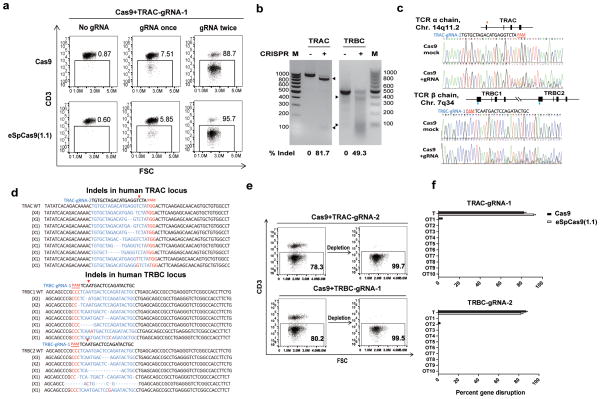
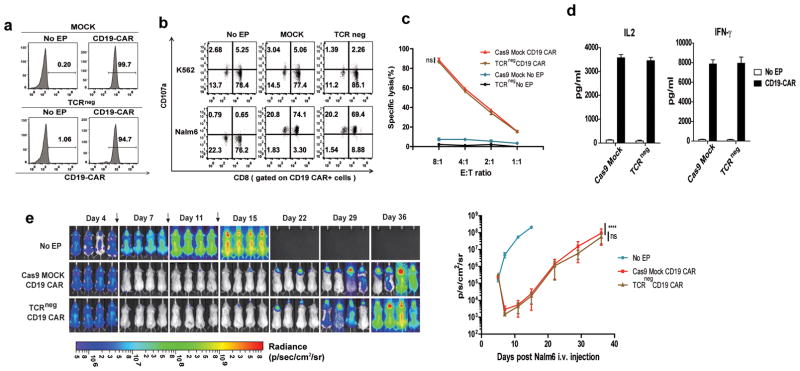
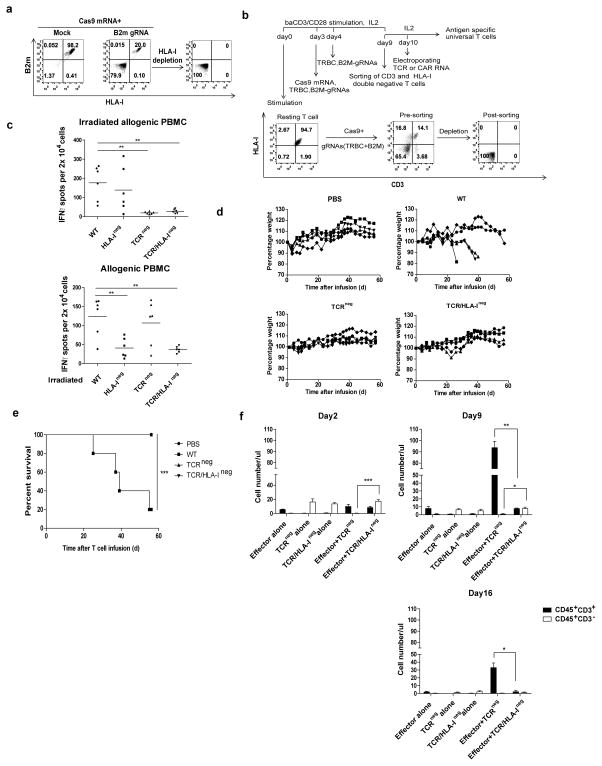
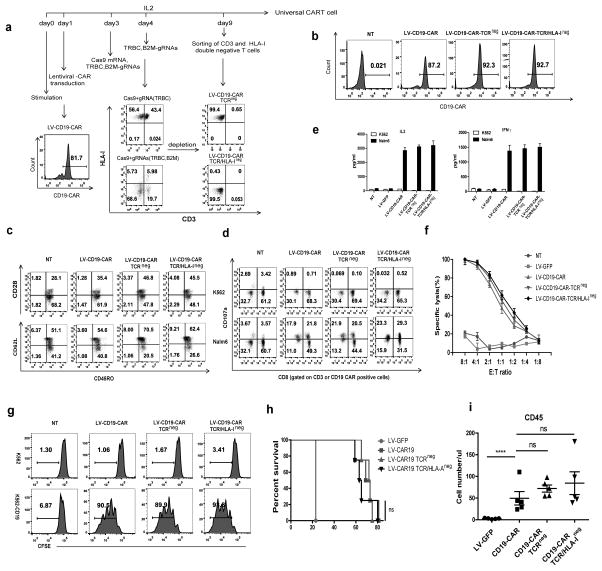
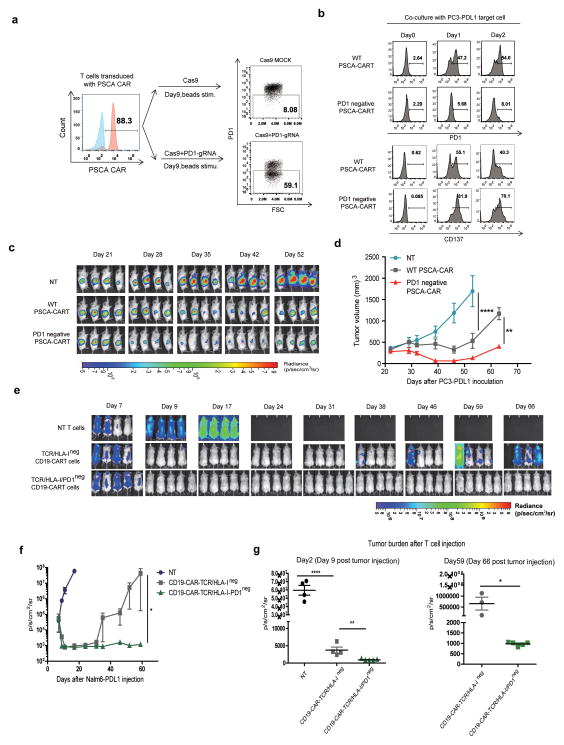
Purpose: Using gene-disrupted allogeneic T cells as universal effector cells provides an alternative and potentially improves current chimeric antigen receptor (CAR) T-cell therapy against cancers and infectious diseases.Experimental Design: The CRISPR/Cas9 system has recently emerged as a simple and efficient way for multiplex genome engineering. By combining lentiviral delivery of CAR and electro-transfer of Cas9 mRNA and gRNAs targeting endogenous TCR, β-2 microglobulin (B2M) and PD1 simultaneously, to generate gene-disrupted allogeneic CAR T cells deficient of TCR, HLA class I molecule and PD1.Results: The CRISPR gene-edited CAR T cells showed potent antitumor activities, both in vitro and in animal models and were as potent as non-gene-edited CAR T cells. In addition, the TCR and HLA class I double deficient T cells had reduced alloreactivity and did not cause graft-versus-host disease. Finally, simultaneous triple genome editing by adding the disruption of PD1 led to enhanced in vivo antitumor activity of the gene-disrupted CAR T cells.Conclusions: Gene-disrupted allogeneic CAR and TCR T cells could provide an alternative as a universal donor to autologous T cells, which carry difficulties and high production costs. Gene-disrupted CAR and TCR T cells with disabled checkpoint molecules may be potent effector cells against cancers and infectious diseases. Clin Cancer Res; 23(9); 2255-66. ©2016 AACR.
©2016 American Association for Cancer Research.
Conflict of interest statement
X.L., C.H.J. and Y.Z. have financial interests due to intellectual property and patents in the field of cell and gene therapy. Conflicts of interest are managed in accordance with University of Pennsylvania policy and oversight. The other authors declare that they have no competing interests.
Figures
References
-
- Brentjens RJ, Davila ML, Riviere I, Park J, Wang X, Cowell LG, et al. CD19-targeted T cells rapidly induce molecular remissions in adults with chemotherapy-refractory acute lymphoblastic leukemia. Science translational medicine. 2013;5(177):177ra38. doi: 10.1126/scitranslmed.3005930. - DOI - PMC - PubMed
-
- Robbins PF, Morgan RA, Feldman SA, Yang JC, Sherry RM, Dudley ME, et al. Tumor regression in patients with metastatic synovial cell sarcoma and melanoma using genetically engineered lymphocytes reactive with NY-ESO-1. Journal of clinical oncology : official journal of the American Society of Clinical Oncology. 2011;29(7):917–24. doi: 10.1200/JCO.2010.32.2537. - DOI - PMC - PubMed
MeSH terms
Substances
Supplementary concepts
Grants and funding
LinkOut - more resources
Full Text Sources
Other Literature Sources
Research Materials
Miscellaneous
