. 2016 Dec 6;87(23):2443-2450.
doi: 10.1212/WNL.0000000000003397. Epub 2016 Nov 4.

Asymptomatic Alzheimer disease: Defining resilience

Collaborators, Affiliations

Asymptomatic Alzheimer disease: Defining resilience

Timothy J Hohman et al. Neurology. .

Abstract

Objective: To define robust resilience metrics by leveraging CSF biomarkers of Alzheimer disease (AD) pathology within a latent variable framework and to demonstrate the ability of such metrics to predict slower rates of cognitive decline and protection against diagnostic conversion.

Methods: Participants with normal cognition (n = 297) and mild cognitive impairment (n = 432) were drawn from the Alzheimer's Disease Neuroimaging Initiative. Resilience metrics were defined at baseline by examining the residuals when regressing brain aging outcomes (hippocampal volume and cognition) on CSF biomarkers. A positive residual reflected better outcomes than expected for a given level of pathology (high resilience). Residuals were integrated into a latent variable model of resilience and validated by testing their ability to independently predict diagnostic conversion, cognitive decline, and the rate of ventricular dilation.

Results: Latent variables of resilience predicted a decreased risk of conversion (hazard ratio < 0.54, p < 0.0001), slower cognitive decline (β > 0.02, p < 0.001), and slower rates of ventricular dilation (β < -4.7, p < 2 × 10-15). These results were significant even when analyses were restricted to clinically normal individuals. Furthermore, resilience metrics interacted with biomarker status such that biomarker-positive individuals with low resilience showed the greatest risk of subsequent decline.

Conclusions: Robust phenotypes of resilience calculated by leveraging AD biomarkers and baseline brain aging outcomes provide insight into which individuals are at greatest risk of short-term decline. Such comprehensive definitions of resilience are needed to further our understanding of the mechanisms that protect individuals from the clinical manifestation of AD dementia, especially among biomarker-positive individuals.


Figures

Figure 1
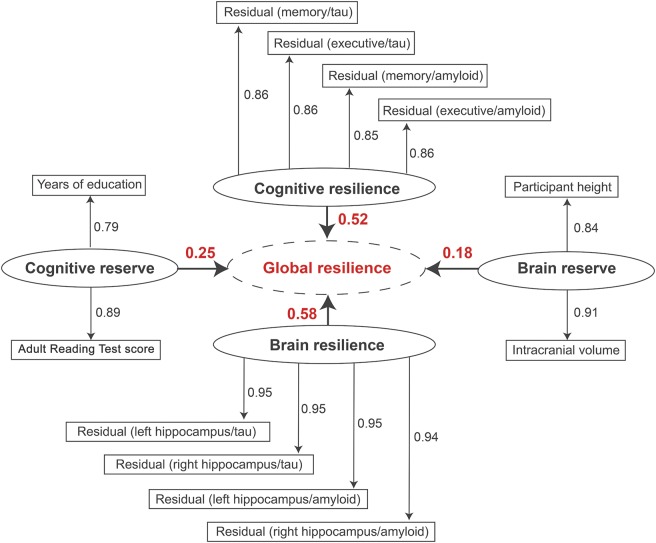
Figure 1. Partial least squares (PLS) path model results
PLS path model results are presented; the goodness of fit was 0.76. Each first-order latent variable is presented as an oval. The variables included in each latent trait are presented as rectangles, and the factor loadings are presented as numbers above each arrow. Arrows are pointing away from the latent trait because we used reflective measurement. For the resilience metrics, each rectangle represents the residuals from a single linear regression model relating the given biomarker to the given outcome. The second-order latent variable (global resilience) is presented as a dotted oval. The loadings for each first-order latent variable are presented numerically above the bold arrows pointing to global resilience.
Figure 2
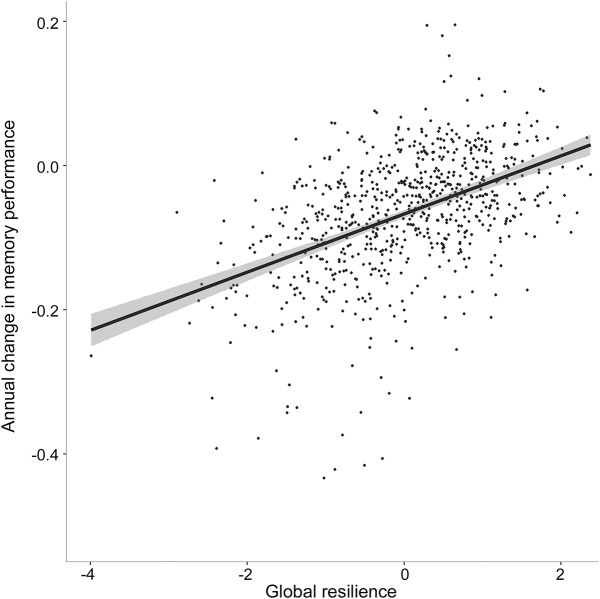
Figure 2. Association between global resilience phenotype and annual change in memory performance
The second-order latent trait global resilience is along the x-axis, and annual change in composite memory performance is along the y-axis. Increased global resilience is associated with a slower trajectory of memory decline.
Figure 3
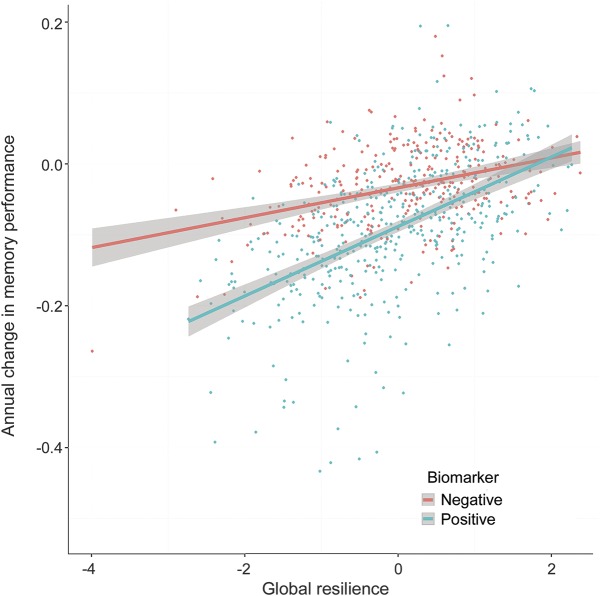
Figure 3. Interaction between global resilience and biomarker positivity on memory trajectories
The second-order latent trait global resilience is along the x-axis, and annual change in composite memory function performance is along the y-axis. Lines are colored by biomarker group where biomarker positive is defined as having a CSF Aβ-42 ≤192 pg/mL or a CSF total tau level ≥93 pg/mL. The association between global resilience and slowed cognitive decline is strongest in biomarker-positive individuals.

References

    1. Roe CM, Xiong C, Miller JP, Morris JC. Education and Alzheimer disease without dementia support for the cognitive reserve hypothesis. Neurology 2007;68:223–228. - PubMed
    1. Stern Y. Cognitive reserve and Alzheimer disease. Alzheimer Dis Assoc Disord 2006;20:112–117. - PubMed
    1. Stern Y. Cognitive reserve. Neuropsychologia 2009;47:2015–2028. - PMC - PubMed
    1. Zahodne LB, Manly JJ, Brickman AM, et al. . Is residual memory variance a valid method for quantifying cognitive reserve? A longitudinal application. Neuropsychologia 2015;77:260–266. - PMC - PubMed
    1. Brickman AM, Siedlecki KL, Muraskin J, et al. . White matter hyperintensities and cognition: testing the reserve hypothesis. Neurobiol Aging 2011;32:1588–1598. - PMC - PubMed

MeSH terms