


Improved glucose metabolism following bariatric surgery is associated with increased circulating bile acid concentrations and remodeling of the gut microbiome
- PMID: 27818587
- PMCID: PMC5075546
- DOI: 10.3748/wjg.v22.i39.8698
Improved glucose metabolism following bariatric surgery is associated with increased circulating bile acid concentrations and remodeling of the gut microbiome
Abstract
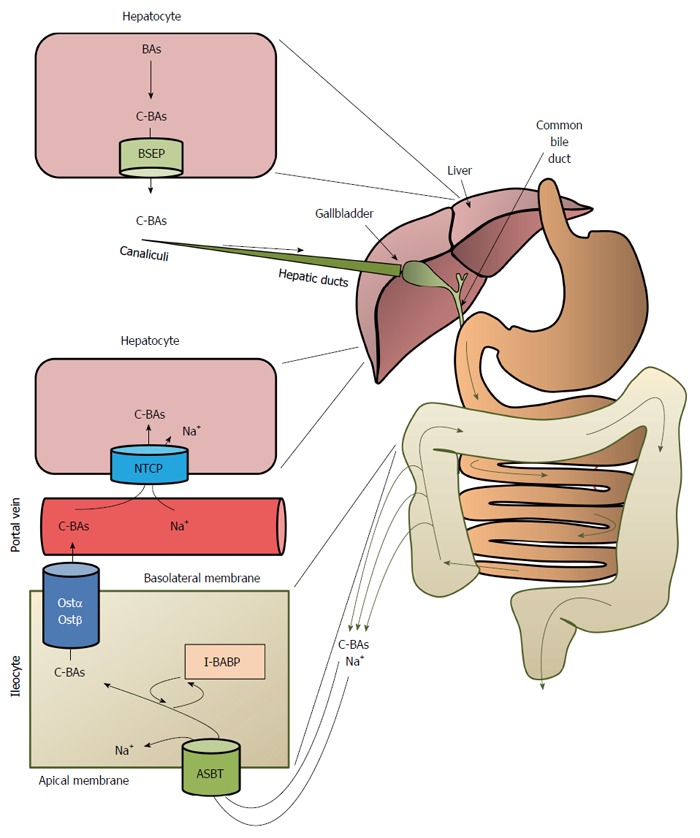
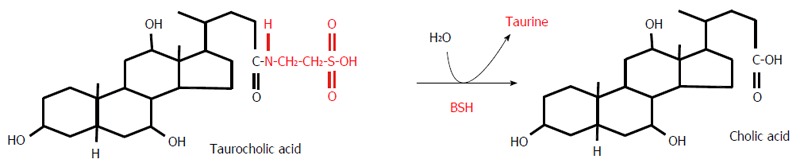
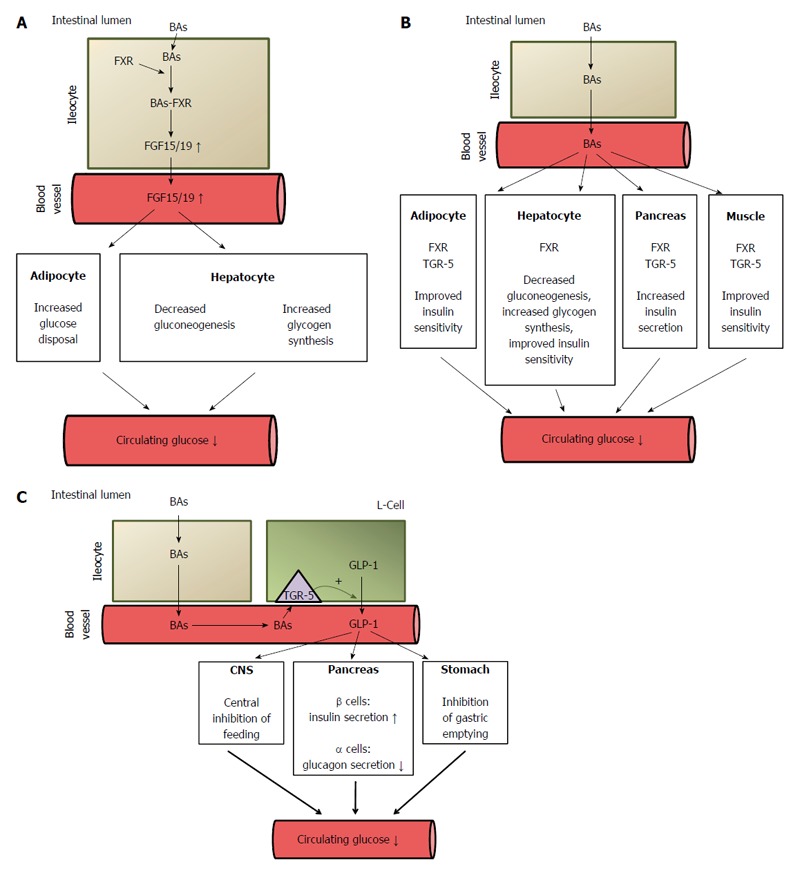
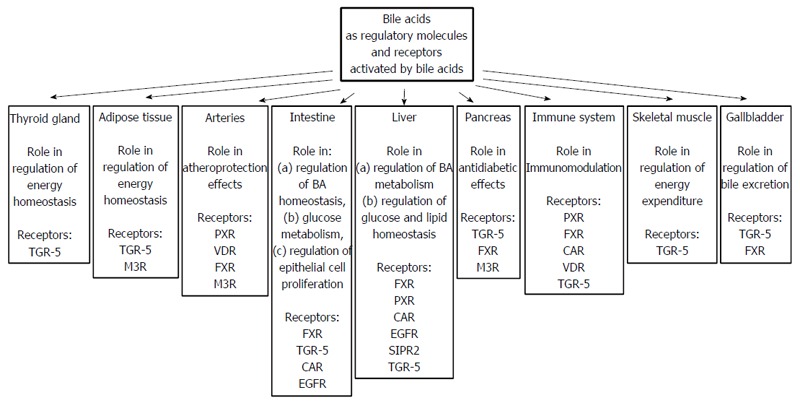
Clinical studies have indicated that circulating bile acid (BA) concentrations increase following bariatric surgery, especially following malabsorptive procedures such as Roux-en-Y gastric bypasses (RYGB). Moreover, total circulating BA concentrations in patients following RYGB are positively correlated with serum glucagon-like peptide-1 concentrations and inversely correlated with postprandial glucose concentrations. Overall, these data suggest that the increased circulating BA concentrations following bariatric surgery - independently of calorie restriction and body-weight loss - could contribute, at least in part, to improvements in insulin sensitivity, incretin hormone secretion, and postprandial glycemia, leading to the remission of type-2 diabetes (T2DM). In humans, the primary and secondary BA pool size is dependent on the rate of biosynthesis and the enterohepatic circulation of BAs, as well as on the gut microbiota, which play a crucial role in BA biotransformation. Moreover, BAs and gut microbiota are closely integrated and affect each other. Thus, the alterations in bile flow that result from anatomical changes caused by bariatric surgery and changes in gut microbiome may influence circulating BA concentrations and could subsequently contribute to T2DM remission following RYGB. Research data coming largely from animal and cell culture models suggest that BAs can contribute, via nuclear farnezoid X receptor (FXR) and membrane G-protein-receptor (TGR-5), to beneficial effects on glucose metabolism. It is therefore likely that FXR, TGR-5, and BAs play a similar role in glucose metabolism following bariatric surgery in humans. The objective of this review is to discuss in detail the results of published studies that show how bariatric surgery affects glucose metabolism and subsequently T2DM remission.
Keywords: Bariatric surgery; Bile acids; Gut microbiota; RXR; Roux-en-Y gastric bypasses; TGR-5; Type-2 diabetes.
Conflict of interest statement
Conflict-of-interest statement: The authors declare no conflict of interest.
Figures
References
-
- Ng M, Fleming T, Robinson M, Thomson B, Graetz N, Margono C, Mullany EC, Biryukov S, Abbafati C, Abera SF, et al. Global, regional, and national prevalence of overweight and obesity in children and adults during 1980-2013: a systematic analysis for the Global Burden of Disease Study 2013. Lancet. 2014;384:766–781. - PMC - PubMed
-
- Kaska L, Mika A, Stepnowski P, Proczko M, Ratnicki-Sklucki K, Sledzinski T, Goyke E, Swierczynski J. The relationship between specific Fatty acids of serum lipids and serum high sensitivity C- reactive protein levels in morbidly obese women. Cell Physiol Biochem. 2014;34:1101–1108. - PubMed
-
- Sledzinski T, Sledzinski M, Smolenski RT, Swierczynski J. Increased serum nitric oxide concentration after bariatric surgery--a potential mechanism for cardiovascular benefit. Obes Surg. 2010;20:204–210. - PubMed
-
- Swierczynski J, Sledzinski T, Slominska E, Smolenski R, Sledzinski Z. Serum phenylalanine concentration as a marker of liver function in obese patients before and after bariatric surgery. Obes Surg. 2009;19:883–889. - PubMed
-
- Swierczynski J, Sledzinski T. The Role of Adipokines and Gastrointestinal Tract Hormones in Obesity. In. Karcz K, Thomusch O, editors. Principles of metabolic surgery: Springer; 2012.
Publication types
MeSH terms
Substances
LinkOut - more resources
Full Text Sources
Other Literature Sources
Medical
Research Materials
