


Incidence and risk factor prevalence of community-acquired pneumonia in adults in primary care in Spain (NEUMO-ES-RISK project)
- PMID: 27821085
- PMCID: PMC5100110
- DOI: 10.1186/s12879-016-1974-4
Incidence and risk factor prevalence of community-acquired pneumonia in adults in primary care in Spain (NEUMO-ES-RISK project)
Erratum in
-
Erratum to: Incidence and risk factor prevalence of community-acquired pneumonia in adults in primary care in Spain (NEUMO-ES-RISK project).BMC Infect Dis. 2017 Jan 12;17(1):64. doi: 10.1186/s12879-016-2134-6. BMC Infect Dis. 2017. PMID: 28081718 Free PMC article. No abstract available.
Abstract
Background: Community-acquired pneumonia (CAP) is a major cause of morbidity and mortality in adults even in developed countries. Several lifestyle factors and comorbidities have been linked to an increased risk, although their prevalence has not been well documented in the primary care setting. The aim of this study is to assess the incidence, risk factor and comorbid conditions distribution of CAP in adults in primary care in Spain.
Methods: Retrospective observational study in adults (>18 years-old) with CAP diagnosed and attended at primary care in Spain between 2009 and 2013, using the Computerized Database for Pharmacoepidemiological Studies in Primary Care (BIFAP).
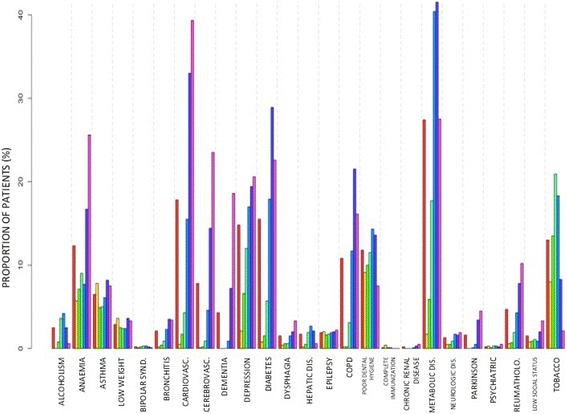
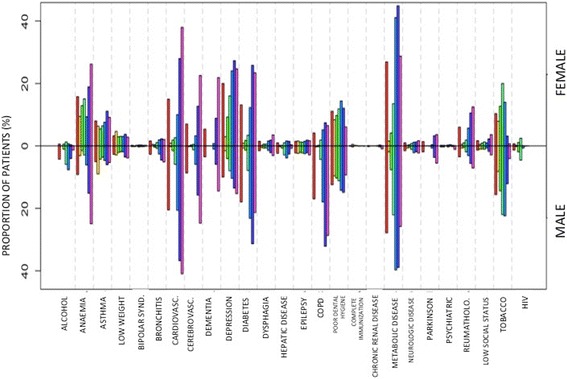
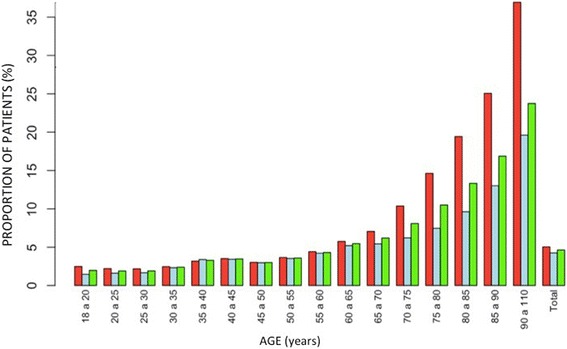
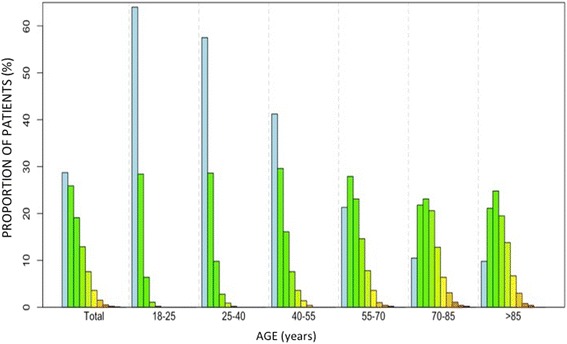
Results: Twenty-eight thousand four hundred thirteen patient records were retrieved and analyzed. Mean age (standard deviation): 60.5 (20.3) years, 51.7 % males. Global incidence of CAP in adults was estimated at 4.63 per 1000 persons/year. CAP incidence increased progressively with age, ranging from a 1.98 at 18-20 years of age to 23.74 in patients over 90 years of age. According to sex, global CAP incidence was slightly higher in males (5.04) than females (4.26); CAP incidence from 18 to 65 year-olds up was comparable between males (range: 2.18-5.75) and females (range: 1.47-5.21), whereas from 65 years of age, CAP incidence was noticeable higher in males (range: 7.06-36.93) than in females (range: 5.43-19.62). Average prevalence of risk factors was 71.3 %, which increased with age, doubling the risk in males by the age of 75 (females 20 % vs males 40 %). From 55 years of age, at least one risk factor was identified in 85.7 % of cases: one risk factor (23.8 %), two risk factors (23.4 %), three or more risk factors (38.5 %). Major risk factors were: metabolic disease (27.4 %), cardiovascular disease (17.8 %) and diabetes (15.5 %).
Conclusions: The annual incidence of CAP in primary care adults in Spain is high, comparable between males and females up to 65 years of age, but clearly increasing in males from that age. CAP risk increases with age and doubles in males older than 75 years. The majority of CAP cases in patients over 55 years of age is associated to at least one risk factor. The main risk factors associated were metabolic disease, cardiovascular disease, and diabetes.
Keywords: Antibiotics; Community-acquired pneumonia; Incidence; Primary care; Risk factors; Vaccine-preventable diseases.
Figures




References
-
- Blasi F, Mantero M, Santus P, Tarsia P. Understanding the burden of pneumococcal disease in adults. Clin Microbiol Infect. 2015;18(s5):7–14. - PubMed
-
- Lozano R, Naghavi M, Foreman K, Stephen L, Shibuya K, Aboyans V. Global and regional mortality from 235 causes of death for 20 age groups in 1990 and 2010: a systematic analysis for the Global Burden of Disease Study 2010. Lancet. 2012;380:2095–128. doi: 10.1016/S0140-6736(12)61728-0. - DOI - PMC - PubMed
-
- Loddenkemper R, Gibson G, Sibille Y. European lung white book. Brussels: European Respiratory Society and European Lung Foundation, The First Comprehensive Survey on Respiratory Health in Europe, ERSJ Ltd; 2003.
MeSH terms
LinkOut - more resources
Full Text Sources
Other Literature Sources
Medical
Miscellaneous
