Epidemiological Features of Japanese Encephalitis in Taiwan from 2000 to 2014
- PMID: 27821699
- PMCID: PMC5303041
- DOI: 10.4269/ajtmh.16-0330
Epidemiological Features of Japanese Encephalitis in Taiwan from 2000 to 2014
Abstract
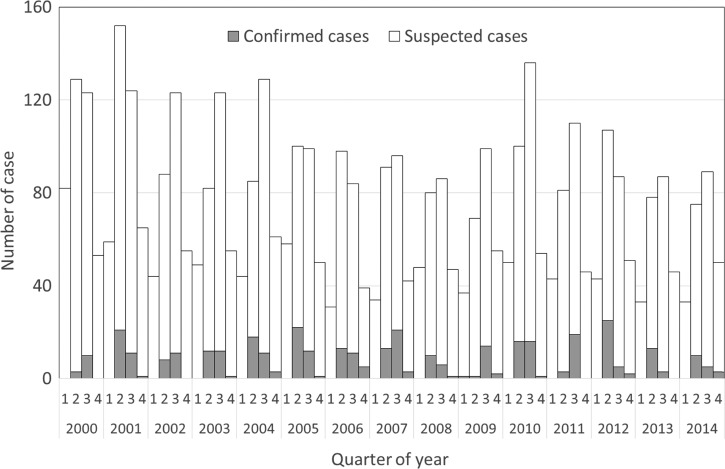
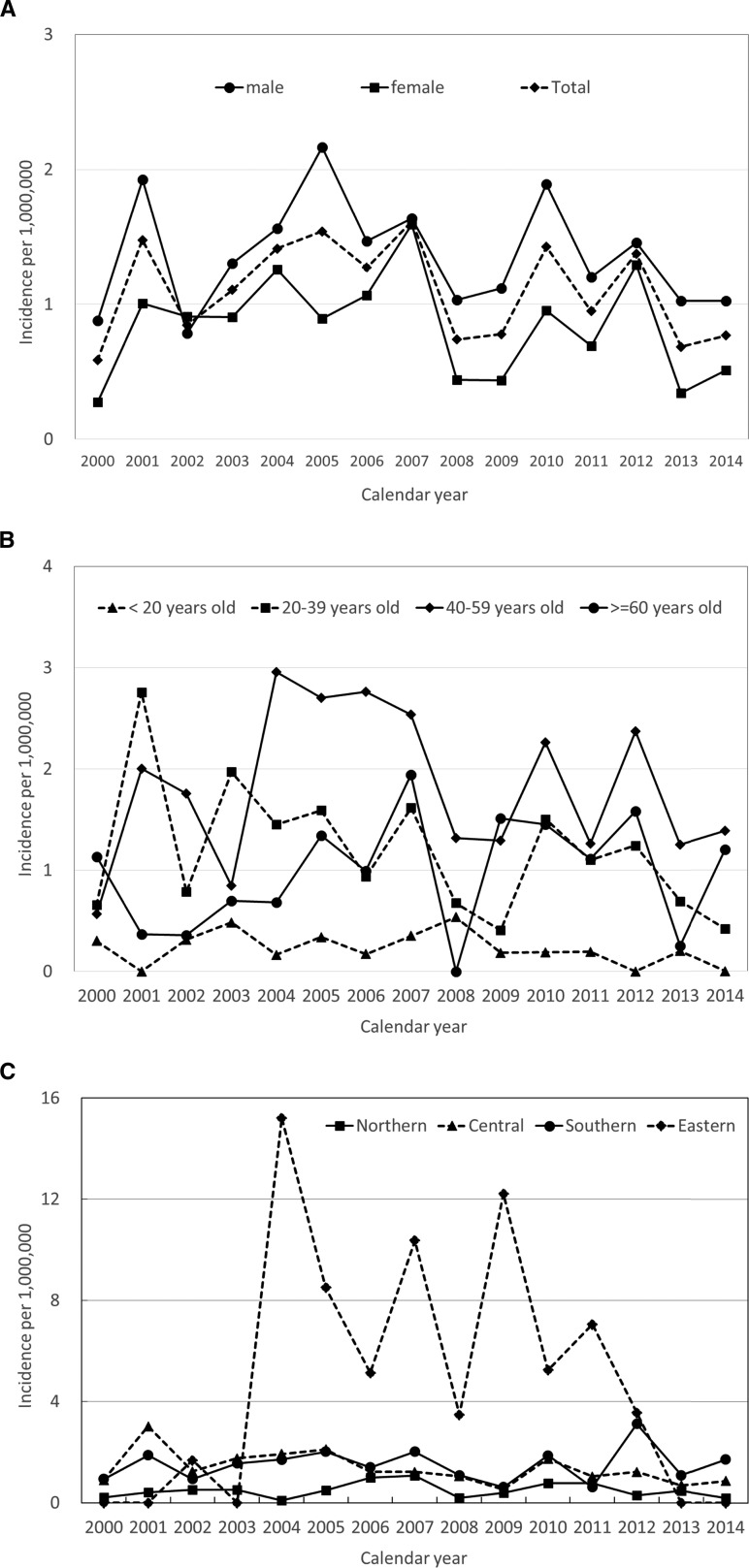
The incidence of Japanese encephalitis (JE) decreased sharply after the national vaccination program was implemented in Taiwan in 1968. However, cases of JE still occur. The purpose of this study was to assess the epidemiology and vaccination policy for JE in Taiwan. We analyzed the data on JE cases reported to the Taiwan Centers for Disease Control (Taiwan CDC) between 2000 and 2014. During the 15-year study period, a total of 4,474 cases were reported to the Taiwan CDC. Of these, 379 (8.5%) were classified as confirmed cases, and 4,095 (91.5%) were classified as suspected cases. The incidence of JE ranged from 0.59 to 1.61 per 1,000,000 people and peaked in 2007. Men had a higher incidence of JE than women (1.37 versus 0.84 per 1,000,000; P = 0.03). Patients who were 40-59 years of age had a higher incidence than did patients younger than 20 years (1.82 versus 0.23; P < 0.001). Patients who lived in the eastern region of Taiwan had the highest incidence rate of JE (P < 0.001). Compared with those who were not vaccinated with the JE vaccine, patients who received four doses of JE vaccine had a lower risk of suffering from death and/or hospitalization (adjusted odds ratio: 0.26; 95% confidence interval: 0.08-0.90; P = 0.04). JE is still a public health problem in Taiwan, and monitoring JE via diagnostic testing to determine the best vaccination program along with enforcing JE vaccine boosters for adults is necessary to eliminate JE in Taiwan.
© The American Society of Tropical Medicine and Hygiene.
Figures
References
-
- Lindenbach B, Rice C. Flaviviridae: the viruses and their replication. In: Fields BN, Howley PM, Griffin DE, Lamb RA, Martin MA, Roizman B, Stratus S, Knipe D, editors. Fields Virology. 4th edition. Philadelphia, PA: Lippincott Williams and Wilkins; 2001. pp. 991–1041.
-
- Vaughn DW, Hoke CJ. The epidemiology of Japanese encephalitis prospects for prevention. Epidemiol Rev. 1992;14:197–221. - PubMed
Publication types
MeSH terms
Substances
LinkOut - more resources
Full Text Sources
Other Literature Sources
Medical