


A Systematic Review of the Relationship between Familism and Mental Health Outcomes in Latino Population
- PMID: 27826269
- PMCID: PMC5078495
- DOI: 10.3389/fpsyg.2016.01632
A Systematic Review of the Relationship between Familism and Mental Health Outcomes in Latino Population
Abstract
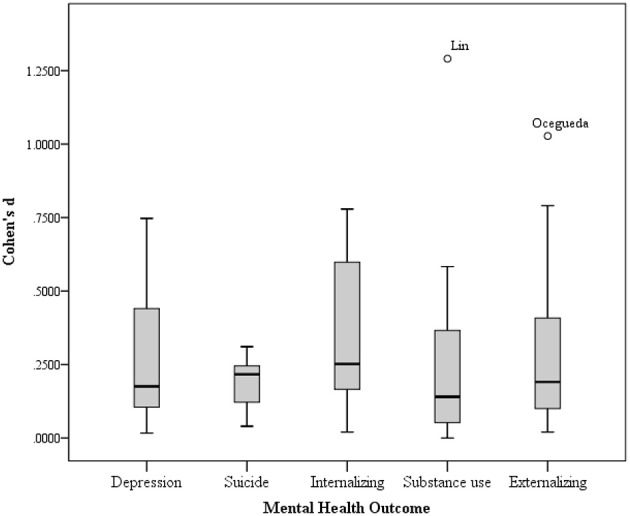
Background:Familismo or familism is a cultural value frequently seen in Hispanic cultures, in which a higher emphasis is placed on the family unit in terms of respect, support, obligation, and reference. Familism has been implicated as a protective factor against mental health problems and may foster the growth and development of children. This study aims at measuring the size of the relationship between familism and mental health outcomes of depression, suicide, substance abuse, internalizing, and externalizing behaviors. Methods: Thirty-nine studies were systematically reviewed to assess the relationship between familism and mental health outcomes. Data from the studies were comprised and organized into five categories: depression, suicide, internalizing symptoms, externalizing symptoms, and substance use. The Cohen's d of each value (dependent variable in comparison to familism) was calculated. Results were weighted based on sample sizes (n) and total effect sizes were then calculated. It was hypothesized that there would be a large effect size in the relationship between familism and depression, suicide, internalizing, and externalizing symptoms and substance use in Hispanics. Results: The meta-analysis showed small effect sizes in the relationship between familism and depression, suicide and internalizing behaviors. And no significant effects for substance abuse and externalizing behaviors. Discussion: The small effects found in this study may be explained by the presence of moderator variables between familism and mental health outcomes (e.g., communication within the family). In addition, variability in the Latino samples and in the measurements used might explain the small and non-significant effects found.
Keywords: Latino; depression; externalizing; familism; internalizing; substance abuse; suicide.
Figures
References
-
- Achenbach T. M. (1991). Manual for the Child Behavior Checklist/4–18 and 1991 Profile. University of Vermont, Department of Psychology, Burlington.
-
- Achenbach T. M., Rescorla L. A. (2001). Manual for the ASEBA School-Age Forms & Profiles. University of Vermont, Research Center for Children, Youth & Families, Burlington.
-
- American Psychiatric Association (APA) (2014). Mental Health Disparities: Hispanics/Latinos. APA Fact Sheet: Division of Diversity and Health Equity; Available online at: www.psychiatry.org
-
- Angold A., Costello E., Messer S., Pickles A., Winder F., Silver D. (1995). Development of a short questionnaire for use in epidemiological studies of depression in children and adolescents. Int. J. Methods Psychiatr. Res. 5, 237–249.
Publication types
LinkOut - more resources
Full Text Sources
Other Literature Sources
