


Measuring Sperm DNA Fragmentation and Clinical Outcomes of Medically Assisted Reproduction: A Systematic Review and Meta-Analysis
- PMID: 27832085
- PMCID: PMC5104467
- DOI: 10.1371/journal.pone.0165125
Measuring Sperm DNA Fragmentation and Clinical Outcomes of Medically Assisted Reproduction: A Systematic Review and Meta-Analysis
Abstract
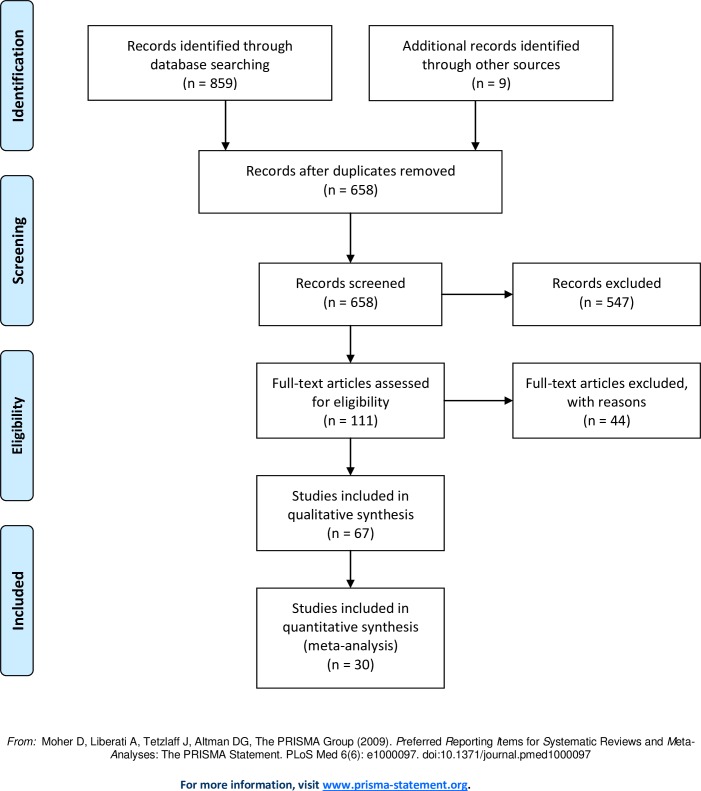
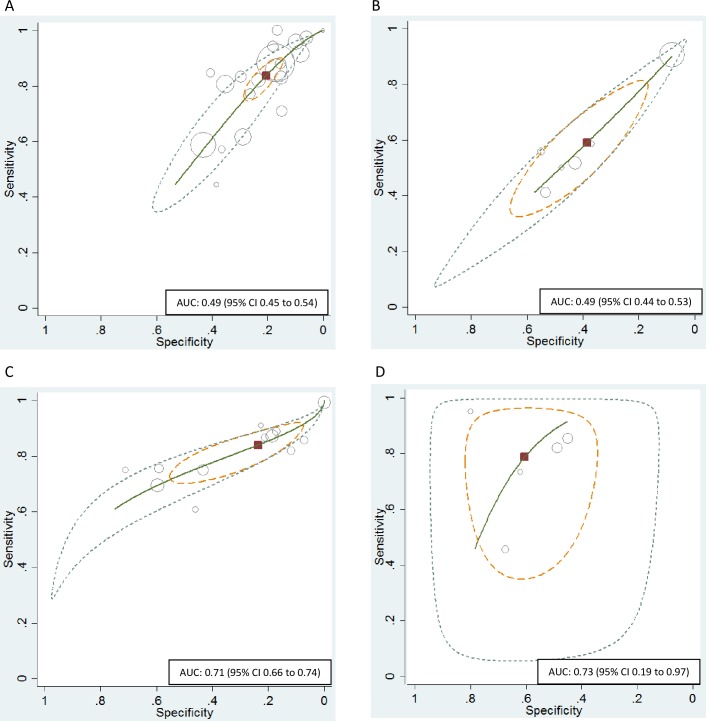
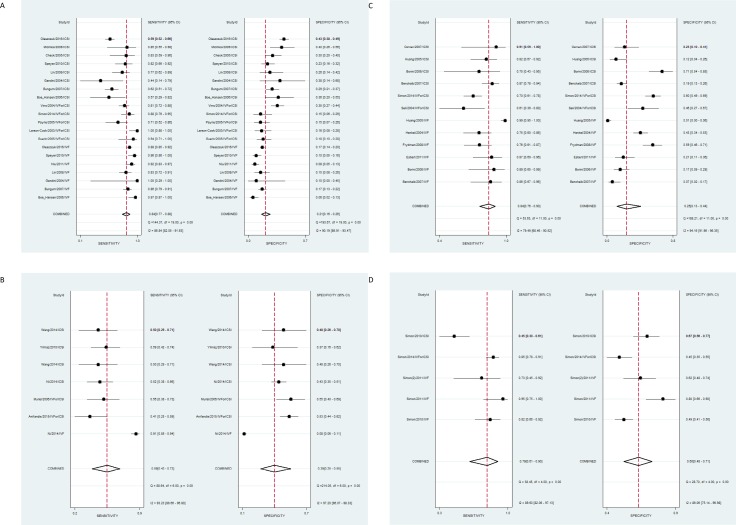
Sperm DNA fragmentation has been associated with reduced fertilization rates, embryo quality, pregnancy rates and increased miscarriage rates. Various methods exist to test sperm DNA fragmentation such as the sperm chromatin structure assay (SCSA), the sperm chromatin dispersion (SCD) test, the terminal deoxynucleotidyl transferase mediated deoxyuridine triphosphate nick end labelling (TUNEL) assay and the single cell gel electrophoresis (Comet) assay. We performed a systematic review and meta-analysis to assess the value of measuring sperm DNA fragmentation in predicting chance of ongoing pregnancy with IVF or ICSI. Out of 658 unique studies, 30 had extractable data and were thus included in the meta-analysis. Overall, the sperm DNA fragmentation tests had a reasonable to good sensitivity. A wide variety of other factors may also affect the IVF/ICSI outcome, reflected by limited to very low specificity. The constructed hierarchical summary receiver operating characteristic (HSROC) curve indicated a fair discriminatory capacity of the TUNEL assay (area under the curve (AUC) of 0.71; 95% CI 0.66 to 0.74) and Comet assay (AUC of 0.73; 95% CI 0.19 to 0.97). The SCSA and the SCD test had poor predictive capacity. Importantly, for the TUNEL assay, SCD test and Comet assay, meta-regression showed no differences in predictive value between IVF and ICSI. For the SCSA meta-regression indicated the predictive values for IVF and ICSI were different. The present review suggests that current sperm DNA fragmentation tests have limited capacity to predict the chance of pregnancy in the context of MAR. Furthermore, sperm DNA fragmentation tests have little or no difference in predictive value between IVF and ICSI. At this moment, there is insufficient evidence to recommend the routine use of sperm DNA fragmentation tests in couples undergoing MAR both for the prediction of pregnancy and for the choice of treatment. Given the significant limitations of the evidence and the methodological weakness and design of the included studies, we do urge for further research on the predictive value of sperm DNA fragmentation for the chance of pregnancy after MAR, also in comparison with other predictors of pregnancy after MAR.
Conflict of interest statement
The authors have declared that no competing interests exist.
Figures
References
-
- Akanji Tijani H, Bhattacharya S. The role of intrauterine insemination in male infertility. Hum Fertil (Camb) 2010; 13(4): 226–32. - PubMed
-
- van Weert JM, Repping S, Van Voorhis BJ, van der Veen F, Bossuyt P, Mol BW. The performance of the postwash total motile sperm count at the time of intrauterine insemination for the prediction of pregnancy: a meta-analysis. Fertil Steril 2004; 82(3): 612–20. 10.1016/j.fertnstert.2004.01.042 - DOI - PubMed
-
- van Weert JM, Repping S, van der Steeg JW, Steures P, van der Veen F, Mol BW. A prediction model for ongoing pregnancy after in vitro fertilization in couples with male subfertility. J Reprod Med 2008; 53(4), 250–6. - PubMed
Publication types
MeSH terms
Substances
LinkOut - more resources
Full Text Sources
Other Literature Sources
