


Intravaginal Practices and Prevalence of Sexual and Reproductive Tract Infections Among Women in Rural Malawi
- PMID: 27835627
- PMCID: PMC5117649
- DOI: 10.1097/OLQ.0000000000000531
Intravaginal Practices and Prevalence of Sexual and Reproductive Tract Infections Among Women in Rural Malawi
Abstract
Background: Many women engage in intravaginal practices (IVP) with a goal of improving genital hygiene and increasing sexual pleasure. Intravaginal practices can disrupt the genital mucosa, and some studies have found that IVP increases risk of acquisition of HIV and bacterial vaginosis (BV). Limited prior research also suggests significant associations between IVP, herpes simplex virus type 2 (HSV-2), and high-risk types of human papillomavirus (HPV).
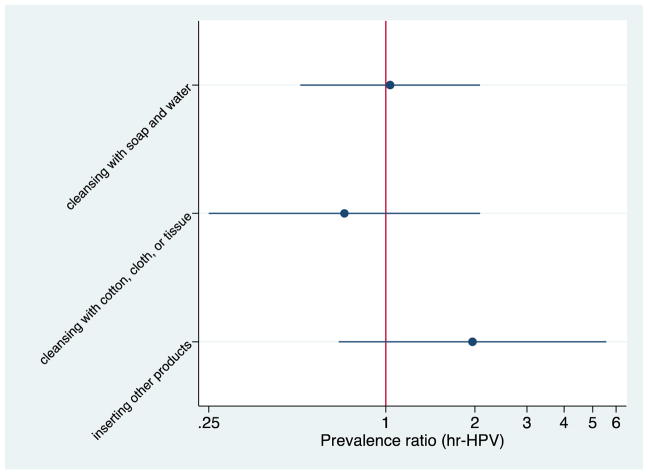
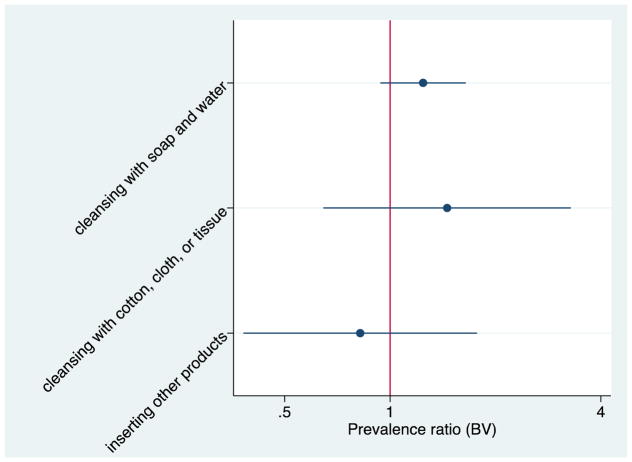
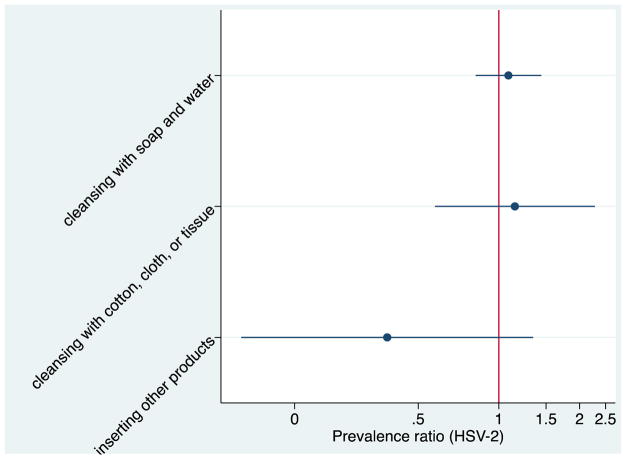
Methods: We examined associations between IVP and HPV, BV, and HSV-2 among 200 women in rural Malawi participating in a clinic-based study on sexual and reproductive tract infections. We calculated prevalence ratios for the associations between frequency and type of IVP and outcomes of HPV, BV, and HSV-2.
Results: Intravaginal practices were commonly performed, with 95% of women reporting current use of at least 1 practice. Infections were also frequently detected: Twenty-two percent of the sample had at least 1 high-risk HPV type, 51% had BV, and 50% were HSV-2 seropositive. We observed no significant associations between type of IVP, frequency of IVP, or a combined measure capturing type and frequency of IVP-and any of the infection outcomes.
Conclusions: Although both IVP and our outcomes of interest (BV, HPV, and HSV-2) were common in the study population, we did not detect associations between IVP type or frequency and any of the 3 infections. However, the high prevalence and frequency of IVP may have limited our ability to detect significant associations.
Conflict of interest statement
No authors have any conflicts of interest to disclose.
Figures
References
-
- Martin Hilber A, Hull TH, Preston-Whyte E, Bagnol B, Smit J, Wacharasin C, et al. A cross cultural study of vaginal practices and sexuality: implications for sexual health. Soc Sci Med. 2010 Feb;70(3):392–400. - PubMed
-
- Hull T, Hilber AM, Chersich MF, Bagnol B, Prohmmo A, Smit Ja, et al. Prevalence, motivations, and adverse effects of vaginal practices in Africa and Asia: findings from a multicountry household survey. J Womens Health 2002. 2011 Jul;20(7):1097–109. - PubMed
-
- Woodsong C, Alleman P. Sexual pleasure, gender power and microbicide acceptability in Zimbabwe and Malawi. AIDS Educ Prev Off Publ Int Soc AIDS Educ. 2008 Apr;20(2):171–87. - PubMed
-
- Esber A, Turner AN, Mopiwa G, Norris AH. Intravaginal practices among a cohort of rural Malawian women. Sex Health. 2016 Apr 14; - PubMed
Publication types
MeSH terms
Grants and funding
LinkOut - more resources
Full Text Sources
Other Literature Sources
Medical
