


Critically ill patients demonstrate large interpersonal variation in intestinal microbiota dysregulation: a pilot study
- PMID: 27837233
- PMCID: PMC5203863
- DOI: 10.1007/s00134-016-4613-z
Critically ill patients demonstrate large interpersonal variation in intestinal microbiota dysregulation: a pilot study
Abstract
Purpose: The intestinal microbiota has emerged as a virtual organ with essential functions in human physiology. Antibiotic-induced disruption of the microbiota in critically ill patients may have a negative influence on key energy resources and immunity. We set out to characterize the fecal microbiota composition in critically ill patients both with and without sepsis and to explore the use of microbiota-derived markers for clinical outcome measurements in this setting.
Methods: In this prospective observational cohort study we analyzed the fecal microbiota of 34 patients admitted to the intensive care unit. Fifteen healthy subjects served as controls. The fecal microbiota was phylogenetically characterized by 16S rRNA gene sequencing, and associations with clinical outcome parameters were evaluated.
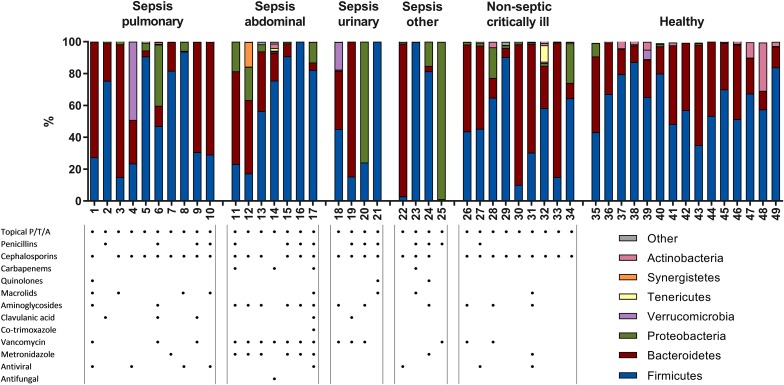
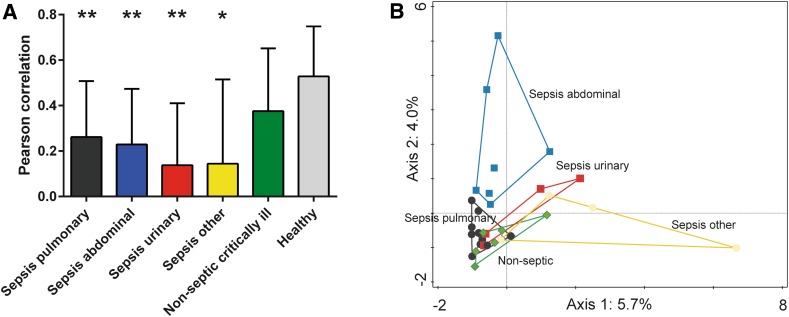
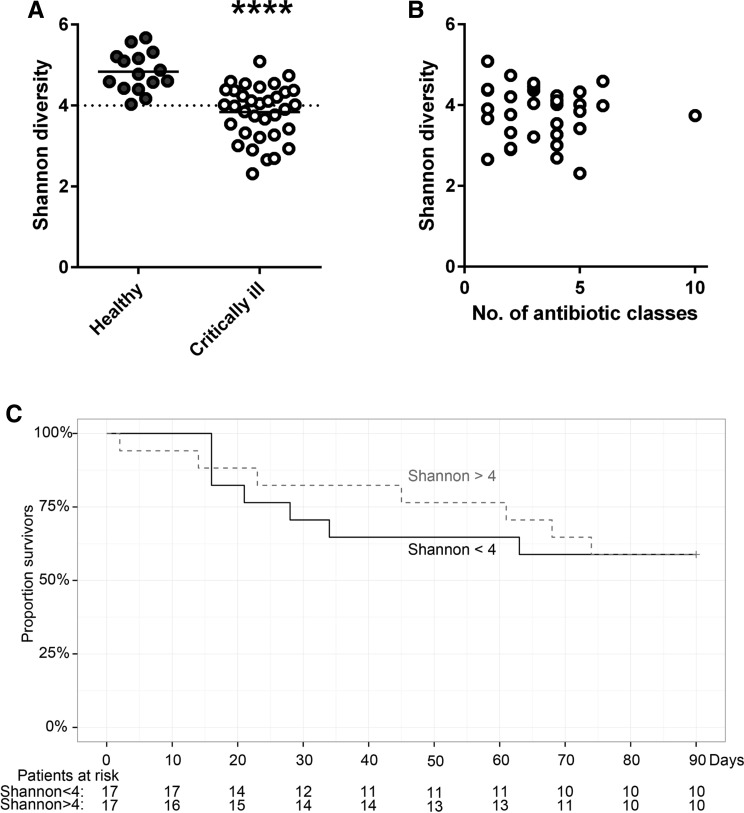
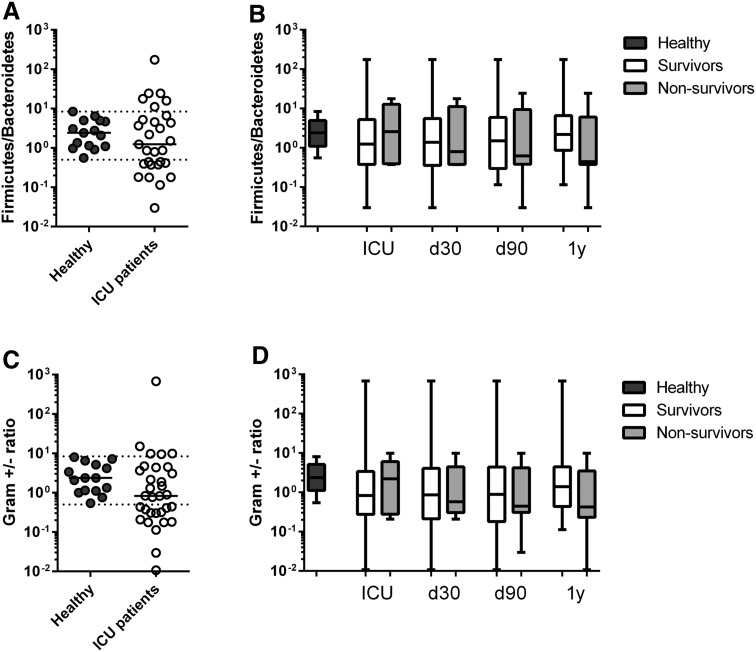
Results: A marked shift in fecal bacterial composition was seen in all septic and non-septic critically ill patients compared with controls, with extreme interindividual differences. In 13 of the 34 patients, a single bacterial genus made up >50% of the gut microbiota; in 4 patients this was even >75%. A significant decrease in bacterial diversity was observed in half of the patients. No associations were found between microbiota diversity, Firmicutes/Bacteroidetes ratio, or Gram-positive/Gram-negative ratio and outcome measurements such as complications and survival.
Conclusions: We observed highly heterogeneous patterns of intestinal microbiota in both septic and non-septic critically ill patients. Nevertheless, some general patterns were observed, including disappearance of bacterial genera with important functions in host metabolism. More detailed knowledge of the short- and long-term health consequences of these major shifts in intestinal bacterial communities is needed.
Keywords: Antibiotics; Critically ill; Gut microbiota; Intensive care unit; Sepsis.
Conflict of interest statement
Compliance with ethical standards Conflicts of interest All authors declare that they have no disclosures.
Figures
Comment in
-
Gut microbiota disruption in critically ill patients : Discussion on "Critically ill patients demonstrate large interpersonal variation of intestinal microbiota dysregulation: a pilot study".Intensive Care Med. 2017 May;43(5):718-719. doi: 10.1007/s00134-017-4713-4. Epub 2017 Feb 23. Intensive Care Med. 2017. PMID: 28233052 No abstract available.
References
-
- Ianiro G, Tilg H, Gasbarrini A (2016) Antibiotics as deep modulators of gut microbiota: between good and evil. Gut. doi:10.1136/gutjnl-2016-312297 - PubMed
-
- Taur Y, Jenq RR, Perales MA, Littmann ER, Morjaria S, Ling L, No D, Gobourne A, Viale A, Dahi PB, Ponce DM, Barker JN, Giralt S, van den Brink M, Pamer EG. The effects of intestinal tract bacterial diversity on mortality following allogeneic hematopoietic stem cell transplantation. Blood. 2014;124:1174–1182. doi: 10.1182/blood-2014-02-554725. - DOI - PMC - PubMed
Publication types
MeSH terms
Substances
LinkOut - more resources
Full Text Sources
Other Literature Sources
Medical
