


The genomic landscape of balanced cytogenetic abnormalities associated with human congenital anomalies
- PMID: 27841880
- PMCID: PMC5307971
- DOI: 10.1038/ng.3720
The genomic landscape of balanced cytogenetic abnormalities associated with human congenital anomalies
Abstract
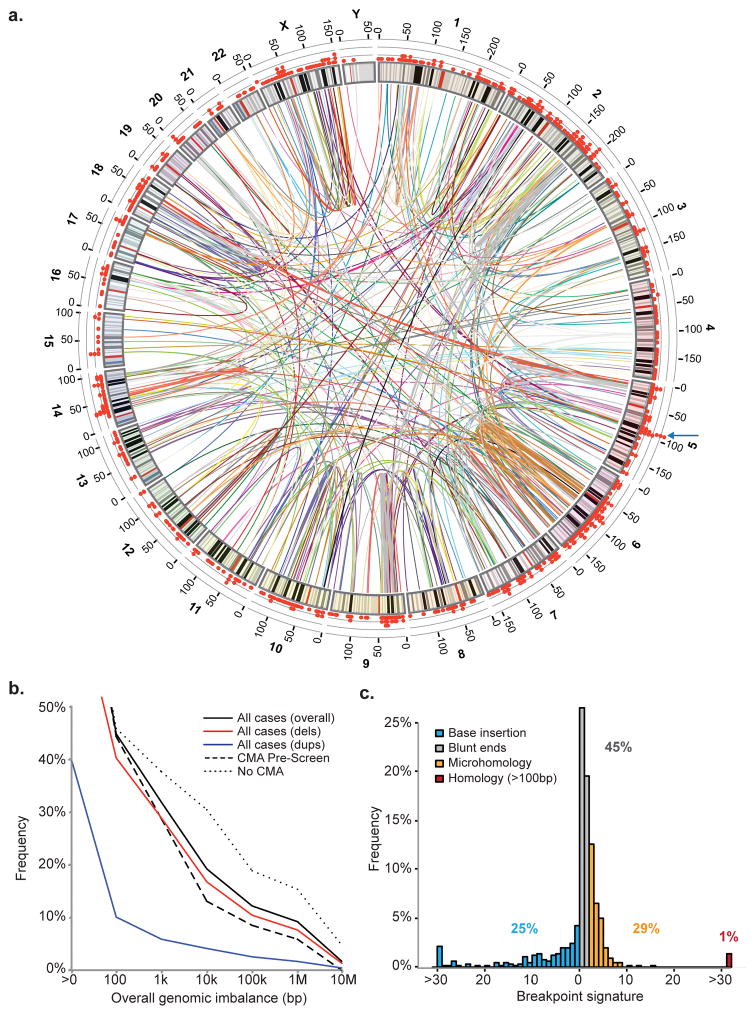
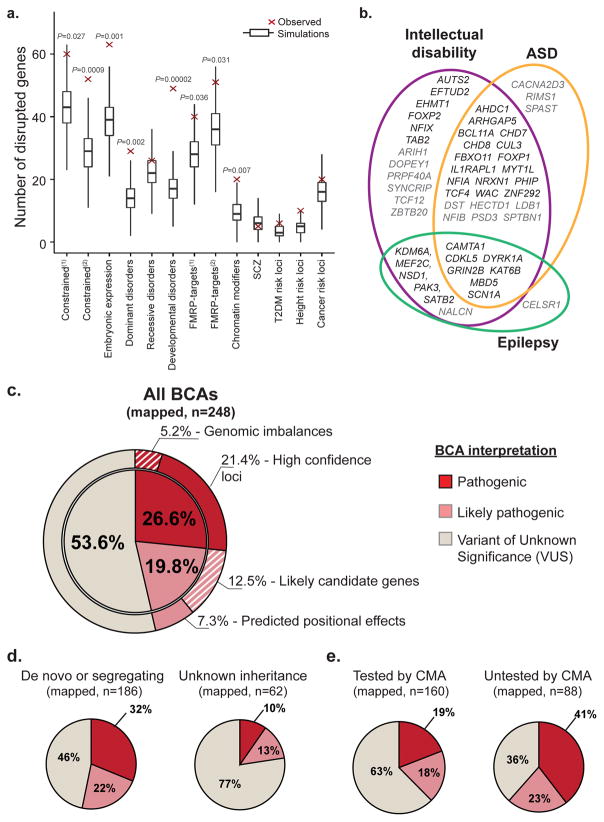
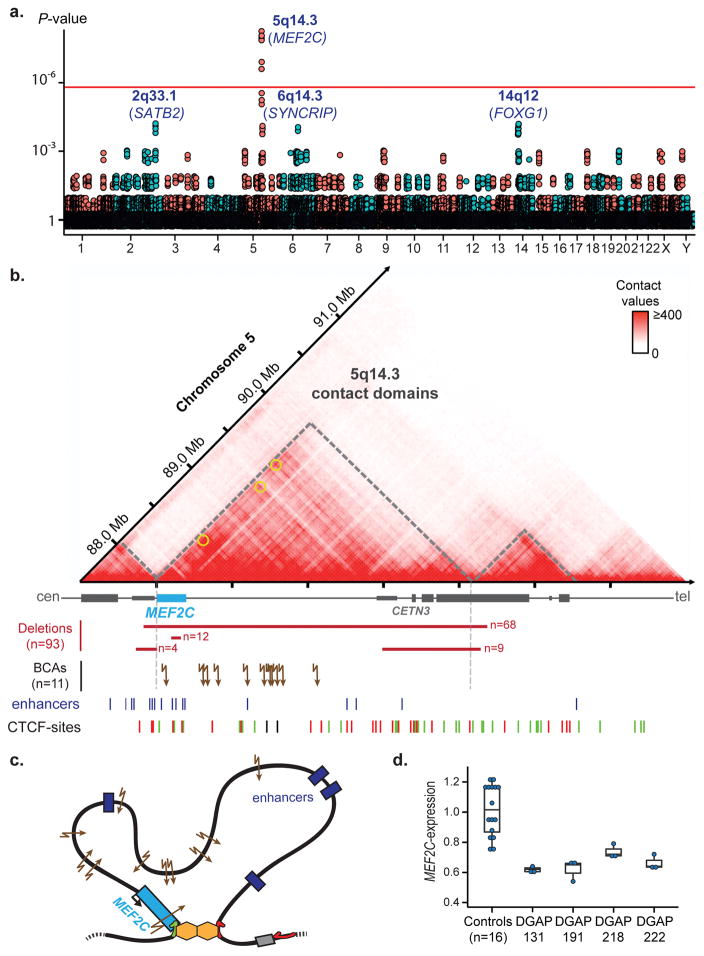
Despite the clinical significance of balanced chromosomal abnormalities (BCAs), their characterization has largely been restricted to cytogenetic resolution. We explored the landscape of BCAs at nucleotide resolution in 273 subjects with a spectrum of congenital anomalies. Whole-genome sequencing revised 93% of karyotypes and demonstrated complexity that was cryptic to karyotyping in 21% of BCAs, highlighting the limitations of conventional cytogenetic approaches. At least 33.9% of BCAs resulted in gene disruption that likely contributed to the developmental phenotype, 5.2% were associated with pathogenic genomic imbalances, and 7.3% disrupted topologically associated domains (TADs) encompassing known syndromic loci. Remarkably, BCA breakpoints in eight subjects altered a single TAD encompassing MEF2C, a known driver of 5q14.3 microdeletion syndrome, resulting in decreased MEF2C expression. We propose that sequence-level resolution dramatically improves prediction of clinical outcomes for balanced rearrangements and provides insight into new pathogenic mechanisms, such as altered regulation due to changes in chromosome topology.
Conflict of interest statement
The authors have none to declare.
Figures
References
-
- Jacobs PA, Melville M, Ratcliffe S, Keay AJ, Syme J. A cytogenetic survey of 11,680 newborn infants. Ann Hum Genet. 1974;37:359–376. - PubMed
-
- Nielsen J, Wohlert M. Chromosome abnormalities found among 34,910 newborn children: results from a 13-year incidence study in Arhus, Denmark. Hum Genet. 1991;87:81–83. - PubMed
-
- Ravel C, Berthaut I, Bresson JL, Siffroi JP Genetics Commission of the French Federation of C. Prevalence of chromosomal abnormalities in phenotypically normal and fertile adult males: large-scale survey of over 10,000 sperm donor karyotypes. Hum Reprod. 2006;21:1484–1489. - PubMed
Publication types
MeSH terms
Substances
Grants and funding
LinkOut - more resources
Full Text Sources
Other Literature Sources
Medical
Research Materials
