


Brain responses to biological motion predict treatment outcome in young children with autism
- PMID: 27845779
- PMCID: PMC5314125
- DOI: 10.1038/tp.2016.213
Brain responses to biological motion predict treatment outcome in young children with autism
Abstract
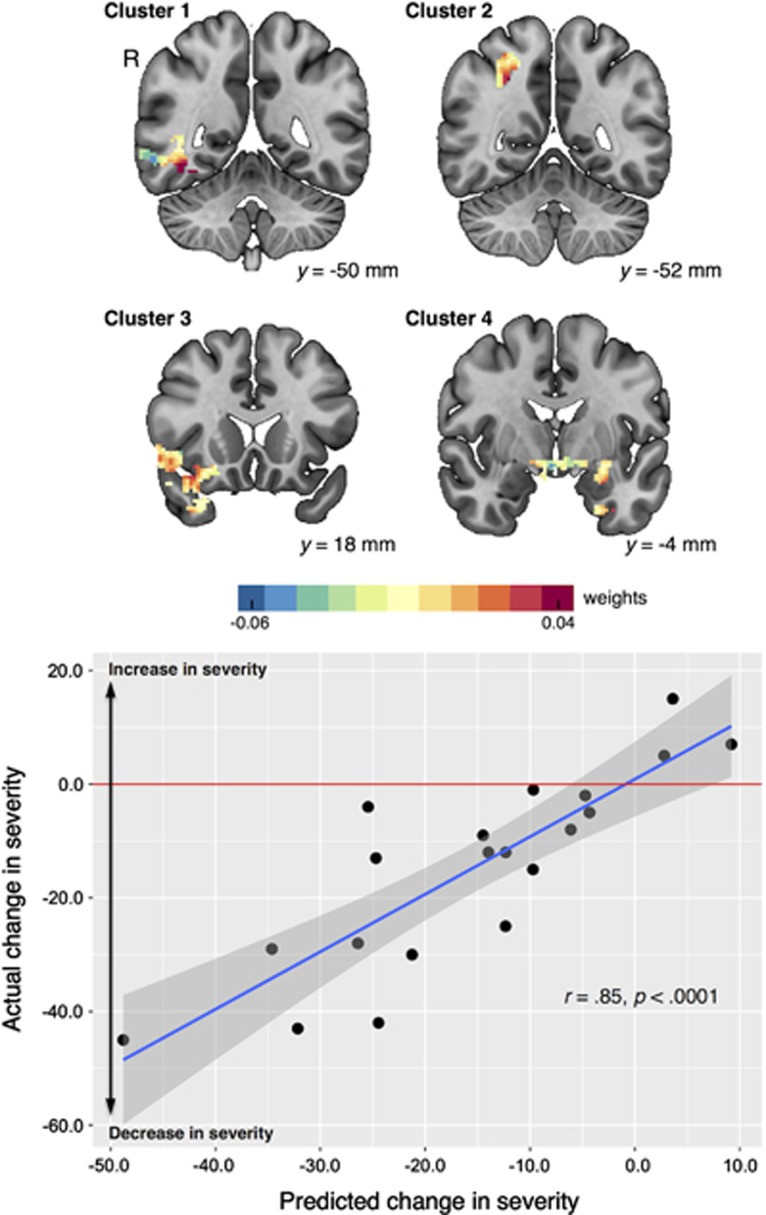
Autism spectrum disorders (ASDs) are common yet complex neurodevelopmental disorders, characterized by social, communication and behavioral deficits. Behavioral interventions have shown favorable results-however, the promise of precision medicine in ASD is hampered by a lack of sensitive, objective neurobiological markers (neurobiomarkers) to identify subgroups of young children likely to respond to specific treatments. Such neurobiomarkers are essential because early childhood provides a sensitive window of opportunity for intervention, while unsuccessful intervention is costly to children, families and society. In young children with ASD, we show that functional magnetic resonance imaging-based stratification neurobiomarkers accurately predict responses to an evidence-based behavioral treatment-pivotal response treatment. Neural predictors were identified in the pretreatment levels of activity in response to biological vs scrambled motion in the neural circuits that support social information processing (superior temporal sulcus, fusiform gyrus, amygdala, inferior parietal cortex and superior parietal lobule) and social motivation/reward (orbitofrontal cortex, insula, putamen, pallidum and ventral striatum). The predictive value of our findings for individual children with ASD was supported by a multivariate pattern analysis with cross validation. Predicting who will respond to a particular treatment for ASD, we believe the current findings mark the very first evidence of prediction/stratification biomarkers in young children with ASD. The implications of the findings are far reaching and should greatly accelerate progress toward more precise and effective treatments for core deficits in ASD.
Conflict of interest statement
The authors declare no conflict of interest.
Figures
References
-
- APADiagnostic and Statistical Manual of Mental Disorders: DSM-5, 5th edn. American Psychiatric Publishing: Washington, DC, USA, 2013, xliv, 947: p.
-
- Ventola P, Friedman HE, Anderson LC, Wolf JM, Oosting D, Foss-Feig J et al. Improvements in social and adaptive functioning following short-duration PRT program: a clinical replication. J Autism Dev Disord 2014; 44: 2862–2870. - PubMed
-
- Insel TR. The NIMH Research Domain Criteria (RDoC) Project: precision medicine for psychiatry. Am J Psychiatry 2014; 171: 395–397. - PubMed
Publication types
MeSH terms
Grants and funding
LinkOut - more resources
Full Text Sources
Other Literature Sources
Medical
