


Writ large: Genomic dissection of the effect of cellular environment on immune response
- PMID: 27846493
- PMCID: PMC5111631
- DOI: 10.1126/science.aaf5453
Writ large: Genomic dissection of the effect of cellular environment on immune response
Abstract
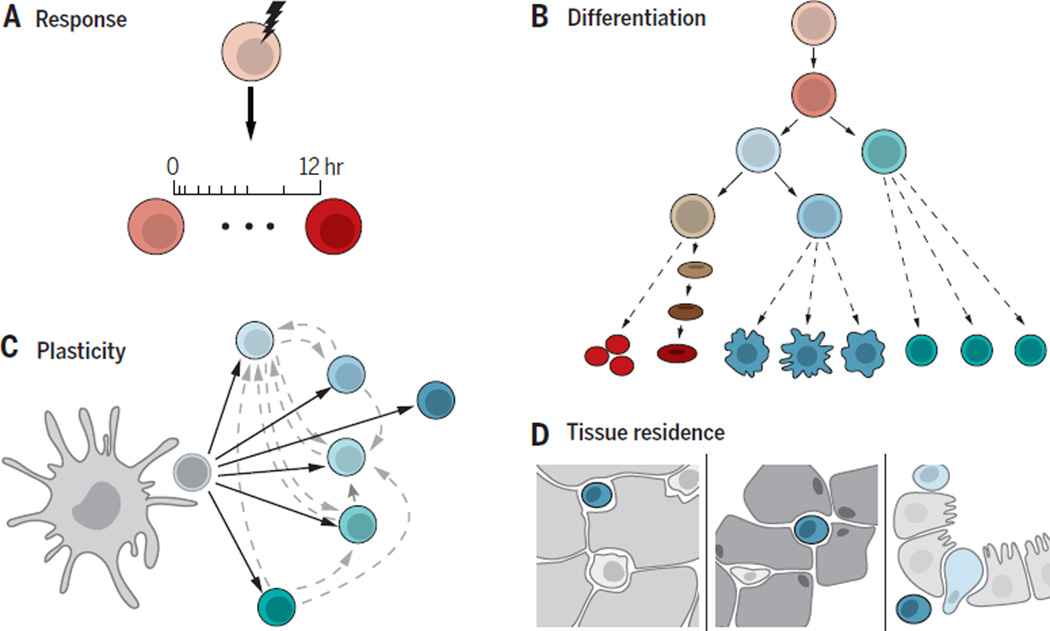
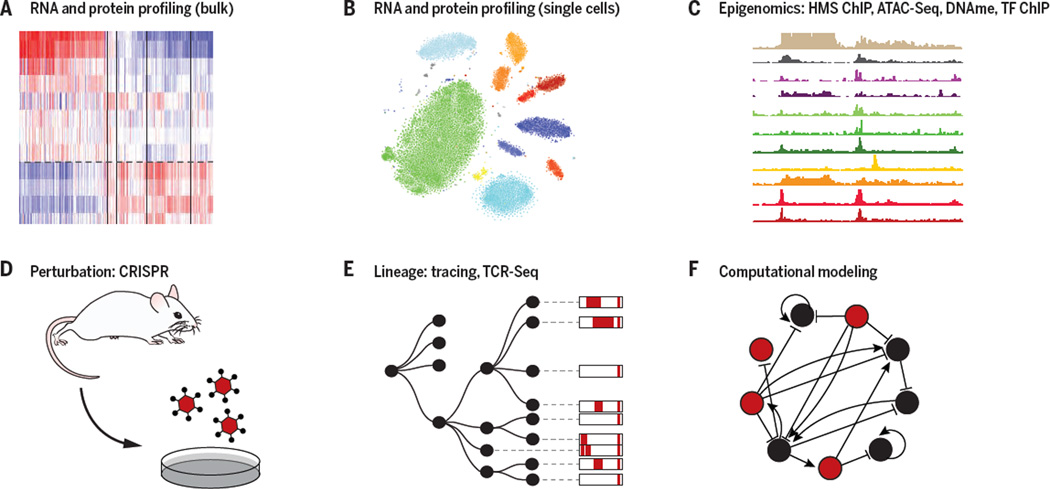
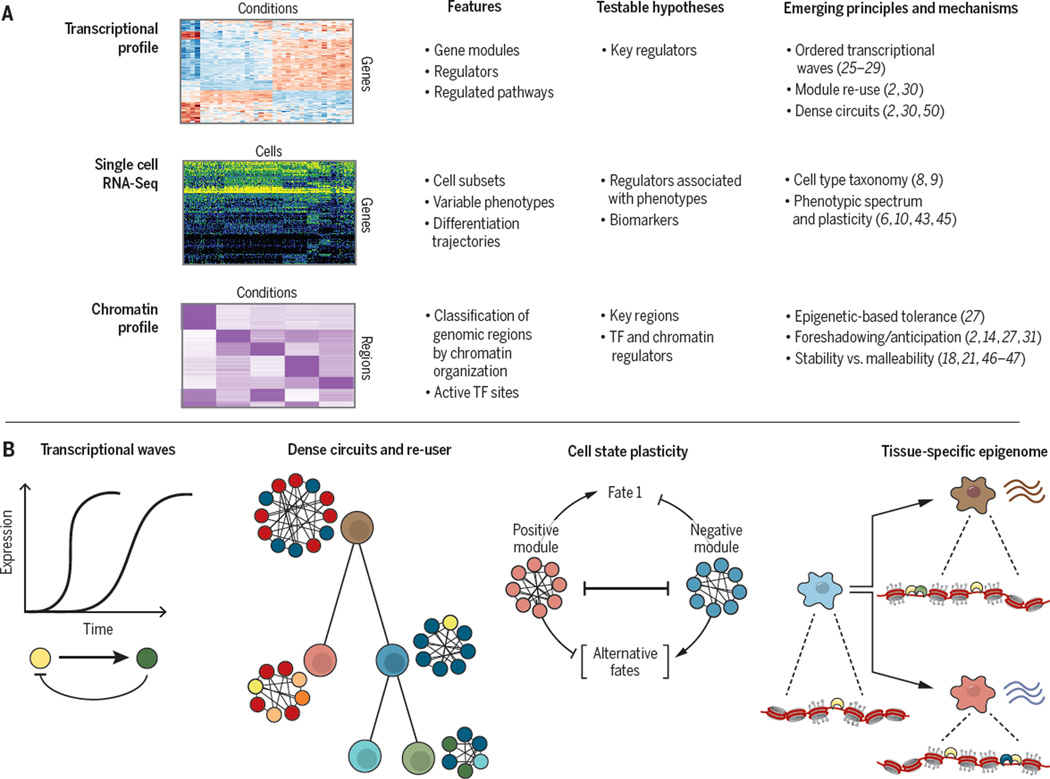
Cells of the immune system routinely respond to cues from their local environment and feed back to their surroundings through transient responses, choice of differentiation trajectories, plastic changes in cell state, and malleable adaptation to their tissue of residence. Genomic approaches have opened the way for comprehensive interrogation of such orchestrated responses. Focusing on genomic profiling of transcriptional and epigenetic cell states, we discuss how they are applied to investigate immune cells faced with various environmental cues. We highlight some of the emerging principles on the role of dense regulatory circuitry, epigenetic memory, cell type fluidity, and reuse of regulatory modules in achieving and maintaining appropriate responses to a changing environment. These provide a first step toward a systematic understanding of molecular circuits in complex tissues.
Copyright © 2016, American Association for the Advancement of Science.
Figures
References
-
- Okabe Y, Medzhitov R. Tissue biology perspective on macrophages. Nature immunology. 2016;17:9–17. published online EpubJan. - PubMed
-
- Novershtern N, Subramanian A, Lawton LN, Mak RH, Haining WN, McConkey ME, Habib N, Yosef N, Chang CY, Shay T, Frampton GM, Drake AC, Leskov I, Nilsson B, Preffer F, Dombkowski D, Evans JW, Liefeld T, Smutko JS, Chen J, Friedman N, Young RA, Golub TR, Regev A, Ebert BL. Densely interconnected transcriptional circuits control cell states in human hematopoiesis. Cell. 2011;144:296–309. published online EpubJan 21. - PMC - PubMed
-
- DuPage M, Bluestone JA. Harnessing the plasticity of CD4(+) T cells to treat immune-mediated disease. Nature reviews. Immunology. 2016;16:149–163. published online EpubMar. - PubMed
Publication types
MeSH terms
Grants and funding
LinkOut - more resources
Full Text Sources
Other Literature Sources
Medical
