. 2016 Nov 16;12(11):e1006029.
doi: 10.1371/journal.ppat.1006029. eCollection 2016 Nov.

Unravelling the Genome-Wide Contributions of Specific 2-Alkyl-4-Quinolones and PqsE to Quorum Sensing in Pseudomonas aeruginosa

Affiliations

Unravelling the Genome-Wide Contributions of Specific 2-Alkyl-4-Quinolones and PqsE to Quorum Sensing in Pseudomonas aeruginosa

Giordano Rampioni et al. PLoS Pathog. .

Abstract

The pqs quorum sensing (QS) system is crucial for Pseudomonas aeruginosa virulence both in vitro and in animal models of infection and is considered an ideal target for the development of anti-virulence agents. However, the precise role played by each individual component of this complex QS circuit in the control of virulence remains to be elucidated. Key components of the pqs QS system are 2-heptyl-4-hydroxyquinoline (HHQ), 2-heptyl-3-hydroxy-4-quinolone (PQS), 2-heptyl-4-hydroxyquinoline N-oxide (HQNO), the transcriptional regulator PqsR and the PQS-effector element PqsE. To define the individual contribution of each of these components to QS-mediated regulation, transcriptomic analyses were performed and validated on engineered P. aeruginosa strains in which the biosynthesis of 2-alkyl-4-quinolones (AQs) and expression of pqsE and pqsR have been uncoupled, facilitating the identification of the genes controlled by individual pqs system components. The results obtained demonstrate that i) the PQS biosynthetic precursor HHQ triggers a PqsR-dependent positive feedback loop that leads to the increased expression of only the pqsABCDE operon, ii) PqsE is involved in the regulation of diverse genes coding for key virulence determinants and biofilm development, iii) PQS promotes AQ biosynthesis, the expression of genes involved in the iron-starvation response and virulence factor production via PqsR-dependent and PqsR-independent pathways, and iv) HQNO does not influence transcription and hence does not function as a QS signal molecule. Overall this work has facilitated identification of the specific regulons controlled by individual pqs system components and uncovered the ability of PQS to contribute to gene regulation independent of both its ability to activate PqsR and to induce the iron-starvation response.


Conflict of interest statement

The authors have declared that no competing interests exist.

Figures
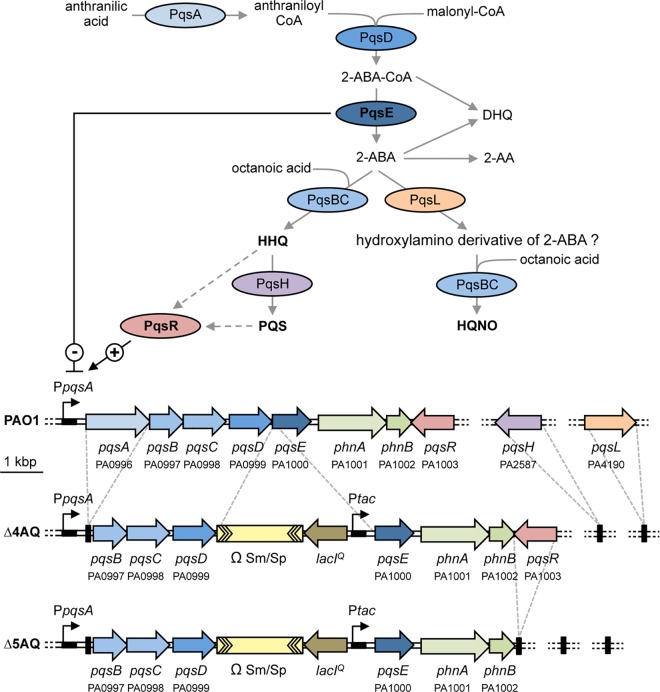
Fig 1
Fig 1. The AQ biosynthetic pathway and pqs genes.
Schematic representation of the AQ biosynthetic pathway and the pqs and phn genes in P. aeruginosa PAO1 and the isogenic ∆4AQ and ∆5AQ mutants. Main elements of the pqs QS system (HHQ, PQS, HQNO, PqsE, and PqsR) are in bold face. The PA number is indicated below the genes according to the Pseudomonas Genome Database [13]. Solid grey arrows represent biosynthesis; dashed grey arrows represent information flow; solid black arrow indicates activation (+); black T-line indicates negative regulation (-).
Fig 2
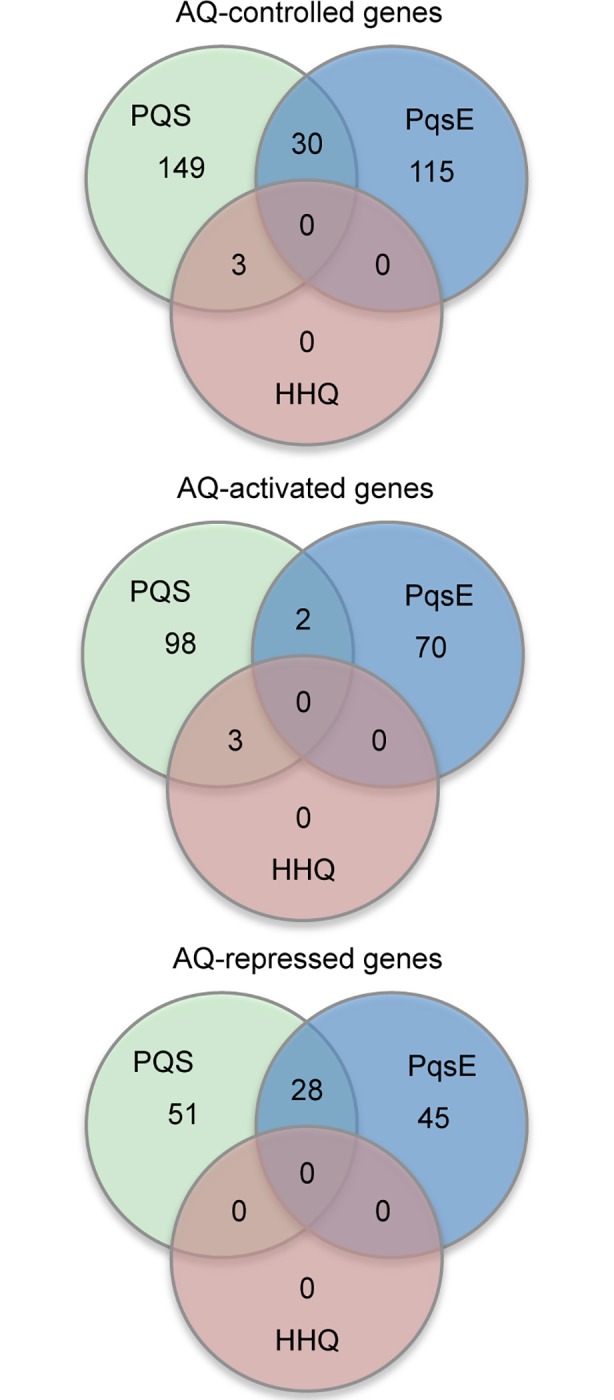
Fig 2. The AQ and PqsE regulons.
Venn diagrams showing the number of genes controlled by HHQ, PQS, and PqsE in P. aeruginosa Δ4AQ, and the overlap between the regulons.
Fig 3
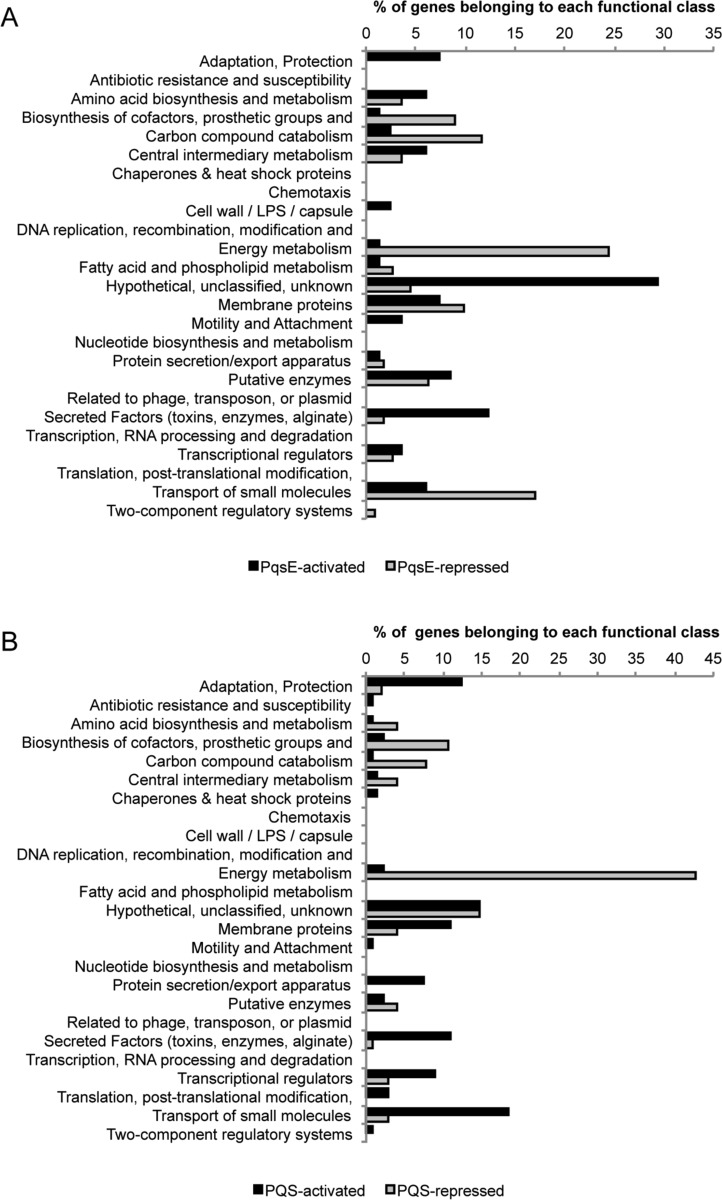
Fig 3. Functional classes of PqsE and PQS controlled genes.
Histograms representing the distribution of (A) PqsE-controlled and (B) PQS-controlled genes according to their functional classification. Functional classes are from the Pseudomonas Genome Database [13].
Fig 4
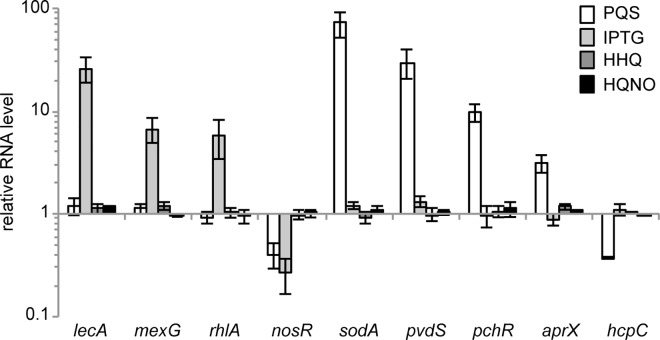
Fig 4. Validation of the microarray data by Real Time PCR.
Relative mRNA levels of the genes indicated quantified by Real Time PCR in the P. aeruginosa ∆4AQ strain grown in LB supplemented with 1 mM IPTG to induce PqsE expression (light-grey bars), or with 40 μM PQS (white bars), HHQ (dark-grey bars), or HQNO (black bars), with respect to the same strain grown in LB. The average of two independent analyses each performed on three technical replicates is shown with standard deviations.
Fig 5
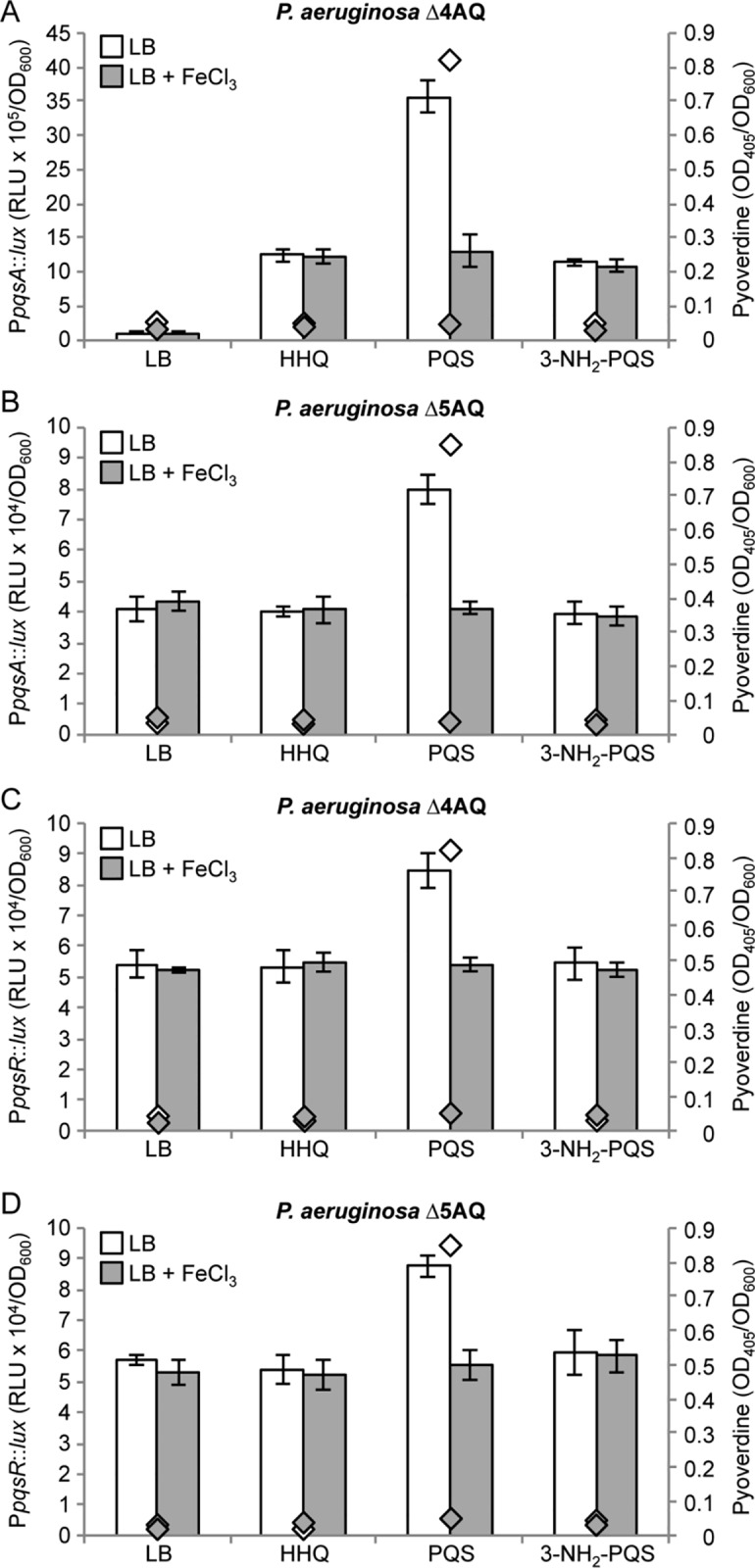
Fig 5. Interplay of HHQ, PQS, PqsR and iron in controlling PpqsA and PpqsR activity.
Maximal promoter activity quantified in the indicated strains carrying the transcriptional fusions PpqsA::lux (A and B) or PpqsR::lux (C and D). Strains were grown in LB or in LB supplemented with 40 μM HHQ, PQS or 3-NH2-PQS, as indicated below the graphs, in the absence (white bars) or presence (grey bars) of 100 μM FeCl3. Diamonds indicate the pyoverdine levels in the absence (white diamonds) or in the presence (grey diamonds) of 100 μM FeCl3. Promoter activity and pyoverdine level are reported as Relative Light Units (RLU) and OD405, respectively, normalized to cell density (OD600). The average of three independent experiments is reported with standard deviations.
Fig 6
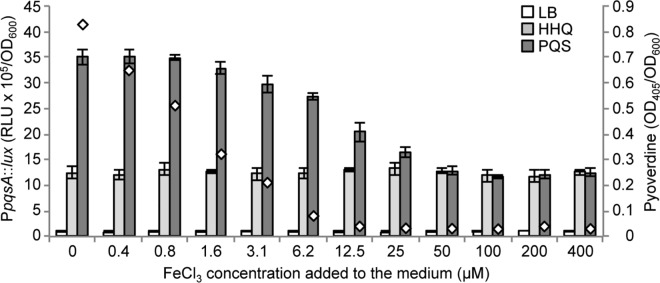
Fig 6. Effect of iron on the ability of PQS to stimulate PpqsA activity.
Maximal PpqsA promoter activity measured in the P. aeruginosa ∆4AQ strain carrying the transcriptional fusion PpqsA::lux, grown in LB (white bars) or in LB supplemented with 40 μM HHQ (light-grey bars) or 40 μM PQS (dark-grey bars), and FeCl3 at the concentration indicated below the graph. White diamonds indicate the pyoverdine level in the supernatants of cultures grown in the presence of PQS with or without FeCl3. Promoter activity and pyoverdine are reported as Relative Light Units (RLU) and OD405, respectively, normalized to cell density (OD600). The average of three independent experiments is reported with standard deviation.
Fig 7
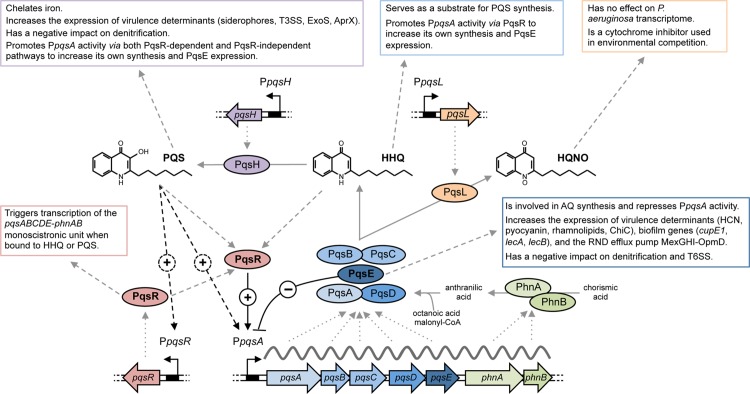
Fig 7. Schematic representation of the pqs QS system in P. aeruginosa.
The core of the pqs QS system is composed of the pqsABCDE-phnAB operon and the pqsR gene. Proteins coded by the pqsABCDE-phnAB operon synthesize HHQ that binds to and activates PqsR. The PqsR-HHQ complex promotes PpqsA activity, thus increasing HHQ and PqsE levels. Notably, the PpqsA promoter is the only target of the PqsR-HHQ complex. Apart from its contribution to HHQ biosynthesis, PqsE influences the P. aeruginosa transcriptome via a still uncharacterized AQ-independent pathway(s). In this way, PqsE up-regulates the expression of genes involved in virulence factor production, biofilm development, and antibiotic resistance. Conversely, PqsE down-regulates PpqsA activity, AQ production and the expression of genes involved in denitrification and T6SS. The pqsH and pqsL genes are required for PQS and HQNO biosynthesis, respectively. HQNO did not affect the P. aeruginosa transcriptome, and probably contributes to environmental competition due to its cytochrome inhibitory activity. PQS chelates iron triggering the iron-starvation response and increasing the transcription of virulence factor genes coding for virulence factors such as pyoverdine, ExoS toxin and AprX protease. Moreover, PQS down-regulates genes involved in denitrification. Most of the regulatory effects exerted by PQS are PqsR-independent, since the PqsR-PQS (or PqsR-HHQ) complex only promotes PpqsA activity. However, PQS also increases PpqsA and PpqsR expression via a PqsR-independent pathway(s) that is unrelated to the iron-starvation response, but is inhibited in the presence of high-iron concentrations. Dotted grey arrows indicate gene expression; solid grey arrows represent biosynthesis; solid black arrow indicates PqsR-dependent activation (+); dashed black arrows indicate PqsR-independent activation (+); black T-line indicates negative regulation (-); dashed grey arrows represent information flow.

References

    1. El Zowalaty ME, Al Thani AA, Webster TJ, El Zowalaty AE, Schweizer HP, Nasrallah GK, et al. Pseudomonas aeruginosa: arsenal of resistance mechanisms, decades of changing resistance profiles, and future antimicrobial therapies. Future Microbiol. 2015;10:1683–706. 10.2217/fmb.15.48 - DOI - PubMed
    1. Gellatly SL, Hancock RE. Pseudomonas aeruginosa: new insights into pathogenesis and host defences. Pathog Dis. 2013;67:159–73. 10.1111/2049-632X.12033 - DOI - PubMed
    1. Dubern JF, Cigana C, De Simone M, Lazenby J, Juhas M, Schwager S, et al. Integrated whole-genome screening for Pseudomonas aeruginosa virulence genes using multiple disease models reveals that pathogenicity is host specific. Environ Microbiol. 2015;17:4379–93. 10.1111/1462-2920.12863 - DOI - PMC - PubMed
    1. Kirisits MJ, Parsek MR. Does Pseudomonas aeruginosa use intercellular signalling to build biofilm communities? Cell Microbiol. 2006;8:1841–9. 10.1111/j.1462-5822.2006.00817.x - DOI - PubMed
    1. Williams P, Cámara M. Quorum sensing and environmental adaptation in Pseudomonas aeruginosa: a tale of regulatory networks and multifunctional signal molecules. Curr Opin Microbiol. 2009;12:182–91. 10.1016/j.mib.2009.01.005 - DOI - PubMed

MeSH terms

LinkOut - more resources