


Enteral High Fat-Polyunsaturated Fatty Acid Blend Alters the Pathogen Composition of the Intestinal Microbiome in Premature Infants with an Enterostomy
- PMID: 27856001
- PMCID: PMC5274578
- DOI: 10.1016/j.jpeds.2016.10.053
Enteral High Fat-Polyunsaturated Fatty Acid Blend Alters the Pathogen Composition of the Intestinal Microbiome in Premature Infants with an Enterostomy
Abstract
Objective: To determine the effect of enteral fish oil and safflower oil supplementation on the intestinal microbiome in infants with an enterostomy born premature.
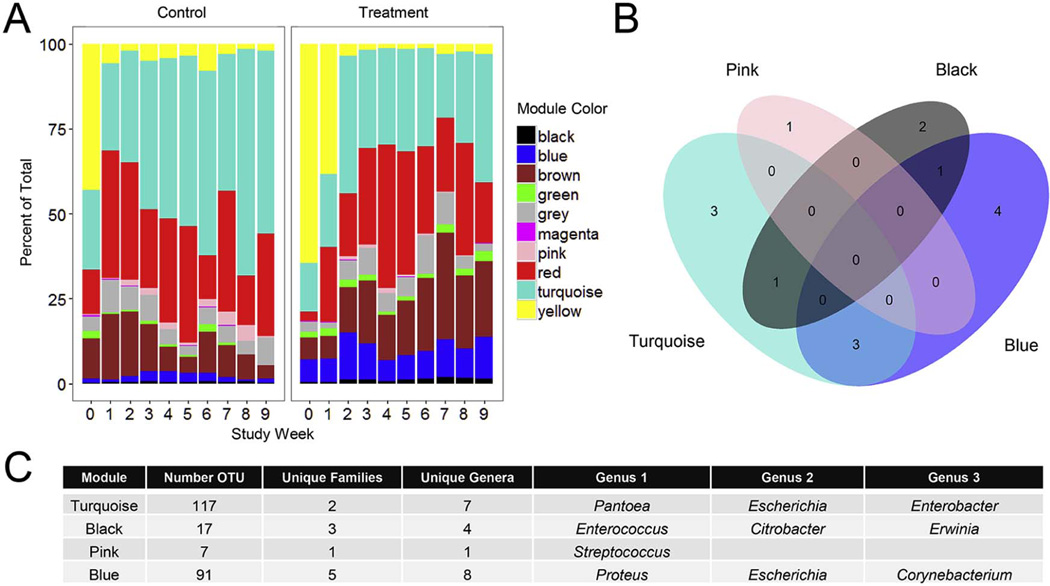
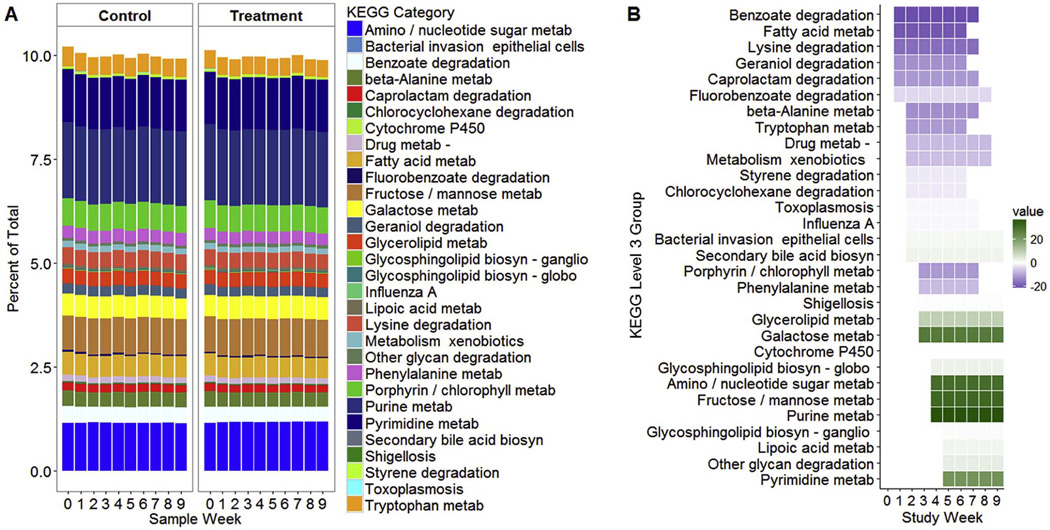
Study design: Infants with an enterostomy born premature were randomized to receive early enteral supplementation with a high-fat polyunsaturated fatty acid (HF-PUFA) blend of fish oil and safflower oil vs standard nutritional therapy. We used 16S rRNA gene sequencing for longitudinal profiling of the microbiome from the time of study entry until bowel reanastomosis. We used weighted gene coexpression network analysis to identify microbial community modules that differed between study groups over time. We performed imputed metagenomic analysis to determine metabolic pathways associated with the microbial genes.
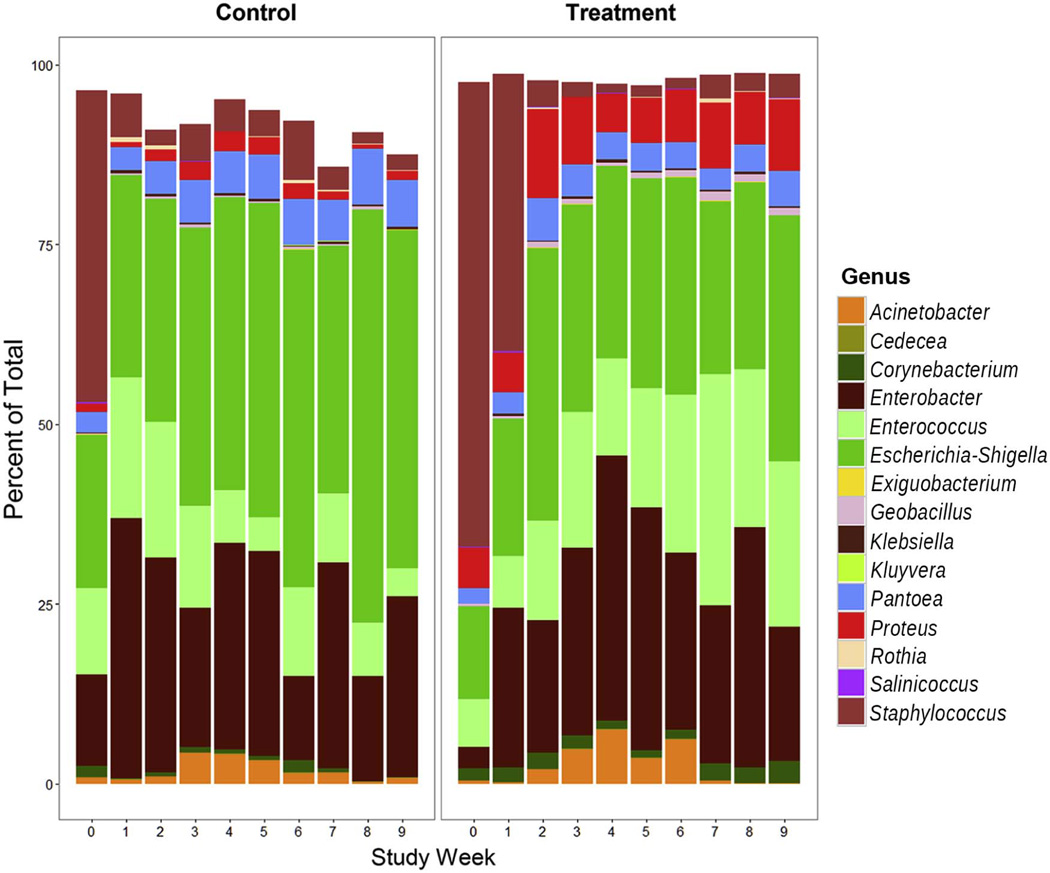
Results: Sixteen infants were randomized to receive enteral HF-PUFA supplementation, and 16 infants received standard care. The intestinal microbiota of infants in the treatment group differed from those in the control group, with greater bacterial diversity and lower abundance of Streptococcus, Clostridium, and many pathogenic genera within the Enterobacteriaceae family. We identified 4 microbial community modules with significant differences between groups over time. Imputed metagenomic analysis of the microbial genes revealed metabolic pathways that differed between groups, including metabolism of amino acids, carbohydrates, fatty acids, and secondary bile acid synthesis.
Conclusion: Enteral HF-PUFA supplementation was associated with decreased abundance of pathogenic bacteria, greater bacterial diversity, and shifts in the potential metabolic functions of intestinal microbiota.
Trial registration: ClinicalTrials.gov:NCT01306838.
Keywords: microbiota; neonate; nutrition.
Copyright © 2016 Elsevier Inc. All rights reserved.
Conflict of interest statement
The authors declare no conflicts of interest.
Figures
References
-
- Blakely ML, Tyson JE, Lally KP, McDonald S, Stoll BJ, Stevenson DK, et al. Laparotomy versus peritoneal drainage for necrotizing enterocolitis or isolated intestinal perforation in extremely low birth weight infants: outcomes through 18 months adjusted age. Pediatrics. 2006;117:e680–e687. - PubMed
-
- Kelly DA. Liver complications of pediatric parenteral nutrition--epidemiology. Nutrition. 1998;14:153–157. - PubMed
-
- Moss RL, Dimmitt RA, Barnhart DC, Sylvester KG, Brown RL, Powell DM, et al. Laparotomy versus peritoneal drainage for necrotizing enterocolitis and perforation. N Engl J Med. 2006;354:2225–2234. - PubMed
-
- Gawecka A, Michalkiewicz J, Kornacka MK, Luckiewicz B, Kubiszewska I. Immunologic properties differ in preterm infants fed olive oil vs soy-based lipid emulsions during parenteral nutrition. JPEN J Parenter Enteral Nutr. 2008;32:448–453. - PubMed
Publication types
MeSH terms
Substances
Associated data
Grants and funding
LinkOut - more resources
Full Text Sources
Other Literature Sources
Medical
Research Materials
Miscellaneous
