


Diagnosis a posteriori? Assessing gestational diabetes screening and management in Morocco
- PMID: 27863534
- PMCID: PMC5116060
- DOI: 10.3402/gha.v9.32511
Diagnosis a posteriori? Assessing gestational diabetes screening and management in Morocco
Abstract
Background: In Morocco, gestational diabetes affects 1 in 10 pregnant women, but knowledge about screening and management practices outside university settings is limited.
Objective: To provide a comprehensive picture about the current situation of screening and management of gestational diabetes at different levels of care and to highlight existing challenges.
Design: We conducted a descriptive mixed methods study in the districts of Al Haouz and Marrakech by using both quantitative and qualitative methods, including document reviews of 369 antenatal cards and 299 hospital files, health facility inventories related to resource availability, 20 key informant interviews as well as focus group discussions with 32 pregnant women and exit interviews with 122 antenatal care (ANC) clients. Quantitative data were descriptively analyzed using STATA Version 13, whereas qualitative data were thematically analyzed using NVIVO Version 10.
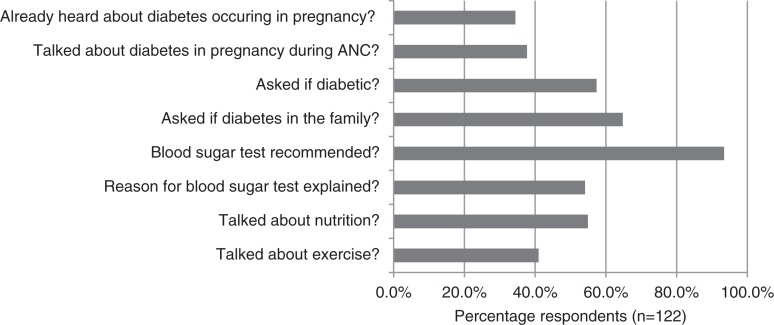
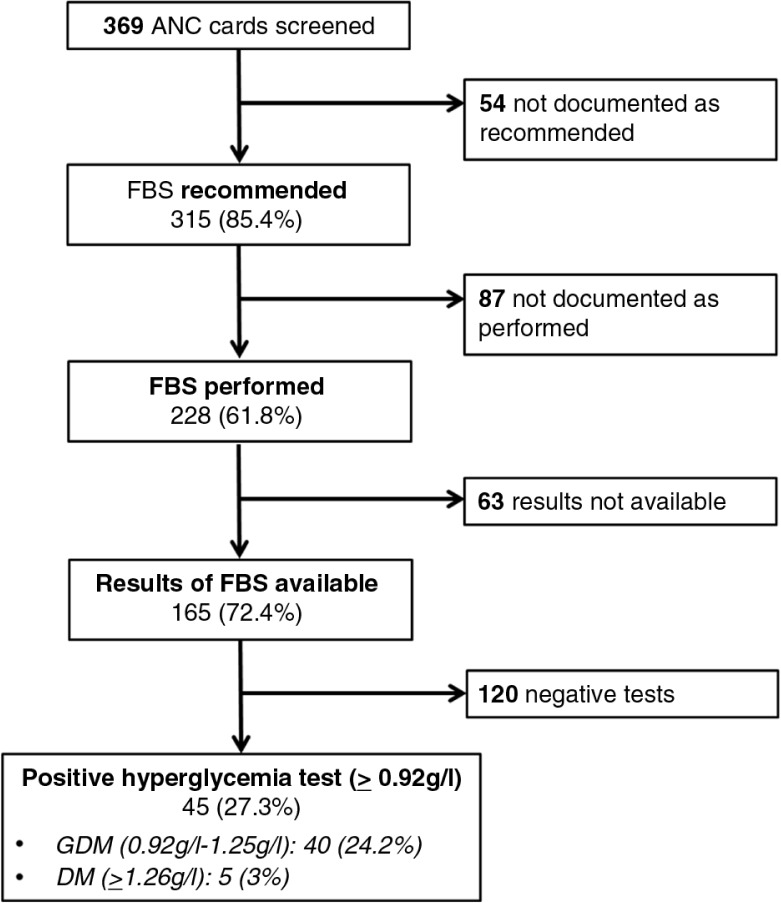
Results: The findings revealed that sensitization of women about gestational diabetes is low, and only 34.4% have ever heard about it before attending ANC. Fasting blood sugar is used for screening, and women are sent to external laboratories for testing. A fasting blood sugar of 0.92 g/l and above was documented in 12.3% of all antenatal cards examined. Women diagnosed with gestational diabetes are usually referred to a specialist despite general practitioners at health center level being responsible for the management of non-pregnant diabetic patients.
Conclusions: Decentralization of screening for gestational diabetes and initial management of uncomplicated cases at the primary level of care could ease access to care and reduce the number of mothers who are diagnosed after a complication occurred.
Keywords: Morocco; diabetes; management; maternal health; pregnancy; screening.
Conflict of interest statement
and funding Financial support to conduct the study was provided by United Nations Population Fund and the Ministry of Health Morocco (project MOR08SMH/DIABETE ENSP) and from FP7-PEOPLE-2013-IRSES Marie Curie Actions project funded by the European Union, grant agreement no. 612216. The funders had no role in study design, data collection and analysis, decision to publish, or preparation of the manuscript.
Figures
References
-
- Vos T, Barber RM, Bell B, Bertozzi-Villa A, Biryukov S, Bolliger I, et al. Global, regional, and national incidence, prevalence, and years lived with disability for 301 acute and chronic diseases and injuries in 188 countries, 1990–2013: a systematic analysis for the Global Burden of Disease Study 2013. Lancet. 2015;386:743–800. - PMC - PubMed
-
- International Diabetes Federation. Diabetes Atlas. 5th ed. Brussels: International Diabetes Federation; 2015. - PubMed
-
- Crowther CA, Hiller JE, Moss JR, McPhee AJ, Jeffries WS, Robinson JS. Effect of treatment of gestational diabetes mellitus on pregnancy outcomes. N Engl J Med. 2005;352:2477–86. - PubMed
-
- Wang Z, Kanguru L, Hussein J, Fitzmaurice A, Ritchie K. Incidence of adverse outcomes associated with gestational diabetes mellitus in low- and middle-income countries. Int J Gynaecol Obstet. 2013;121:14–19. - PubMed
-
- Langer O, Yogev Y, Most O, Xenakis EM. Gestational diabetes: the consequences of not treating. Am J Obstet Gynecol. 2005;192:989–97. - PubMed
LinkOut - more resources
Full Text Sources
Other Literature Sources
