


Radiotherapy using IMRT boosts after hyperbaric oxygen therapy with chemotherapy for glioblastoma
- PMID: 27864508
- PMCID: PMC5440883
- DOI: 10.1093/jrr/rrw105
Radiotherapy using IMRT boosts after hyperbaric oxygen therapy with chemotherapy for glioblastoma
Abstract
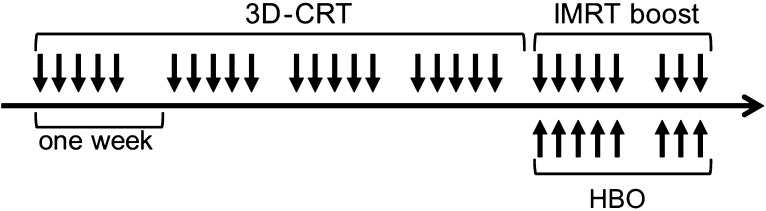
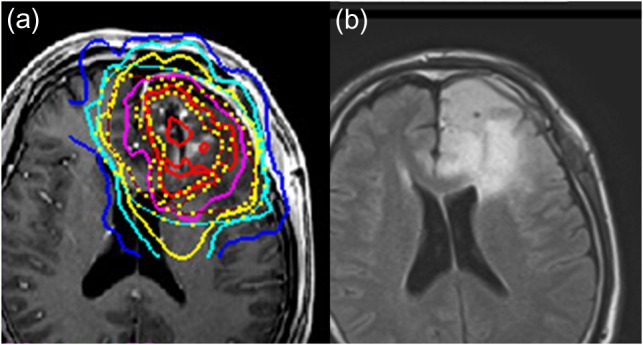
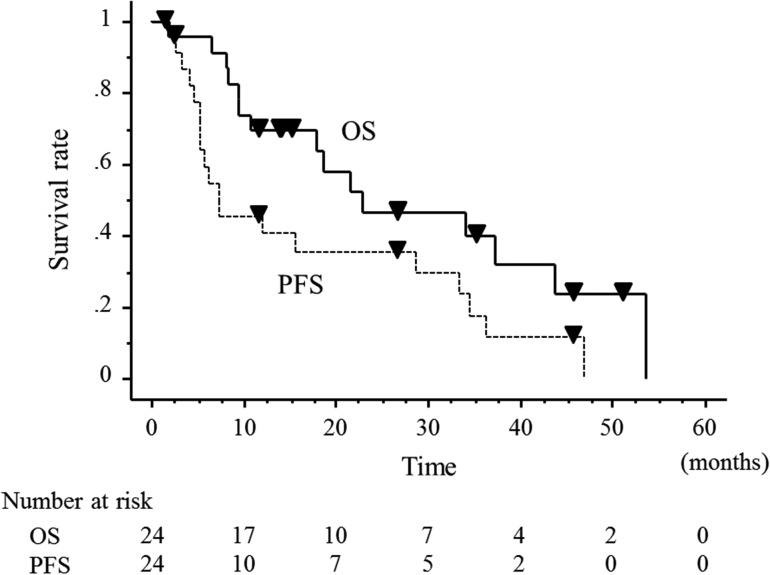
The purpose of this study was to evaluate the feasibility and efficacy of radiotherapy (RT) using intensity-modulated radiotherapy (IMRT) boosts after hyperbaric oxygen (HBO) therapy with chemotherapy in patients with glioblastoma. Twenty-four patients with glioblastoma were treated with the combined therapy, which was RT using IMRT boosts after HBO with chemotherapy, and were retrospectively analyzed. The RT protocol was as follows: first, 3D conformal RT [40 Gy/20 fractions (fr)] was delivered to the gross tumor volume (GTV) and the surrounding edema, including an additional 1.5-2.0 cm. The IMRT boost doses were then continuously delivered to the GTV plus 5 mm (28 Gy/8 fr) and the surrounding edema (16 Gy/8 fr). Each IMRT boost session was performed immediately after HBO to achieve radiosensitization. The planned RT dose was completed in all patients, while HBO therapy was terminated in one patient (4%) due to Grade 2 aural pain. The toxicities were mild, no non-hematological toxicity of Grade 3-5 was observed. The 2-year overall survival (OS) and progression-free survival rates in all patients were 46.5% and 35.4%, respectively. The median OS time was 22.1 months. In conclusion, the combined therapy of RT using IMRT boosts after HBO with chemotherapy was a feasible and promising treatment modality for patients with glioblastoma. The results justify further evaluation to clarify the benefits of this therapy.
Keywords: glioblastoma; high-grade glioma; hyperbaric oxygen; intensity-modulated radiotherapy; radiosensitization.
© The Author 2016. Published by Oxford University Press on behalf of The Japan Radiation Research Society and Japanese Society for Radiation Oncology.
Figures
References
-
- Reddy K, Damek D, Gaspar LE, et al. . Phase II trial of hypofractionated IMRT with temozolomide for patients with newly diagnosed glioblastoma multiforme. Int J Radiat Oncol Biol Phys 2012;84:655–60. - PubMed
-
- Iuchi T, Hatano K, Kodama T, et al. . Phase 2 trial of hypofractionated high-dose intensity modulated radiation therapy with concurrent and adjuvant temozolomide for newly diagnosed glioblastoma. Int J Radiat Oncol Biol Phys 2014;88:793–800. - PubMed
-
- Piroth MD, Pinkawa M, Holy R, et al. . Integrated boost IMRT with FET-PET–adapted local dose escalation in glioblastomas. Results of a prospective phase II study. Strahlenther Onkol 2012;188:334–9. - PubMed
-
- Daruwalla J, Christophi C.. Hyperbaric oxygen therapy for malignancy: a review. World J Surg 2006;30:2112–31. - PubMed
-
- Kohshi K, Beppu T, Tanaka K, et al. . Potential roles of hyperbaric oxygenation in the treatments of brain tumors. Undersea Hyperb Med 2013;40:351–62. - PubMed
MeSH terms
Substances
LinkOut - more resources
Full Text Sources
Other Literature Sources
Medical
