


Human gut microbiota: the links with dementia development
- PMID: 27866330
- PMCID: PMC5291774
- DOI: 10.1007/s13238-016-0338-6
Human gut microbiota: the links with dementia development
Abstract
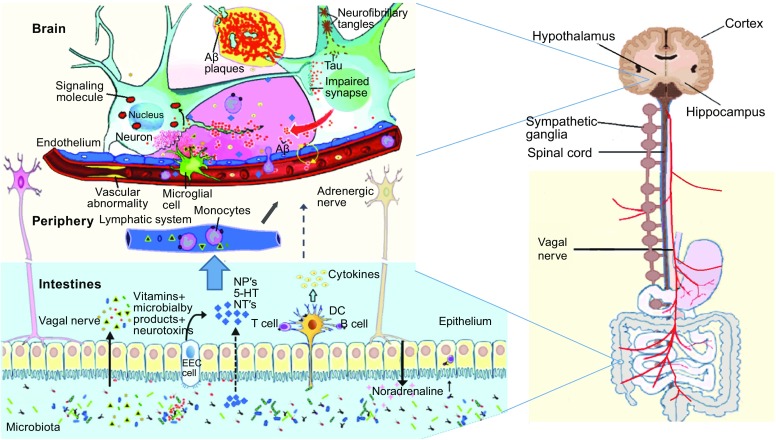
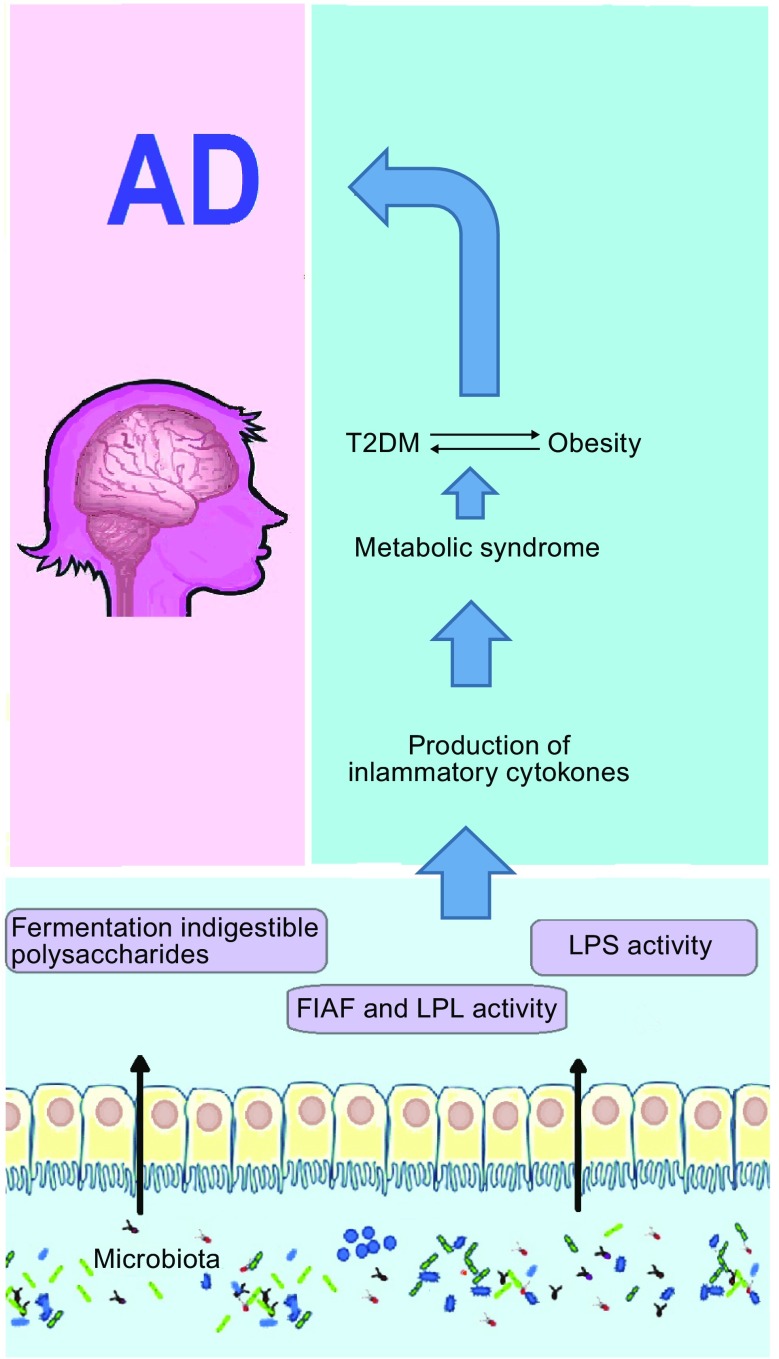
Dementia is a comprehensive category of brain diseases that is great enough to affect a person's daily functioning. The most common type of dementia is Alzheimer's disease, which makes most of cases. New researches indicate that gastrointestinal tract microbiota are directly linked to dementia pathogenesis through triggering metabolic diseases and low-grade inflammation progress. A novel strategy is proposed for the management of these disorders and as an adjuvant for psychiatric treatment of dementia and other related diseases through modulation of the microbiota (e.g. with the use of probiotics).
Keywords: alzheimer’s disease; dementia; gut microbiota; inflammation; probiotics.
Figures
References
-
- Agostoni C, Axelsson I, Braegger C, Goulet O, Koletzko B, Michaelsen KF, Rigo J, Shamir R, Szajewska H, Turck D, et al. Probiotic bacteria in dietetic products for infants: a commentary by the ESPGHAN Committee on Nutrition. J Pediatr Gastroenterol Nutr. 2004;38:365–374. doi: 10.1097/00005176-200404000-00001. - DOI - PubMed
-
- Arosio B, Trabattoni D, Galimberti L, Bucciarelli P, Fasano F, Calabresi C, Cazzullo CL, Vergani C, Annoni G, Clerici M. Interleukin-10 and interleukin-6 gene polymorphisms as risk factors for Alzheimer’s disease. Neurobiol Aging. 2004;25:1009–1015. doi: 10.1016/j.neurobiolaging.2003.10.009. - DOI - PubMed
-
- Aura AM, O’Leary KA, Williamson G, Ojala M, Bailey M, Puupponen-Pimia R, Nuutila AM, Oksman-Caldentey KM, Poutanen K. Quercetin derivatives are deconjugated and converted to hydroxyphenylacetic acids but not methylated by human fecal flora in vitro. J Agric Food Chem. 2002;50:1725–1730. doi: 10.1021/jf0108056. - DOI - PubMed
Publication types
MeSH terms
LinkOut - more resources
Full Text Sources
Other Literature Sources
Medical
