


Child Trauma Exposure and Psychopathology: Mechanisms of Risk and Resilience
- PMID: 27868085
- PMCID: PMC5111863
- DOI: 10.1016/j.copsyc.2016.10.004
Child Trauma Exposure and Psychopathology: Mechanisms of Risk and Resilience
Abstract
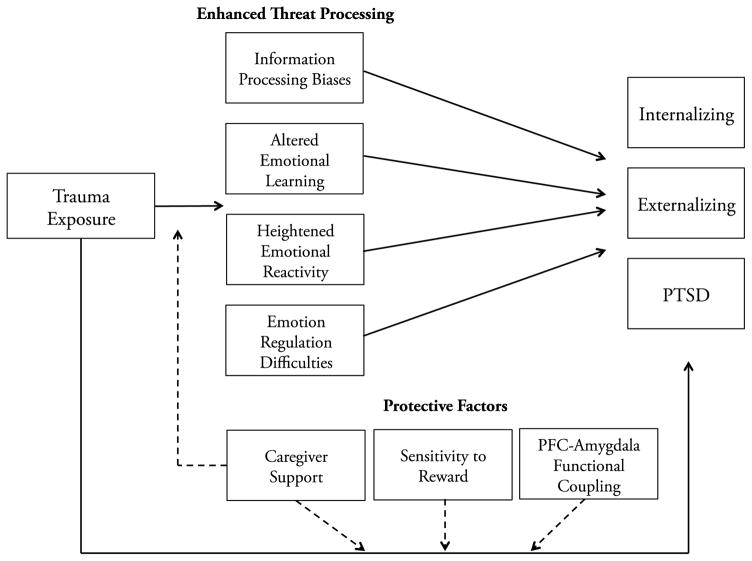
Exposure to trauma in childhood is associated with elevated risk for multiple forms of psychopathology. Here we present a biopsychosocial model outlining the mechanisms that link child trauma with psychopathology and protective factors that can mitigate these risk pathways. We focus on four mechanisms of enhanced threat processing: information processing biases that facilitate rapid identification of environmental threats, disruptions in learning mechanisms underlying the acquisition of fear, heightened emotional responses to potential threats, and difficulty disengaging from negative emotional content. Supportive relationships with caregivers, heightened sensitivity to rewarding and positive stimuli, and mature amygdala-prefrontal circuitry each serve as potential buffers of these risk pathways, highlighting novel directions for interventions aimed at preventing the onset of psychopathology following child trauma.
Figures
References
-
- Carliner H, Keyes KM, McLaughlin KA, Meyers JL, Dunn EC, Martins SS. Childhood trauma and illict drug use in adolescence: A population-based National Comorbidity Survey Replication-Adolescent Supplement study. Journal of the American Academy of Child & Adolescent Psychiatry. 2016;55:701–708. - PMC - PubMed
-
- Alisic E, Zalta AK, van Wesel F, Larsen SE, Hafstad GS, Hassanpour K, Smid GE. Rates of post-traumatic stress disorder in trauma-exposed children and adolescents: meta-analysis. British Journal of Psychiatry. 2014;204:335–340. - PubMed
Grants and funding
LinkOut - more resources
Full Text Sources
Other Literature Sources
Medical