


Informant Questionnaire on Cognitive Decline in the Elderly (IQCODE) for the early diagnosis of dementia across a variety of healthcare settings
- PMID: 27869298
- PMCID: PMC6477966
- DOI: 10.1002/14651858.CD011333.pub2
Informant Questionnaire on Cognitive Decline in the Elderly (IQCODE) for the early diagnosis of dementia across a variety of healthcare settings
Update in
-
Informant Questionnaire on Cognitive Decline in the Elderly (IQCODE) for the early detection of dementia across a variety of healthcare settings.Cochrane Database Syst Rev. 2021 Jul 18;7(7):CD011333. doi: 10.1002/14651858.CD011333.pub3. Cochrane Database Syst Rev. 2021. PMID: 34275145 Free PMC article.
Abstract
Background: The Informant Questionnaire for Cognitive Decline in the Elderly (IQCODE) is a structured interview based on informant responses that is used to assess for possible dementia. IQCODE has been used for retrospective or contemporaneous assessment of cognitive decline. There is considerable interest in tests that may identify those at future risk of developing dementia. Assessing a population free of dementia for the prospective development of dementia is an approach often used in studies of dementia biomarkers. In theory, questionnaire-based assessments, such as IQCODE, could be used in a similar way, assessing for dementia that is diagnosed on a later (delayed) assessment.
Objectives: To determine the diagnostic accuracy of IQCODE in a population free from dementia for the delayed diagnosis of dementia (test accuracy with delayed verification study design).
Search methods: We searched these sources on 16 January 2016: ALOIS (Cochrane Dementia and Cognitive Improvement Group), MEDLINE Ovid SP, Embase Ovid SP, PsycINFO Ovid SP, BIOSIS Previews on Thomson Reuters Web of Science, Web of Science Core Collection (includes Conference Proceedings Citation Index) on Thomson Reuters Web of Science, CINAHL EBSCOhost, and LILACS BIREME. We also searched sources specific to diagnostic test accuracy: MEDION (Universities of Maastricht and Leuven); DARE (Database of Abstracts of Reviews of Effects, in the Cochrane Library); HTA Database (Health Technology Assessment Database, in the Cochrane Library), and ARIF (Birmingham University). We checked reference lists of included studies and reviews, used searches of included studies in PubMed to track related articles, and contacted research groups conducting work on IQCODE for dementia diagnosis to try to find additional studies. We developed a sensitive search strategy; search terms were designed to cover key concepts using several different approaches run in parallel, and included terms relating to cognitive tests, cognitive screening, and dementia. We used standardised database subject headings, such as MeSH terms (in MEDLINE) and other standardised headings (controlled vocabulary) in other databases, as appropriate.
Selection criteria: We selected studies that included a population free from dementia at baseline, who were assessed with the IQCODE and subsequently assessed for the development of dementia over time. The implication was that at the time of testing, the individual had a cognitive problem sufficient to result in an abnormal IQCODE score (defined by the study authors), but not yet meeting dementia diagnostic criteria.
Data collection and analysis: We screened all titles generated by the electronic database searches, and reviewed abstracts of all potentially relevant studies. Two assessors independently checked the full papers for eligibility and extracted data. We determined quality assessment (risk of bias and applicability) using the QUADAS-2 tool, and reported quality using the STARDdem tool.
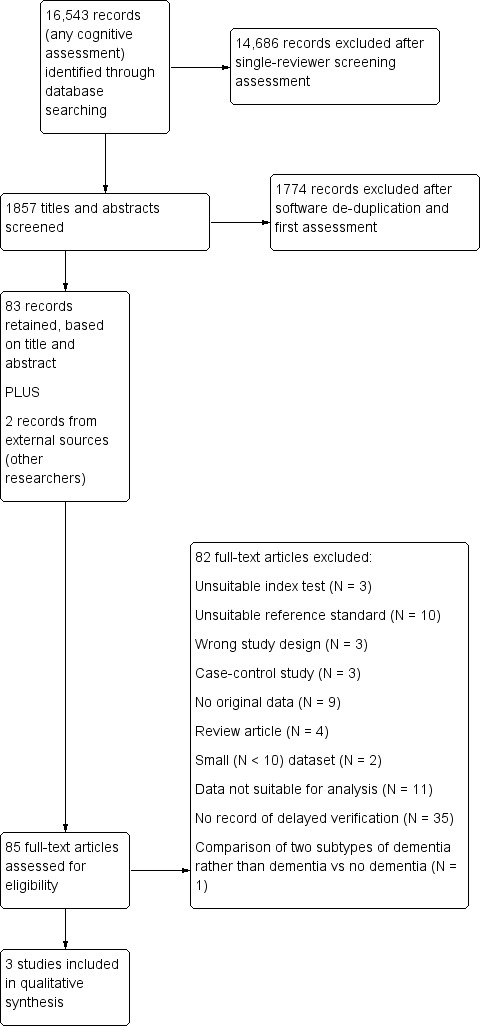
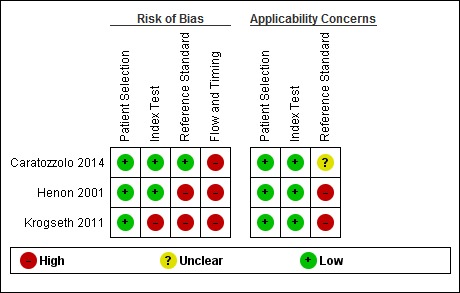
Main results: From 85 papers describing IQCODE, we included three papers, representing data from 626 individuals. Of this total, 22% (N = 135/626) were excluded because of prevalent dementia. There was substantial attrition; 47% (N = 295) of the study population received reference standard assessment at first follow-up (three to six months) and 28% (N = 174) received reference standard assessment at final follow-up (one to three years). Prevalence of dementia ranged from 12% to 26% at first follow-up and 16% to 35% at final follow-up.The three studies were considered to be too heterogenous to combine, so we did not perform meta-analyses to describe summary estimates of interest. Included patients were poststroke (two papers) and hip fracture (one paper). The IQCODE was used at three thresholds of positivity (higher than 3.0, higher than 3.12 and higher than 3.3) to predict those at risk of a future diagnosis of dementia. Using a cut-off of 3.0, IQCODE had a sensitivity of 0.75 (95%CI 0.51 to 0.91) and a specificity of 0.46 (95%CI 0.34 to 0.59) at one year following stroke. Using a cut-off of 3.12, the IQCODE had a sensitivity of 0.80 (95%CI 0.44 to 0.97) and specificity of 0.53 (95C%CI 0.41 to 0.65) for the clinical diagnosis of dementia at six months after hip fracture. Using a cut-off of 3.3, the IQCODE had a sensitivity of 0.84 (95%CI 0.68 to 0.94) and a specificity of 0.87 (95%CI 0.76 to 0.94) for the clinical diagnosis of dementia at one year after stroke.In generaI, the IQCODE was sensitive for identification of those who would develop dementia, but lacked specificity. Methods for both excluding prevalent dementia at baseline and assessing for the development of dementia were varied, and had the potential to introduce bias.
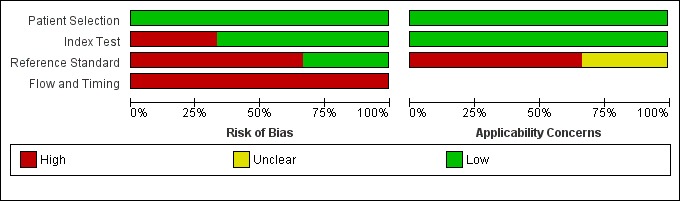
Authors' conclusions: Included studies were heterogenous, recruited from specialist settings, and had potential biases. The studies identified did not allow us to make specific recommendations on the use of the IQCODE for the future diagnosis of dementia in clinical practice. The included studies highlighted the challenges of delayed verification dementia research, with issues around prevalent dementia assessment, loss to follow-up over time, and test non-completion potentially limiting the studies. Future research should recognise these issues and have explicit protocols for dealing with them.
Conflict of interest statement
No relevant disclosures or conflicts of interest for the content of this review.
Figures





References
References to studies included in this review
Caratozzolo 2014 {published and unpublished data}
-
- Caratozzolo S, Mombelli G, Riva M, Zanetti M, Gottardi F, Rozzini L, et al. New onset of dementia or previous cognitive impairment: a 3‐month and 1 year after stroke overview. Neuroepidemiology. 2014:159. - PubMed
-
- Caratozzolo S, Riva M, Chilovi BV, Cerea E, Mombelli G, Padovani A, et al. Prestroke Dementia: characteristics and clinical features in consecutive series of patients. European Neurology 2014;71:148‐54. - PubMed
Henon 2001 {published and unpublished data}
-
- Henon H, Durieu I, Guerouaou D, Lebert F, Pasquier F, Leys D. Poststroke dementia: incidence and relationship to prestroke cognitive decline. Neurology 2001;57:1216‐22. - PubMed
Krogseth 2011 {published and unpublished data}
-
- Krogseth M, Wyller TB, Engedal K, Juliebo V. Delirium is an important predictor of incident dementia among elderly hip fracture patients. Dementia and Geriatric Cognitive Disorders 2011;31:63‐70. - PubMed
References to studies excluded from this review
Abreu 2008 {published data only}
-
- Abreu ID, Nunes PV, Diniz BS, Forlenza OV. Combining functional scales and cognitive tests in screening for mild cognitive impairment at a university based memory clinic in Brazil. Revista Brasileira de Psiquiatria 2008;30:346‐9. - PubMed
Blackburn 2013 {published data only}
-
- Blackburn DJ, Fox L, Mangoyana M, Bath PMW. Repeat cognitive screening (MoCA, MMSE & ACE‐R, IQCODE) in a high risk post‐stroke population: data from the 'prevention of decline in cognition after stroke trial' (PODCAST). Cerebrovascular diseases 2013;Supplement, proceedings of the 2013 European Stroke Conference:s519.
Bloomfield 2012 {published data only}
-
- Bloomfield K, John N. Informant Questionnaire on Cognitive Decline in the Elderly (IQCODE) completion on an acute care ward for the elderly: A brief study of informant characteristics. International Psychogeriatrics 2012;24(10):1700‐1. - PubMed
Bosboom 2013 {published data only}
-
- Bosboom PR, Alfonso H, Almeida OP. Determining the predictors of change in quality of life self‐ratings and carer‐ratings for community‐dwelling people with Alzheimer disease. Alzheimer Disease and Associated Disorders 2013;27(4):363‐71. - PubMed
Burke 2014 {published data only}
-
- ACP Journal Club. Review: several brief screening tests detect dementia in older adults; no trials assess effects on patient outcomes. Annals of Internal Medicine 2014;160(4):JC12. - PubMed
Burton 2015 {published data only}
-
- Burton L, Tyson SF. Screening for cognitive impairment after stroke: a systematic review of psychometric properties and clinical utility. Journal of Rehabilitation Medicine 2015;47(3):193‐203. - PubMed
Butt 2008 {published data only}
-
- Butt Z. Sensitivity of the IQCODE an application of item response theory. Aging, Neuropsychology and Cognition 2008;15:642‐55. - PubMed
Bystad 2013 {published data only}
-
- Bystad M, Skjerve A, Strobel C. Assessing dementia: a presentation of MMSE‐NR, clock‐drawing test and informant scales [Demensutredning ved hjelp av MMSE‐NR, klokketesten og pårørendeskalaer]. Tidsskrift for Norsk Psykologforening 2013;50(1):7‐11.
Cherbuin 2008 {published data only}
-
- Cherbuin N, Anstey KJ, Lipnicki DM. Screening for dementia: a review of self and informant assessment instruments. International Psychogeriatrics 2008;20:431‐58. - PubMed
Cherbuin 2012 {published data only}
-
- Cherbuin N, Jorm AF. The IQCODE: using informant reports to assess cognitive change in the clinic and in older adults living in the community. Cognitive screening instruments: A practical approach. Springer, 2012:165‐82.
Cruz‐Orduna 2012 {published data only}
-
- Cruz‐Orduna I, Bellon JM, Torrero P, Aparicio E, Sanz A, Mula N, et al. Detecting MCI and dementia in primary care: efficiency of the MMS, the FAQ and the IQCODE. Family Practice 2012;29(4):401‐6. - PubMed
de Jonge 1997 {published data only}
-
- Jonghe JFM. Differentiating between demented and psychiatric patients with the dutch version of IQCODE. International Journal of Geriatric Psychiatry 1997;12:462‐5. - PubMed
Dekkers 2009 {published data only}
-
- Dekkers M, Joosten‐Weyn Banningh EW, Eling PA. Awareness in patients with mild cognitive impairment (MCI). Tijdschrift voor Gerontologie en Geriatrie 2009;40:17‐23. - PubMed
Diefeldt 2007b {published data only}
-
- Diesfeldt HFA. Informant based measures may over estimate cognitive impairment in elderly patients. International Journal of Geriatric Psychiatry 2007;22:1166‐70. - PubMed
Ehrensperger 2010 {published data only}
-
- Enrensperger MM, Berres M, Taylor KI, Monsch AU. Screening properties of the German IQCODE with a two year time frame in MCI and early Alzheimer's disease. International Psychogeriatrics 2010;22:91‐100. - PubMed
Eramudugolla 2013 {published data only}
-
- Eramudugolla R, Cherbuin N, Easteal S, Jorm AF, Anstey KJ. Self‐reported cognitive decline on the Informant Questionnaire on Cognitive Decline in the Elderly is associated with dementia, instrumental activities of daily living and depression but not longitudinal cognitive change. Dementia and Geriatric Cognitive Disorders 2013;34(5‐6):282‐91. - PubMed
Farias 2002 {published data only}
Finneli 2009 {published data only}
-
- Finelli L, Kunze U, Gautier A, Gomez‐Mancilla B, Monsch A. Algorithms to retrospectively diagnose mild cognitive impairment and dementia in a longitudinal study of ageing and dementia. Alzheimers and Dementia 2009;5:supplement.
Fuh 1995 {published data only}
-
- Fuh JL, Teng EL, Lin KN, Larson EB, Wang SJ, Liu CY, et al. The Informant Questionnaire on Cognitive Dcline in the Elderly as a screening tool for dementia for a predominantly illiterate Chinese population. Neurology 1995;45:92‐6. - PubMed
Garcia 2002 {published data only}
-
- Forcano Garcia M, Perlado Ortiz de Pinedo F. Cognitive deterioration: use of the short version of the Informant Test (IQCODE) in the geriatrics consultations. Revista Espanola de Geriatria y Gerontolgia 2002;37:81‐5.
Girard 2014 {published data only}
-
- Girard TD, Edwards KM, Self WH, Grijalva CG, Zhu Y, Williams DJ, et al. Long‐term cognitive outcomes after hospitalization for community‐acquired pneumonia (COGCAP). American Journal of Respiratory and Critical Care Medicine 2014;189:D108.
Goncalves 2011 {published data only}
-
- Goncalves DC, Arnold E, Appadurai K, Byrne GJ. Case finding in dementia: comparative utility of three brief instruments in the memory clinic setting. International Psychogeriatrics 2011;23:788‐96. - PubMed
Hancock 2009 {published data only}
-
- Hancock P, Larner AJ. Diagnostic utility of the IQCODE and its combination with ACE‐R in a memory clinic based population. International Psychogeriatrics 2009;21:526‐30. - PubMed
Harwood 1997 {published data only}
-
- Harwood DMJ, Hope T, Jacoby R. Cognitive impairment in medical inpatients ‐ screening for dementia: is history better than mental state. Age and Ageing 1997;26:31‐5. - PubMed
Hayden 2003 {published data only}
-
- Hayden KM, Khachaturian AS, Tschanz JT, Corcoran C, Nortond M, Breitner JCS. Characteristics of a two‐stage screen for incident dementia. Journal of Clinical Epidemiology 2003;56:1038‐45. - PubMed
Hollands 2015 {published data only}
-
- Hollands S, Lim YY, Buckley R, Pietrzak RH, Snyder PJ, Ames D, et al. Amyloid‐beta related memory decline is not associated with subjective or informant rated cognitive impairment in healthy adults. Journal of Alzheimer's Disease 2015;43(2):677‐86. - PubMed
Isella 2002 {published data only}
-
- Isella V, Villa ML, Frattola L, Appollonio I. Screening cognitive decline in dementia preliminary data on the Italian version of the IQCODE. Neurological Sciences 2002;23:s79‐80. - PubMed
Isella 2006 {published data only}
Jackson 2014 {published and unpublished data}
-
- Jackson TA, Sheehan B, MacLullich AM, Lord HM, Gladman JR. Diagnostic test accuracy of informant based tools to diagnose dementia in older hospital patients with delirium: a prospective cohort study. Age and Ageing 2016 [Epub ahead of print 2016 Apr 13];45(4):505‐11. [DOI: 10.1093/ageing/afw065] - DOI - PubMed
-
- Jackson TA, Sheehan B, MacLullich AM, Lord HM, Gladman JR. Does the Informant Questionnaire of Cognitive Decline in the Elderly (IQCODE) predict dementia in patients admitted with delirium?. European Journal of Geriatric Medicine 2014;supplement:S67.
Jorm 1988a {published data only}
-
- Jorm AF, Korten AE. Assessment of cognitive decline in the elderly by informant interview. British Journal of Psychiatry 1988;152:209–13. - PubMed
Jorm 1989 {published data only}
-
- Jorm AF, Jacomb PA. The informant questionnaire on cognitive decline in the elderly (IQCODE) sociodemographic correlates; reliability; validity and some norms. Psychological Medicine 1989;19:1015‐22. - PubMed
Jorm 1991 {published data only}
-
- Jorm AF, Scott R, Cullen JS, MacKinnon AJ. Performance of the IQCODE as a screening test for dementia. Psychological Medicine 1991;21:785‐90. - PubMed
Jorm 1994 {published data only}
-
- Jorm AF. A short form of the Informant Questionnaire on Cognitive Decline in the Elderly (IQCODE) : development and cross validation. Psychological Mmedicine 1994;24:145‐53. - PubMed
Jorm 1996A {published data only}
-
- Jorm AF, Christensen H, Henderson AS, Jacomb PA, Korten AE, Mackinnon A. Informant ratings of cognitive decline of elderly people relationships to longitudinal change on cognitive tests. Age and Ageing 1996;25:125‐9. - PubMed
Jorm 1997 {published data only}
-
- Jorm AF. Methods of screening for dementia: a meta‐analysis of studies comparing an informant interview with a brief cognitive test. Alzheimer Disease and Associated Disorders 1997;11:158‐62. - PubMed
Jorm 2000 {published data only}
-
- Jorm AF, Christensen H, Korten AE, Jacomb PA, Henderson AS. Informant ratings of cognitive decline in old age. Psychological Medicine 2000;30:981‐5. - PubMed
Jorm 2000a {published data only}
-
- Jorm AF, Christensen H, Henderson AS, Jacomb PA, Korten AE, Mackinnon A. Informant ratings of cognitive decline in old age: validation against change on cognitive tests over 7‐8 years. Psychological Medicine 2000;30:981‐5. - PubMed
Jorm 2003 {published data only}
-
- Jorm AF. The value of informant reports for assessment and prediction of dementia. Journal of the American Geriatrics Association 2003;51:881‐2. - PubMed
Jorm 2004 {published data only}
-
- Jorm AF. The IQCODE: a review. International Psychogeriatrics 2004;16:275‐93. - PubMed
Kathriarachi 2001 {published data only}
Khachaturian 2000 {published data only}
-
- Khachaturian AS, Gallo JJ, Breitner JC. Performance characteristics of a two‐stage dementia screen in a population sample. Journal of Clinical Epidemiology 2000;53:531‐40. - PubMed
Knaefelc 2003 {published data only}
-
- Knafelc R, Giudice DL, Harrigan S, Cook R, Flicker L, Mackinnon A, et al. The combination of cognitive testing and an informant questionnaire in screening for dementia. Age and Ageing 2003;32:541‐7. - PubMed
Larner 2010 {published data only}
-
- Larner AJ. Can IQCODE differentiate Alzheimer's disease from frontotemporal dementia. Age and Ageing 2010;39:392‐4. - PubMed
Larner 2013 {published data only}
-
- Cherbuin N, Jorm AF. Chapter 8. The Informant Questionnaire for Cognitive Decline in the Elderly. In: Larner AJ editor(s). Cognitive Screening Instruments. London: Springer‐Verlag, 2013:166‐79.
Law 1995 {published data only}
-
- Law S, Wolfson C. Validation of a French version of an informant based questionnaire as a screening test for Alzheimer's disease. The British Journal of Psychiatry 1995;167:541‐4. - PubMed
Li 2012 {published data only}
-
- Li F, Jia XF, Jia J. The Informant Questionnaire on Cognitive Decline in the Elderly individuals in screening mild cognitive impairment with or without functional impairment. Journal of Geriatric Psychiatry and Neurology 2012;25:227‐32. - PubMed
Lin 2013 {published data only}
-
- Lin JS, O'Connor E, Rossom RC, Perdue LA, Eckstrom E. Screening for cognitive impairment in older adults: a systematic review for the U.S. Preventive Services Task Force. Annals of Internal Medicine 2013;159(9):601‐12. - PubMed
Louis 1999 {published data only}
-
- Louis B, Harwood D, Hope T, Jacoby R. Can an informant questionnaire be used to predict the development of dementia in medical inpatients?. International Journal of Geriatric Psychiatry 1999;14:941‐5. - PubMed
Mackinnon 1998 {published data only}
-
- Mackinnon A, Mulligan R. Combining cognitive testing and informant report to increase accuracy in screening for dementia. American Journal of Psychiatry 1998;155:1529‐35. - PubMed
Mackinnon 2003 {published data only}
-
- Mackinnon A, Khalilian A, Jorm AF, Korten AE, Christensen H, Mulligan R. Improving screening accuracy for dementia in a community sample by augmenting cognitive testing with informant report. Journal of Clinical Epidemiology 2003;56:358–66. - PubMed
Mimori 2000 {published data only}
-
- Mimori Y. Cognitive decline and detection of dementia among the Japanese population analysis with CASI and IQCODE. Nihon Ronen Igakkai Zasshi. 2000; Vol. supplement:s451.
Morales 1995 {published data only}
-
- Morales JM, Gonzalez‐Montalvo JI, Bermejo F, Del‐Ser T. The screening of mild dementia with a shortened Spanish version of the Informant Questionnaire on Cognitive Decline in the Elderly. Alzheimer Disease and Associated Disorders 1995;9:105‐1. - PubMed
Morales 1997a {published data only}
-
- Morales JM, Bermejo F, Romero M, Del‐Ser T. Screening of dementia in community dwelling elderly through informant report. International Journal of Geriatric Psychiatry 1997;12:808‐16. [these are data from independent rural cohort] - PubMed
Morales 1997b {published data only}
-
- Morales JM, Bermejo F, Romero M, Del‐Ser T. Screening of dementia in community dwelling elderly through informant report. International Journal of Geriatric Psychiatry 1997;12:808‐16. - PubMed
Morales‐Gonzalez 1992 {published data only}
-
- Morales‐Gonzalez JM, Gonzalez‐Montalvo JI, Ser Quijano T, Bermejo Pareja F. Validation of the S‐IQCODE: the Spanish version of the informant questionnaire on cognitive decline in the elderly. Archivos de neurobiologia 1992;55(6):262‐6. - PubMed
Mulligan 1996 {published data only}
-
- Mulligan R, Mackinnon A, Jorm A, Giannakopoulos P, Michel J. A comparison of alternative methods of screening for dementia in clinical settings. Archives of Neurology 1996;53:532‐6. - PubMed
Narasimhalu 2008 {published data only}
-
- Narasimhalu K, Lee J, Auchus AP, Chen CPLH. Improviong detection of dementia in Asian Patients with low education: combining the MMSE and the IQCODE. Dementia and Geriatric Cognitive Disorders 2008;25:17‐22. - PubMed
Ozel‐kizel 2010 {published data only}
-
- Ozel‐Kizel ET, Turan ED, Yilmaz E, Cangoz B, Uluc S. Discriminant validity and reliability of the Turkish version of the IQCODE. Archives of Clinical Neuropsychology 2010;25:139‐45. - PubMed
Peroco 2009 {published data only}
-
- Perroco TR, Zevallos Bustamente SE, Pilar Q Moreno M, Hototian SR, Lopes MA, Azevedo D, et al. Performance of Brazilian long and short IQCODE on the screening of dementia in elderly people with low education. International Psychogeriatrics 2009;21:531‐8. - PubMed
Potter 2009 {published data only}
Razavi 2011 {published data only}
Ritchie 1992 {published data only}
-
- Ritchie K, Fuhrer R. A comparative study of the performance of screening tests for senile dementia using receiver operating characteristics analysis. Journal of Clinical Epidemiology 1992;45:627‐37. - PubMed
Rodriguez‐Molinero 2010 {published data only}
-
- Rodriguez‐Molinero A, Lopez‐Dieguez M, Medina IP, Tabuenca AI, Cruz JJ, Banegas JR. Cognitive assessment of elderly patients in the emergency department. Revista Espanola de Geriatria y Gerontolgia 2010;45:183‐8. - PubMed
Rovner 2012 {published data only}
-
- Rovner BW, Casten RJ, Arenson C, Salzman B, Kornsey EB. Racial differences in the recognition of cognitive dysfunction in older persons. Alzheimer Disease and Associated Disorders 2012;26:44‐9. - PubMed
Sanchez 2009 {published data only}
-
- dos Santos Sanchez MA, Lourenco RA. Informant Questionnaire on Cognitive Decline in the Elderly (IQCODE): cross‐cultural adaptation for use in Brazil [Informant Questionnaire on Cognitive Decline in the Elderly (IQCODE): adaptação transcultural para uso no Brasil]. Cadernos de Saúde Pública, Rio de Janiero 2009;25:1455‐65. - PubMed
Schofield 2006 {published data only}
-
- Schofield PW. Discrepancies in cognitive history from patient and informant in relation to cognitive function. Research and Practice in Alzheimer's Disease 2006;11:328‐31.
Senanorong 2001 {published data only}
-
- Senanarong V, Assavisaraporn S, Sivasiriyanonds N, Printarakul T, Jamjumrus S, Udompunthurunk S, et al. The IQCODE an alternative screening test for dementia for low educated Thai elderly. Journal of the Medical Association of Thailand 2001;84:648‐55. - PubMed
Sikkes 2010 {published data only}
-
- Sikkes SAM, Berg MT, Knol DL, de‐Lange‐de Klerk ESM, Scheltens P, Uitdehaag BMJ, et al. How useful is IQCODE for discriminating between Alzheimer's disease, mild cognitive impairment and subjective memory complaints?. Dementia and Geriatric Cognitive Disorders 2010;30:411‐6. - PubMed
Siri 2006 {published data only}
-
- Siri S, Okanurak K, Chansirikanjana S, Kitiyaporn D, Jorm AF. Modified IQCODE as a screening test for dementia for Thai elderly. Southeast Asian Journal of Tropical Medicine and Public Health 2006;37:587‐94. - PubMed
Srikanth 2006 {published data only}
-
- Srikanth V, Thrift AG, Fryer JL, Saling MM. The validity of brief screening cognitive assessments in the diagnosis of cognitive impairments and dementia after first ever stroke. International Psychogeriatrics 2006;18(2):295‐305. - PubMed
Starr 2000 {published data only}
-
- Starr JM, Nicolson C, Anderson K, Dennis MS, Deary IJ. Correlates of informant rated cognitive decline after stroke. Cerebrovsacular Diseases 2000;10(3):214‐20. - PubMed
Tang 2003 {published data only}
-
- Tang WK, Sandra SMC, Chiu HFK, Wong KS, Kwok TCY, Mok V, et al. Can IQCODE detect post stroke dementia?. International Journal of Geriatric Psychiatry 2003;18:706‐10. - PubMed
Thomas 1994 {published data only}
-
- Thomas LD, Gonzales MF, Chamberlain A, Beyreuther K, Masters CL, Flicker L. Comparison of clinical state retrospective informant interview and the neuropathological diagnosis of Alzheimer's disease. International Journal of Geriatric Psychiatry 1994;9:233‐6.
Tokuhara 2006 {published data only}
-
- Tokuhara KG, Valcour VG, Masaki KH, Blanchette PI. Utility of the Informant Questionnaire on Cognitive Decline in the Elderly (IQCODE) for dementia in a Japanese American population. Hawaii Medical Journal 2006;65(3):72‐5. - PubMed
Wierderholt 1999 {published data only}
-
- Wiederholt WC, Galasko D, Salmon DP. Utility of CASI and IQCODE as screening instruments for dementia in natives of Guam. Journal of the Neurological Sciences. 1997; Vol. 150:s89.
Wolf 2009 {published data only}
-
- Wolf SA, Kubatschek K, Henry M, Harth S, Edbert AD, Wallesch CW. Informant report of cognitive changes in the elderly: a first evaluation of the German version of the IQCODE. Nervenartz 2009;80(10):1178‐80. - PubMed
Yamada 2000 {published data only}
-
- Yamada M, Mimori Y, Sasaki H, Ikeda J, Nakamura S, Kodama K. Cognitive dysfunction among the elderly evaluated by the cognitive abilities screening instrument. Nihon Ronen Iqakkai Zasshi 2000;37:56‐62. - PubMed
Zevallos‐Bustamente 2003 {published data only}
-
- Zevallos Bustamante SE, Bottino CMC, Lopes MA, Dionísio Azevedo D, Hototatian SR, Litvoc J, et al. Combined instruments on the evaluation of dementia in the elderly: preliminary results. Arquivos de Neuro‐Psiquiatria 2003;61:601‐6. - PubMed
Zhang 2003 {published data only}
-
- Zhang XQ, Zhou JS, Wang LD, Meng C, Chen B. Memory complaints in the clinical diagnosis of dementia. Chinese Journal of Clinical Rehabilitation 2003;7:4254‐5.
Zhou 2002 {published data only}
-
- Zhou JS, Zhang XQ, Wang L. Telephone questionnaire: a new method for screening dementia. Chinese Journal of Clinical Rehabilitation 2002;6:3166‐7.
Zhou 2003 {published data only}
-
- Zhou J, Xinqing Z, Wang L, Meng C, Chu C, Chen B. Orientation memory concentration test and short IQCODE in the elderly: screen dementia by telephone. Chinese Journal of Clinical Rehabilitation 2003;7:1529‐31.
Zhou 2004 {published data only}
-
- Zhou JS, Zhang XQ, Mundt JC, Wang L, Meng C, Chu C, et al. Comparison of three dementia screening instruments administered by telephone in China. The International Journal of Social Research and Practice 2004;3:69‐81.
Additional references
Agrell 1998
-
- Agrell B, Dehlin O. The clock‐drawing test. Age and Ageing 1998;27:399‐403. - PubMed
Bamford 2007
-
- Bamford C, Eccles M, Steen N, Robinson L. Can primary care record review facilitate earlier diagnosis of dementia?. Family Practice 2007;24(2):108‐16. - PubMed
Bejot 2011
-
- Bejot Y, Aboa‐Eboule C, Durier J, Rouaud O, Jacquin A, Ponavoy E, et al. Prevalence of early dementia after first‐ever stroke: a 24‐year population‐based study. Stroke 2011;42:607‐12. - PubMed
Boustani 2003
-
- Boustani M, Peterson B, Hanson L, Harris R, Lohr KN. Screening for dementia in primary care: a summary of the evidence for the US Preventative Services Task Force. Annals of Internal Medicine 2003;138(11):927‐37. - PubMed
Brainin 2015
-
- Brainin M, Tuomilehto J, Heiss WD, Bornstein N, Bath PM, Teuschl Y, et al. Post‐stroke cognitive decline: an update and perspectives for clinical research. European Journal of Neurology 2015;22(2):229‐38. - PubMed
Brodaty 2002
-
- Brodaty H. The GPCOG: a new screening test for dementia designed for general practice. Journal of the American Geriatrics Society 2002;50(3):530‐4. - PubMed
Chodosh 2004
-
- Chodosh J, Petitti DB, Elliott M, Hays RD, Crooks VC, Reuben DB, et al. Physician recognition of cognitive impairment: evaluating the need for improvement. Journal of the American Geriatrics Society 2004;52(7):1051‐9. - PubMed
Cordell 2013
-
- Cordell CB, Borson S, Boustani M, Chodosh J, Reuben D, Verghese J, et al. the Medicare Detection of the Cognitive Impairment Workgroup. Alzheimer's Association recommendations for operationalizing the detection of cognitive impairment during Medicare annual wellness visit in a primary care setting. Alzheimer's & Dementia 2013;9(2):141‐50. - PubMed
Davis 2012
Davis 2013
-
- Davis DHJ, Creavin ST, Noel‐Storr AH, Quinn TJ, Smailagic N, Hyde C, et al. Neuropsychological tests for the diagnosis of Alzheimer’s disease dementia and other dementias: a generic protocol for cross‐sectional and delayed‐verification studies. Cochrane Database of Systematic Reviews 2013, Issue 3. [DOI: 10.1002/14651858.CD010460] - DOI - PMC - PubMed
Ferri 2005
Folstein 1975
-
- Folstein MF, Folstein SE, McHugh PR. Minimental state: a practical method for grading the cognitive state of patients for the clinician. Journal of Psychiatric Research 1975;12(3):189‐98. - PubMed
Galvin 2005
-
- Galvin JE. The AD8: a brief informant interview to detect dementia. Neurology 2005;65(4):559‐64. - PubMed
Glanville 2012
-
- Glanville J, Cikalo M, Crawford F, Dozier M, McIntosh H. Handsearching did not yield additional FDG‐PET diagnostic test accuracy studies compared with electronic searches: a preliminary investigation. Research Synthesis Methods 2012;3:202‐13. - PubMed
Greenhalgh 1997
Harrison 2014
-
- Harrison JK, Fearon P, Noel‐Storr A‐H, McShane R, Stott DJ, Quinn TJ. Informant Questionnaire on Cognitive Decline in the Elderly (IQCODE) for the diagnosis of dementia within a general practice (primary care) setting. Cochrane Database of Systematic Reviews 2014, Issue 7. [DOI: 10.1002/14651858.CD010771.pub2] - DOI - PubMed
Harrison 2015
-
- Harrison JK, Fearon P, Noel‐Storr A‐H, McShane R, Stott DJ, Quinn TJ. Informant Questionnaire on Cognitive Decline in the Elderly (IQCODE) for the diagnosis of dementia within a secondary care setting. Cochrane Database of Systematic Reviews 2015, Issue 3. [DOI: 10.1002/14651858.CD010772.pub2] - DOI - PubMed
Herbert 2013
Jorm 1988
-
- Jorm AF, Korten AE. Assessment of cognitive decline in the elderly by informant interview. British Journal of Psychiatry 1988;152:209‐13. - PubMed
Mahoney 1965
-
- Mahoney FI, Barthel DW. Functional evaluation: the Barthel Index. Maryland State Medical Journal 1965;14:61‐5. - PubMed
McGovern 2016
-
- McGovern A, Pendlebury ST, Mishra NK, Fan Y, Quinn TJ. Test accuracy of informant‐based cognitive screening tests for diagnosis of dementia and multidomain cognitive impairment in stroke. Stroke 2016;47(2):329‐35. - PubMed
McKeith 2005
-
- McKeith IG, Dickson DW, Lowe J, Emre M, O’Brien JT, Feldman H. Diagnosis and management of dementia with Lewy bodies: third report of the DLB Consortium. Neurology 2005;65(12):1863‐72. - PubMed
McKhann 1984
-
- McKhann G, Drachman D, Folstein M, Katzman R, Price D, Stadlan EM. Clinical diagnosis of Alzheimer's disease: report of the NINCDS‐ADRDA Work Group under the auspices of Department of Health and Human Services Task Force on Alzheimer's Disease. Neurology 1984;34(7):939‐44. - PubMed
McKhann 2001
-
- McKhann GM, Albert MS, Grossman M, Miller B, Dickson D, Trojanowski JQ, Work Group on Frontotemporal dementia and PIck’s disease. Clinical and pathological diagnosis of frontotemporal dementia: report of the Work Group on Frontotemporal Dementia and Pick's Disease. Archives of Neurology 2001;58(11):1803‐9. - PubMed
McKhann 2011
Menon 2011
-
- Menon R, Larner AJ. Use of cognitive screening instruments in primary care: the impact of national dementia directives (NICE/SCIE National Dementia Strategy). Family Practice 2011;28:272‐6. - PubMed
Metitieri 2001
-
- Metitieri T, Geroldi C, Pezzini A, Frisoni GB, Bianchetti A, Trabucchi M. The Itel‐MMSE: an Italian telephone version of the Mini‐Mental State Examination. International Journal of Geriatric Psychiatry 2001;16(2):166‐7. - PubMed
Noel‐Storr 2014
Peterson 2004
-
- Petersen RC. Mild cognitive impairment as a diagnostic entity. Journal of Internal Medicine 2004;256:183‐94. - PubMed
Prince 2013
-
- Prince M, Bryce R, Albanese E, Wimo A, Ribeiro W, Ferri CP. The global prevalence of dementia: a systematic review and meta‐analysis. Alzheimer's & Dementia 2013;9(1):63‐75. - PubMed
Quinn 2014
-
- Quinn TJ, Fearon P, Noel‐Storr AH, Young C, McShane R, Stott DJ. Informant Questionnaire on Cognitive Decline in the Elderly (IQCODE) for the diagnosis of dementia within community dwelling populations. Cochrane Database of Systematic Reviews 2014, Issue 4. [DOI: 10.1002/14651858.CD010079.pub2] - DOI - PubMed
RevMan 2014 [Computer program]
-
- The Nordic Cochrane Centre, The Cochrane Collaboration. Review Manager (RevMan) 5.3. Copenhagen: The Nordic Cochrane Centre, The Cochrane Collaboration, 2014.
Ritchie 2015
Roman 1993
-
- Román GC, Tatemichi TK, Erkinjuntti T, Cummings JL, Masdeu JC, Garcia JH, et al. for the Vascular Dementia: Diagnostic Criteria for Research Studies work group. Vascular dementia: diagnostic criteria for research studies. Report of the NINDS‐AIREN International Workshop. Neurology 1993;43(2):250‐60. - PubMed
Romero 2014
-
- Romero JP, Benito‐Leon J, Mitchell AJ, Trincado R, Bermejo‐Pareja F. Under reporting of dementia deaths on death certificates: using data from a population‐based study (NEDICES). Journal of Alzheimer's Disease 2014;39(4):741‐8. - PubMed
Sampson 2009
-
- Sampson EL, Blanchard MR, Jones L, Tookman A, King M. Dementia in the acute hospital: prospective cohort study of prevalence and mortality. British Journal of Psychiatry 2009;195(1):61‐6. - PubMed
Valcour 2000
-
- Valcour VG, Masaki KH, Curb JD, Blanchette PL. The detection of dementia in the primary care setting. Archives of Internal Medicine 2000;160(19):2964‐8. - PubMed
Wilson 1968
-
- Wilson JMG, Jungner G, World Health Organization. Principles and practice of screening for disease. Geneva: World Health Organization 1968.
Publication types
MeSH terms
Grants and funding
LinkOut - more resources
Full Text Sources
Other Literature Sources
Medical
