


Antiviral Therapy by HIV-1 Broadly Neutralizing and Inhibitory Antibodies
- PMID: 27869733
- PMCID: PMC5133900
- DOI: 10.3390/ijms17111901
Antiviral Therapy by HIV-1 Broadly Neutralizing and Inhibitory Antibodies
Abstract
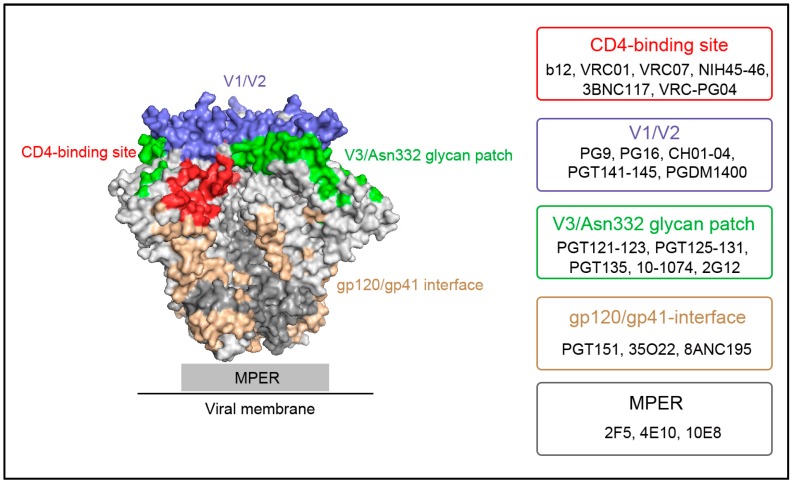
Human immunodeficiency virus type 1 (HIV-1) infection causes acquired immune deficiency syndrome (AIDS), a global epidemic for more than three decades. HIV-1 replication is primarily controlled through antiretroviral therapy (ART) but this treatment does not cure HIV-1 infection. Furthermore, there is increasing viral resistance to ART, and side effects associated with long-term therapy. Consequently, there is a need of alternative candidates for HIV-1 prevention and therapy. Recent advances have discovered multiple broadly neutralizing antibodies against HIV-1. In this review, we describe the key epitopes on the HIV-1 Env protein and the reciprocal broadly neutralizing antibodies, and discuss the ongoing clinical trials of broadly neutralizing and inhibitory antibody therapy as well as antibody combinations, bispecific antibodies, and methods that improve therapeutic efficacy by combining broadly neutralizing antibodies (bNAbs) with latency reversing agents. Compared with ART, HIV-1 therapeutics that incorporate these broadly neutralizing and inhibitory antibodies offer the advantage of decreasing virus load and clearing infected cells, which is a promising prospect in HIV-1 prevention and treatment.
Keywords: HIV-1; antibody therapy; broadly neutralizing antibody; epitope.
Conflict of interest statement
The authors declare no conflict of interest.
Figures
References
-
- Pitisuttithum P., Gilbert P., Gurwith M., Heyward W., Martin M., van Griensven F., Hu D., Tappero J.W. Randomized, double-blind, placebo-controlled efficacy trial of a bivalent recombinant glycoprotein 120 HIV-1 vaccine among injection drug users in Bangkok, Thailand. J. Infect. Dis. 2006;194:1661–1671. doi: 10.1086/508748. - DOI - PubMed
-
- Flynn N.M., Forthal D.N., Harro C.D., Judson F.N., Mayer K.H., Para M.F., rgp 120 HIV Vaccine Study Group Placebo-controlled phase 3 trial of a recombinant glycoprotein 120 vaccine to prevent HIV-1 infection. J. Infect. Dis. 2005;191:654–665. - PubMed
Publication types
MeSH terms
Substances
LinkOut - more resources
Full Text Sources
Other Literature Sources
Medical
