Review
. 2016 Dec;6(12):1315-1333.
doi: 10.1158/2159-8290.CD-16-0615. Epub 2016 Nov 21.

Targeting Cancer Metabolism: Dietary and Pharmacologic Interventions

Affiliations
Review

Targeting Cancer Metabolism: Dietary and Pharmacologic Interventions

Claudio Vernieri et al. Cancer Discov. 2016 Dec.

Abstract

Most tumors display oncogene-driven reprogramming of several metabolic pathways, which are crucial to sustain their growth and proliferation. In recent years, both dietary and pharmacologic approaches that target deregulated tumor metabolism are beginning to be considered for clinical applications. Dietary interventions exploit the ability of nutrient-restricted conditions to exert broad biological effects, protecting normal cells, organs, and systems, while sensitizing a wide variety of cancer cells to cytotoxic therapies. On the other hand, drugs targeting enzymes or metabolites of crucial metabolic pathways can be highly specific and effective, but must be matched with a responsive tumor, which might rapidly adapt. In this review, we illustrate how dietary and pharmacologic therapies differ in their effect on tumor growth, proliferation, and metabolism and discuss the available preclinical and clinical evidence in favor of or against each of them. We also indicate, when appropriate, how to optimize future investigations on metabolic therapies on the basis of tumor- and patient-related characteristics.

Significance: To our knowledge, this is the first review article that comprehensively analyzes the preclinical and preliminary clinical experimental foundations of both dietary and pharmacologic metabolic interventions in cancer therapy. Among several promising therapies, we propose treatment personalization on the basis of tumor genetics, tumor metabolism, and patient systemic metabolism.Cancer Discov; 6(12); 1315-33. ©2016 AACR.


Conflict of interest statement

Valter Longo has equity interest in L-Nutra, a company that develops and sells medical food. The other authors declare no conflicts of interest.

Figures
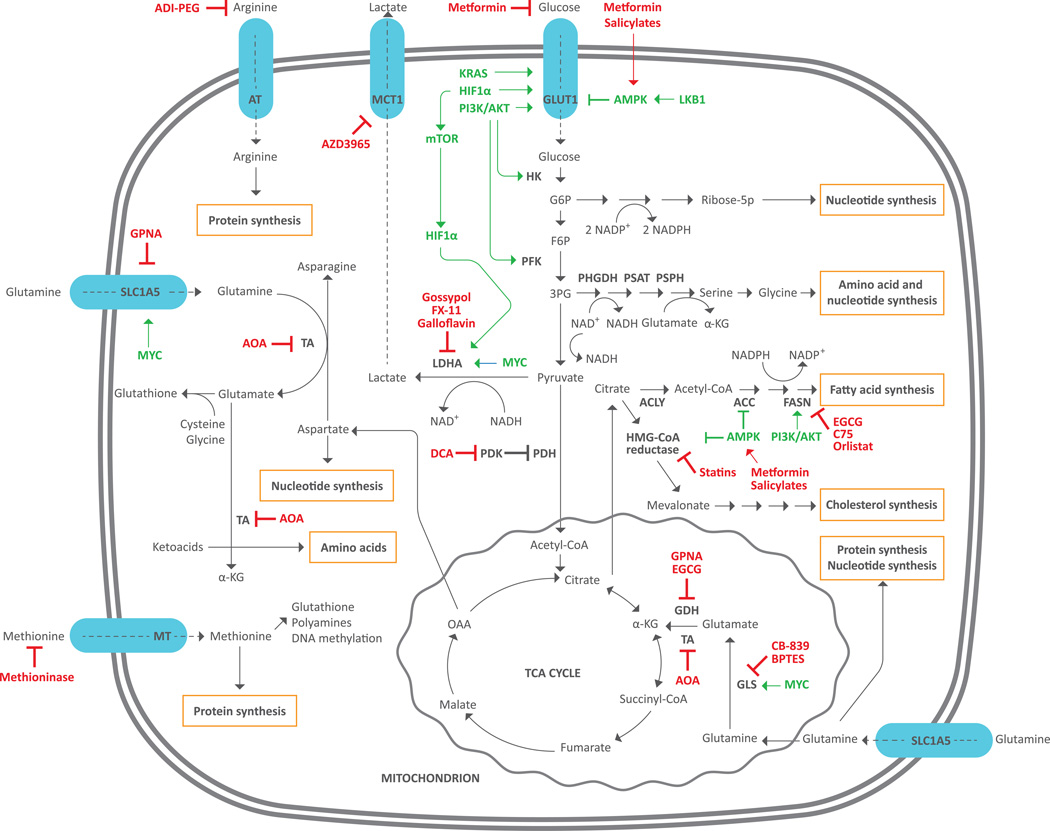
Figure 1
Figure 1. Main metabolic pathways deregulated in cancers and corresponding targeting drugs
Cancer cells up-regulate both catabolic and anabolic pathways to optimize energy and macromolecule production. Glucose and glutamine are central biomolecules that provide cancer cells with most of energy and metabolites required for growth and proliferation. Glucose is uptaken by tumor cells through the GLUT1 transporter and enters glycolysis. The glycolytic intermediate G6P can be diverted to the pentose phosphate pathway to form ribose-5P (nucleotide synthesis) and reducing equivalents in the form of NADPH (anabolic processes). Another glycolytic intermediate, 3-PG, can be diverted to synthesis of serine and glycine, which can be incorporated into proteins or nucleotides, or used as precursors of other biomolecules. Finally, glucose-derived pyruvate can be converted to lactate by LDHA, oxidized in the mitochondrial TCA cycle or, finally, converted to citrate to fuel synthesis of FAs and cholesterol. Synthesis of FAs requires ACC and FASN enzymes while HMG-CoA reductase is the key enzyme for cholesterol synthesis. Glutamine enters tumor cells through the SLC1A5 transporter and is used for protein or nucleotide synthesis, or can be converted to glutamate and then α-KG. Finally, α-KG can be either oxidized in the mitochondrial TCA cycle, or undergo reductive metabolism to form citrate, thus contributing to FA and cholesterol synthesis. Cytoplasmic glutamine can be also transaminated to form amino acids from corresponding ketoacids. Arginine and methionine are uptaken from the external environment through specific transporters and then used for protein synthesis or other purposes. ACC: acetyl-CoA carboxylase; ACLY: ATP citrate lyase; ADI-PEG: PEGylated arginine deiminase; AMPK: AMP-activated protein kinase; AOA: aminooxyacetate; AT: arginine transporter; DCA: dichloroacetate; FASN: fatty acid synthase; F6P: fructose 6 phosphate; GDH: glutamate dehydrogenase; GLS: glutaminase; GLUT1: glucose transporter 1; G6P: glucose-6 phosphate; HIF1-α: hypoxia-inducible factor 1; HK: hexokinase; LDHA: lactate dehydrogenase A; LKB1 (liver kinase B1); MT: methionine transporter; mTOR: mammalian target of rapamycin; NAD: nicotinamide adenine dinucleotide; NADP: nicotinamide adenine dinucleotide phosphate; OAA: oxaloacetate; PDH: pyruvate dehydrogenase; PDK: pyruvate dehydrogenase kinase; PFK: phosphofructokinase; PHGDH: phosphoglycerate dehydrogenase; PI3K: phosphatidylinositol 3-kinase; PSAT: phosphoserine aminotransferase; PSPH: phosphoserine phosphatase; Ribose 5-P: ribose 5-phosphate; TA: transaminase; TCA: tricarboxylic acid; α-KG: α-ketoglutarate; 3-PG: 3-phosphoglycerate.
Figure 2
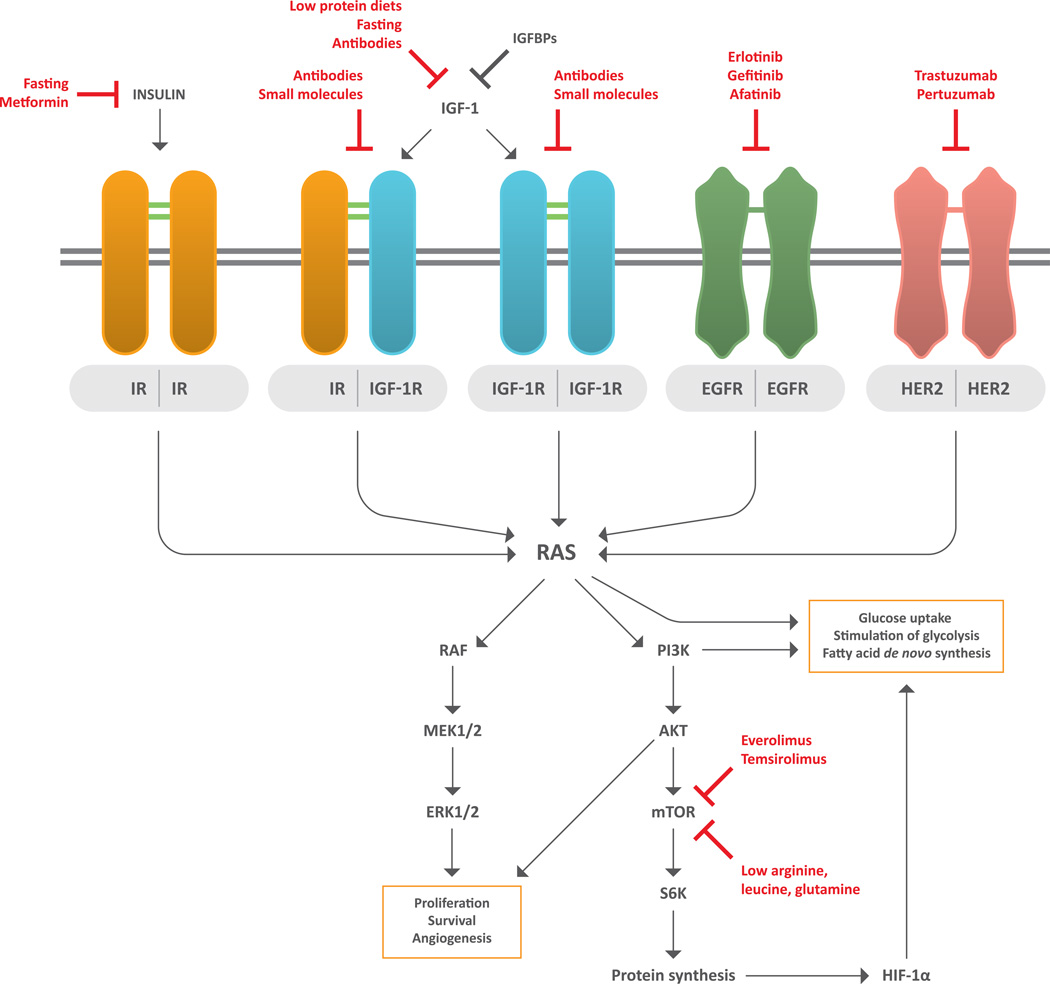
Figure 2. Connections between insulin/insulin-like growth factor 1 signaling and metabolic pathways in tumor cells
Insulin receptor (IR) and IGF-1 receptor (IGF-1R) can either homo- or heterodimerize to activate their TK domains; this stimulates downstream RAS/RAF/MEK/ERK and RAS/PI3K/AKT/mTOR signal transduction pathways, which induce survival, proliferation, angiogenesis and ribosomal synthesis of several proteins, including hypoxia-induced factor 1α (HIF-1α). PI3K, RAS and HIF-1α promote crucial metabolic modifications in neoplastic cells, including glucose uptake and aerobic glycolysis, as well as de novo synthesis of fatty acids. Since RAS/RAF/MEK/ERK and RAS/PI3K/AKT/mTOR cascades can also be activated by other membrane receptors, including EGFR and HER2, combining inhibition of IGF-1/IGF-1R pathway with targeting of other TK receptors or their downstream mediators (e.g. mTOR) could synergistically inhibit cancer cell proliferation and survival. Abbreviations. EGFR: epidermal growth factor receptor; HER2: human epidermal growth factor receptor 2; HIF1-α: hypoxia-induced factor 1-α; IGF-1: insulin-like growth factor 1; IGFBPs: IGF-1 binding proteins; IGF-1R: IGF-1 receptor; IR: insulin receptor; mTOR: mammalian target of rapamycin; PI3K: phosphoinositide 3-kinase; S6K: S6 kinase.
Figure 3
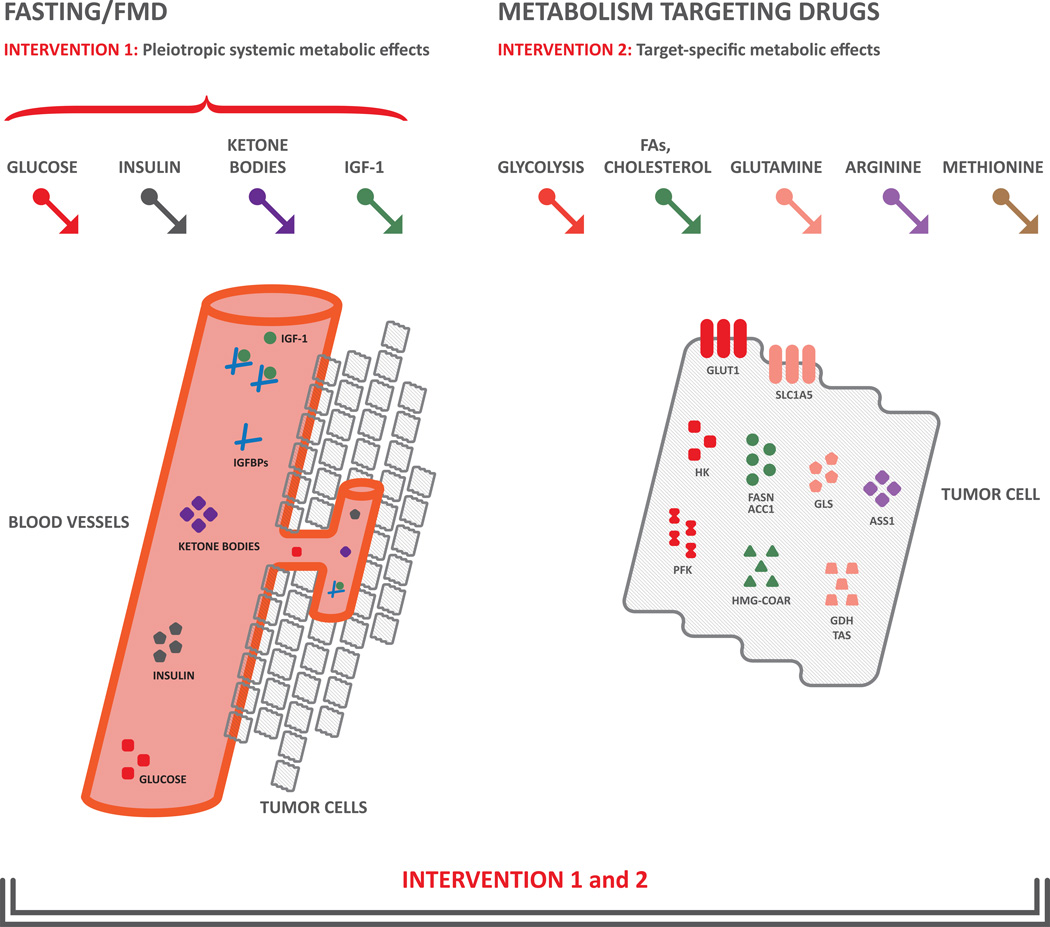
Figure 3. Rationale for combining dietary interventions and drugs targeting specific metabolic pathways in cancers
Fasting and FMD (left part of the figure) impact on systemic metabolism through induction of pleiotropic metabolic effects, including reduction of glycemia, insulin and IGF-1 levels, and increase of ketone bodies and IGFBPs. On the other hand, pharmacologic approaches (right part of the figure) have the potential to selectively inhibit the specific metabolic pathway(s), such as glycolysis, glutamine, arginine, methionine, FAs and cholesterol metabolism, to which a single tumor may be addicted. Combining the two strategies could produce synergistic and selective anticancer effects . Abbreviations. IGF-1: insulin-like growth factor 1; FAs: fatty acids; GLUT1: glucose transporter 1; HK: hexokinase; PFK: phosphofructokinase; FASN: fatty acid synthase; ACC1: acetyl-CoA carboxylase; HMGCR: hydroxymethylglutaryl-CoA reductase; GLS: glutaminase; GDH: glutamate dehydrogenase; TAs: transaminases; ASS1: argininosuccinate synthase 1

References

    1. Hanahan D, Weinberg RA. Hallmarks of cancer: the next generation. Cell. 2011;144:646–674. - PubMed
    1. Huang M, Shen A, Ding J, Geng M. Molecularly targeted cancer therapy: some lessons from the past decade. Trends Pharmacol Sci. 2014;35:41–50. - PubMed
    1. Wilson PM, Danenberg PV, Johnston PG, Lenz HJ, Ladner RD. Standing the test of time: targeting thymidylate biosynthesis in cancer therapy. Nat Rev Clin Oncol. 2014;11:282–298. - PubMed
    1. Mathews CK. Deoxyribonucleotide metabolism, mutagenesis and cancer. Nat Rev Cancer. 2015;15:528–539. - PubMed
    1. Vander Heiden MG, Cantley LC, Thompson CB. Understanding the Warburg effect: the metabolic requirements of cell proliferation. Science. 2009;324:1029–1033. - PMC - PubMed

MeSH terms

Substances