


A pilot test of the acceptability and efficacy of narrative and non-narrative health education materials in a low health literacy population
- PMID: 27872657
- PMCID: PMC5115781
- DOI: 10.1080/17538068.2015.1126995
A pilot test of the acceptability and efficacy of narrative and non-narrative health education materials in a low health literacy population
Abstract
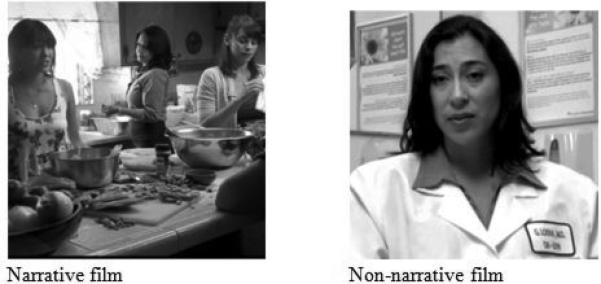
Although entertainment-education narratives are increasingly being used to communicate health information to a diversity of populations, there is limited evidence examining the use of narrative health education videos in low compared with adequate health literacy populations. There are also very few studies directly comparing narrative materials to more traditional, non-narrative materials. Because individuals with low health literacy are less likely than those with adequate health literacy to benefit from health communication interventions, it is especially important to develop an evidence base supporting the use of narrative health education materials in low literacy populations. This study extends knowledge on the use of narrative health education materials in populations with low health literacy by conducting a randomized trial comparing the acceptability and efficacy (knowledge gain) of two fact-equivalent films, one in a narrative and one in a non-narrative format, on individuals with adequate and low health literacy. This study finds that while both films were well-accepted and produced knowledge gains, the narrative film was more effective in this regard. This effect occurred regardless of health literacy level, indicating that narrative health communication materials are appropriate for individuals with low health literacy and do not exacerbate existing health disparities. These findings add to a small but growing body of evidence testing narrative health education materials in individuals with low health literacy, and provide new evidence supporting narrative, entertainment-education style video as a health communication tool to help reduce health literacy-related health disparities.
Keywords: Cervical cancer; Entertainment-education; HPV; Health communication; Health disparities; Health literacy; Knowledge; Narrative.
Figures
References
-
- Kreuter MW, Green MC, Cappella JN, Slater MD, Wise ME, Storey D, et al. Narrative communication in cancer prevention and control: a framework to guide research and application. Ann Behav Med. 2007;33:221–35. - PubMed
-
- Green MC. Narratives and cancer communication. J Commun. 2006;56:S163–183.
Grants and funding
LinkOut - more resources
Full Text Sources
Other Literature Sources
