


Diagnosis of a mild peroxisomal phenotype with next-generation sequencing
- PMID: 27872819
- PMCID: PMC5109284
- DOI: 10.1016/j.ymgmr.2016.10.006
Diagnosis of a mild peroxisomal phenotype with next-generation sequencing
Abstract
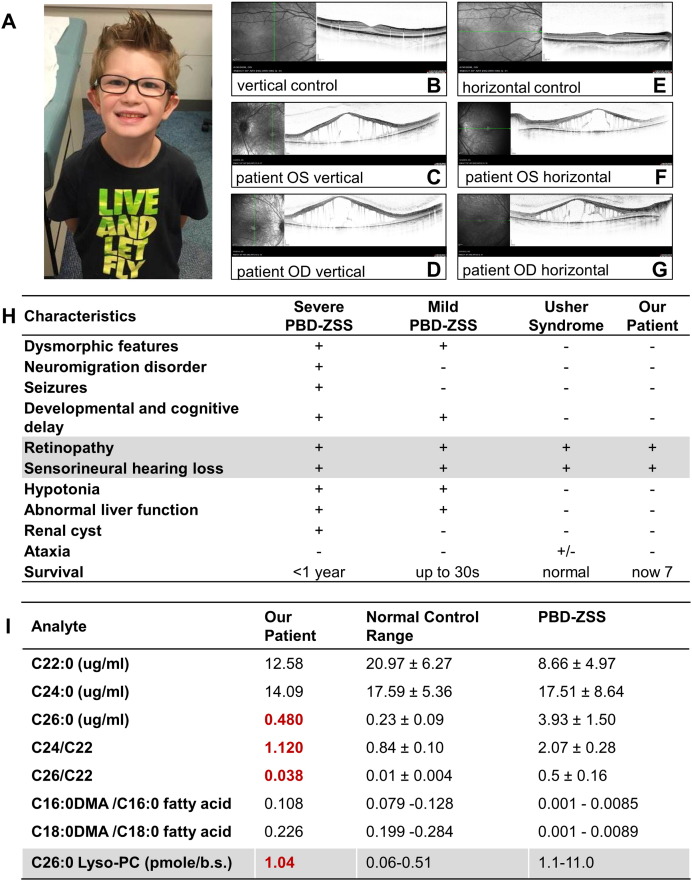
Peroxisomal biogenesis disorders (PBD) are caused by mutations in PEX genes, and are typically diagnosed with biochemical testing in plasma followed by confirmatory testing. Here we report the unusual diagnostic path of a child homozygous for PEX1 p.G843D. The patient presented with sensorineural hearing loss, pigmentary retinopathy, and normal intellect. After testing for Usher syndrome was negative, he was found to have PBD through a research sequencing panel. When evaluating a patient with hearing loss and pigmentary retinopathy, mild PBD should be on the differential regardless of cognitive function.
Keywords: PEX1 p.G843D; Peroxisomal biogenesis disorders; Usher syndrome; Zellweger syndrome spectrum.
Figures
References
-
- Braverman N.E., D’Agostino M.D., Maclean G.E. Peroxisome biogenesis disorders: biological, clinical and pathophysiological perspectives. Dev. Disabil. Res. Rev. 2013;17:187–196. - PubMed
-
- Wanders R.J.A. Metabolic and molecular basis of peroxisomal disorders: a review. Am. J. Med. Genet. A. 2004;126A:355–375. - PubMed
-
- Ebberink M.S., Mooijer P.A.W., Gootjes J., Koster J., Wanders R.J.A., Waterham H.R. Genetic classification and mutational spectrum of more than 600 patients with a Zellweger syndrome spectrum disorder. Hum. Mutat. 2011;32:59–69. - PubMed
-
- Reuber B.E., Germain-Lee E., Collins C.S., Morrell J.C., Ameritunga R., Moser H.W., Valle D., Gould S.J. Mutations in PEX1 are the most common cause of peroxisome biogenesis disorders. Nat. Genet. 1997;17:445–448. - PubMed
Publication types
Grants and funding
LinkOut - more resources
Full Text Sources
Other Literature Sources
