. 2016 Nov 22:6:37458.
doi: 10.1038/srep37458.

Natural zwitterionic betaine enables cells to survive ultrarapid cryopreservation

Affiliations

Natural zwitterionic betaine enables cells to survive ultrarapid cryopreservation

Jing Yang et al. Sci Rep. .

Abstract

Cryoprotectants (CPAs) play a critical role in cryopreservation because they can resist the cell damage caused by the freezing process. Current state-of-the-art CPAs are mainly based on an organic solvent dimethyl sulfoxide (DMSO), and several DMSO-cryopreserved cell products have been brought to market. However, the intrinsic toxicity and complex freezing protocol of DMSO still remain as the bottleneck of the wide use for clinical applications. Herein, we reported that betaine, a natural zwitterionic molecule, could serve as a nontoxic and high efficient CPA. At optimum concentration of betaine, different cell types exhibited exceptional post-thaw survival efficiency with ultrarapid freezing protocol, which was straightforward, cost efficient but difficult to succeed using DMSO. Moreover, betaine showed negligible cytotoxicity even after long-term exposure of cells. Mechanistically, we hypothesized that betaine could be ultra-rapidly taken up by cells for intracellular protection during the freezing process. This technology unlocks the possibility of alternating the traditional toxic CPAs and is applicable to a variety of clinical applications.


Conflict of interest statement

The authors declare no competing financial interests.

Figures
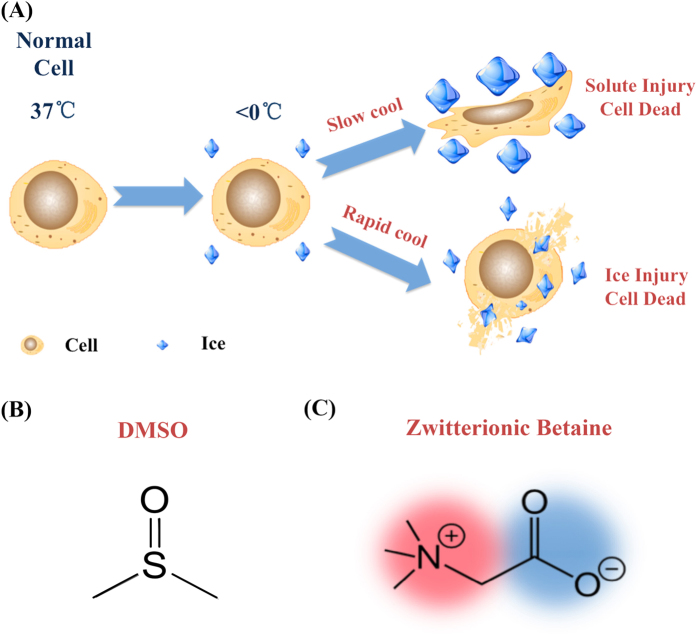
Figure 1
Figure 1
(A) Schematic drawing of two types of cryo-injuries in the freezing process. The molecular structure of (B) DMSO and (C) zwitterionic betaine.
Figure 2
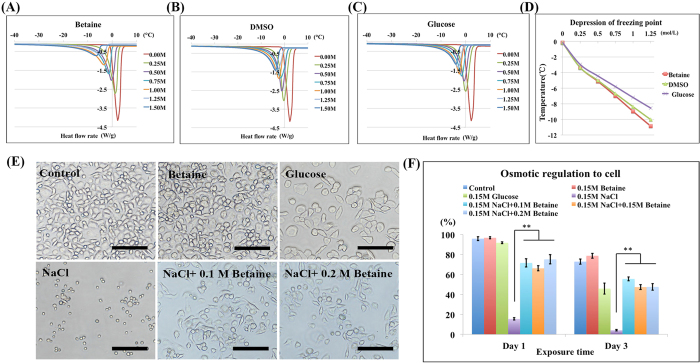
Figure 2. Effects on ice formation and osmotic regulation of betaine.
Differential scanning calorimetry (DSC) thermograms of pure water (red), 0.25 M (green), 0.5 M (purple), 0.75 M (light blue), 1 M (orange), 1.25 M (gray), 1.5 M (dark blue) of (A) betaine, (B) DMSO and (C) glucose. (D) The depression of water freezing point of betaine (red), DMSO (green) and glucose (purple). (E) GLC-82 cell attachment after exposure in medium, 0.15 M betaine, 0.15 M glucose, 0.15 M NaCl, 0.15 M NaCl + 0.1 M betaine, and 0.15 M NaCl + 0.2 M betaine for 3 day. Scale bar = 50 μm. (F) The cell viability after exposure in medium (dark blue), 0.15 M betaine (red), 0.15 M glucose (green), 0.15 M NaCl (purple), 0.15 M NaCl + 0.1 M betaine (light blue), 0.15 M NaCl + 0.15 M betaine (orange), and 0.15 M NaCl + 0.2 M betaine (gray) for 1 day and 3 day. Value = mean ± standard deviation, n ≥ 3. p <  *0.05; **0.01; ***0.001.
Figure 3
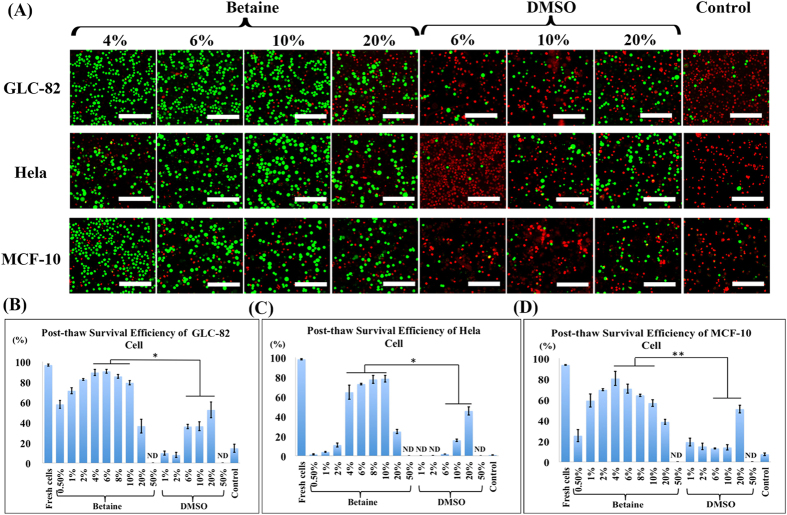
Figure 3. Cell cryopreservation using betaine with ultrarapid freezing.
(A) Fluorescence images of the live/dead assay of GLC-82 cells (upper row), Hela cells (middle row), and MCF-10 cells (lower row) cryopreservation with different concentrations of CPAs (betaine and DMSO), and cryopreservation in culture medium as control. Post-thaw survival efficiency of (B) GLC-82 cells, (C) Hela cells, and (D) MCF-10 cells evaluated at different concentrations of CPAs and control, with an identical cell amount (1.0 × 106). Green: live cells. Red: dead cells. ND: not detected. Scale bar = 50 μm. Value = mean ± standard deviation, n ≥ 3. p < *0.05; **0.01.
Figure 4
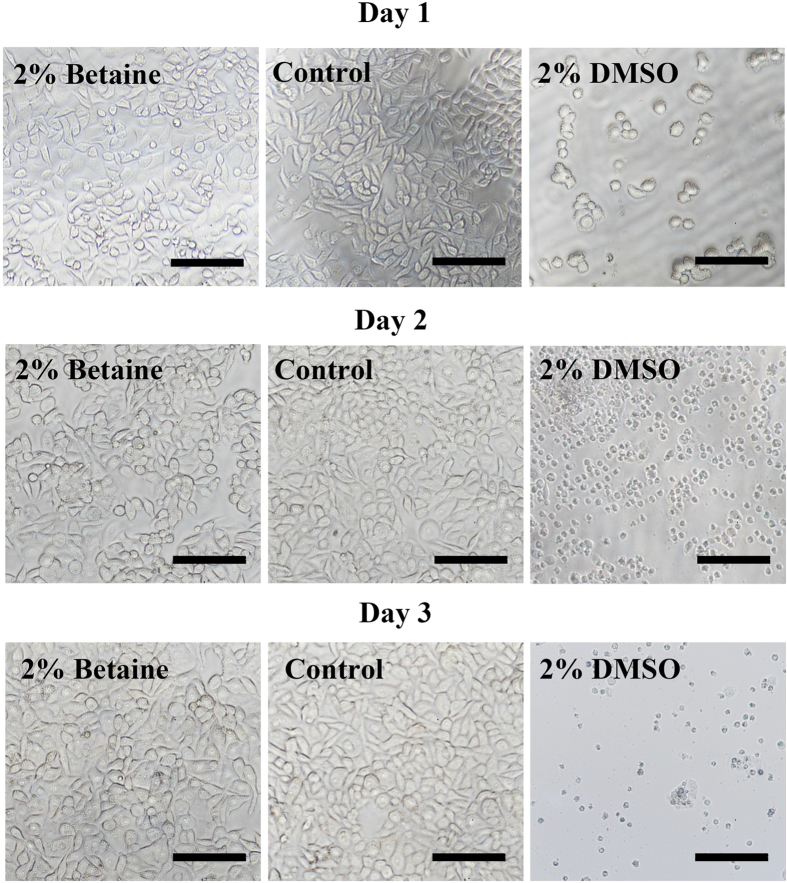
Figure 4. Cytotoxicity tests of betaine and DMSO.
The attachment of GLC-82 cells after exposure in medium containing 2% of betaine and DMSO for 1 day (upper row), 2 days (middle row) and 3 days (lower row), and in culture medium as a control. Scale bar = 50 μm.
Figure 5
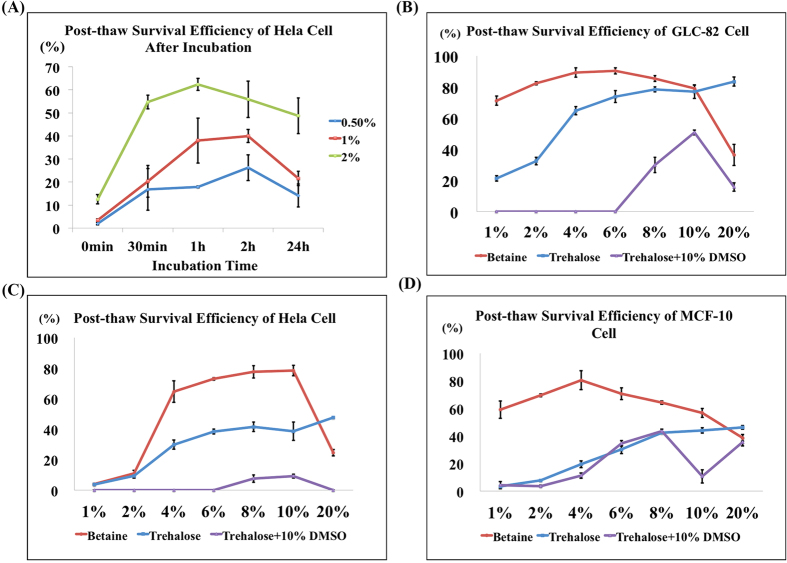
Figure 5. Rapid intracellular bioprotection of betaine.
(A) Post-thaw efficiency of Hela cells after incubation for different periods in medium containing 0.5% (blue), 1% (red), 2%, (green) of betaine. Post-thaw survival efficiency of (B) GLC-82 cells, (C) Hela cells and (D) MCF-10 cells after cryopreservation using betaine (red), trehalose (blue), and trehalose + 10% DMSO (purple) with ultrarapid freezing protocol. Value = mean ± standard deviation, n ≥ 3.
Figure 6
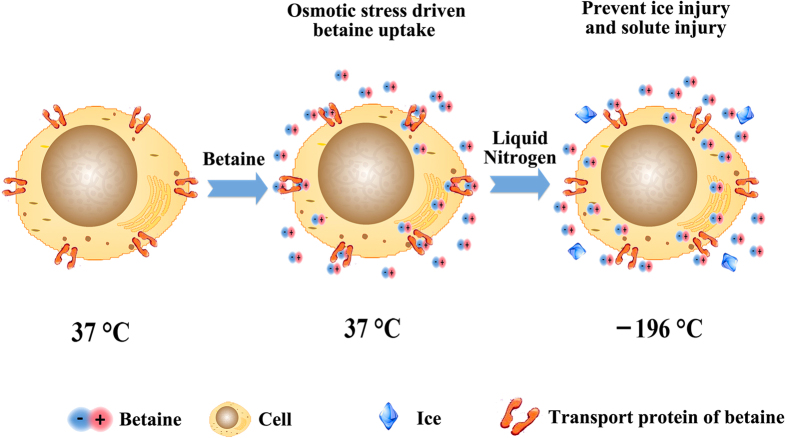
Figure 6. A proposed mechanism of cell cryopreservation using betaine with ultrarapid freezing.
During the freezing process, the uptake of betaine by cells via transport proteins is induced by osmotic stress (middle) and prevents the intracellular and extracellular ice injuries as well as solute injury.

References

    1. Rall W. F. & Fahy G. M. Ice-free cryopreservation of mouse embryos at −196 degrees C by vitrification. Nature 313, 573–575 (1985). - PubMed
    1. Trounson A. & Mohr L. Human pregnancy following cryopreservation, thawing and transfer of an eight-cell embryo. Nature 305, 707–709 (1983). - PubMed
    1. Hovatta O. et al. Cryopreservation of human ovarian tissue using dimethylsulphoxide and propanediol-sucrose as cryoprotectants. Hum. Reprod. 11, 1268–1272 (1996). - PubMed
    1. Chen C. Pregnancy after human oocyte cryopreservation. Lancet 1, 884–886 (1986). - PubMed
    1. Fahy G. M., Macfarlane D. R., Angell C. A. & Meryman H. T. Vitrification as an approach to cryopreservation. Cryobiology 21, 407–426 (1984). - PubMed

Publication types