. 2016 Nov 22:6:37524.
doi: 10.1038/srep37524.

Automatic Identification of Systolic Time Intervals in Seismocardiogram

Affiliations

Automatic Identification of Systolic Time Intervals in Seismocardiogram

Ghufran Shafiq et al. Sci Rep. .

Abstract

Continuous and non-invasive monitoring of hemodynamic parameters through unobtrusive wearable sensors can potentially aid in early detection of cardiac abnormalities, and provides a viable solution for long-term follow-up of patients with chronic cardiovascular diseases without disrupting the daily life activities. Electrocardiogram (ECG) and siesmocardiogram (SCG) signals can be readily acquired from light-weight electrodes and accelerometers respectively, which can be employed to derive systolic time intervals (STI). For this purpose, automated and accurate annotation of the relevant peaks in these signals is required, which is challenging due to the inter-subject morphological variability and noise prone nature of SCG signal. In this paper, an approach is proposed to automatically annotate the desired peaks in SCG signal that are related to STI by utilizing the information of peak detected in the sliding template to narrow-down the search for the desired peak in actual SCG signal. Experimental validation of this approach performed in conventional/controlled supine and realistic/challenging seated conditions, containing over 5600 heart beat cycles shows good performance and robustness of the proposed approach in noisy conditions. Automated measurement of STI in wearable configuration can provide a quantified cardiac health index for long-term monitoring of patients, elderly people at risk and health-enthusiasts.


Conflict of interest statement

The authors declare no competing financial interests.

Figures
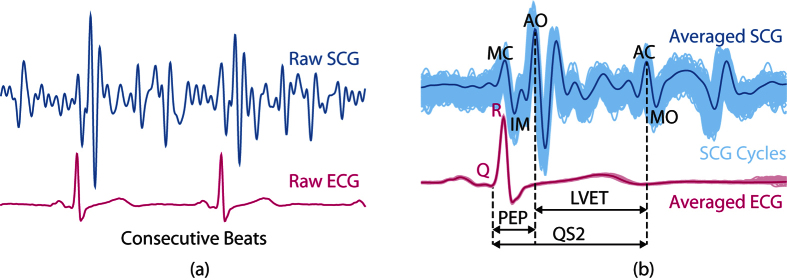
Figure 1
Figure 1. SCG vs. ECG signal.
(a) Consecutive SCG and ECG Cycles (b) superimposed SCG and ECG beats (light shades) aligned w.r.t R-peaks and their ensemble averages (dark lines).
Figure 2
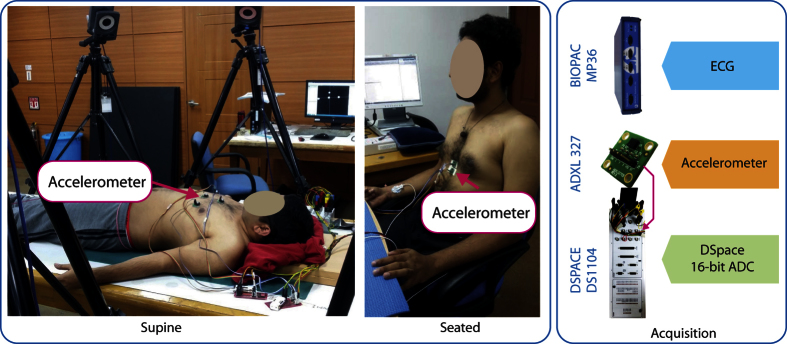
Figure 2. Experimental Setup - postures and data acquisition.
Accelerometer placed at lower sternum was considered for this study.
Figure 3
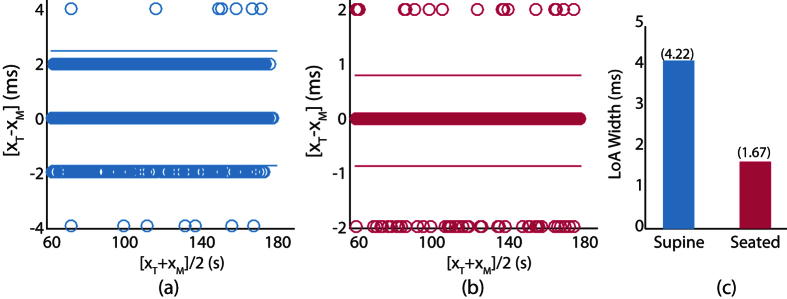
Figure 3
BA plots for AO peaks for supine trials (a) and seated trials (b) with LoA widths for both conditions (c). XT is the true location while XM is the identified location of AO peak by proposed approach.
Figure 4
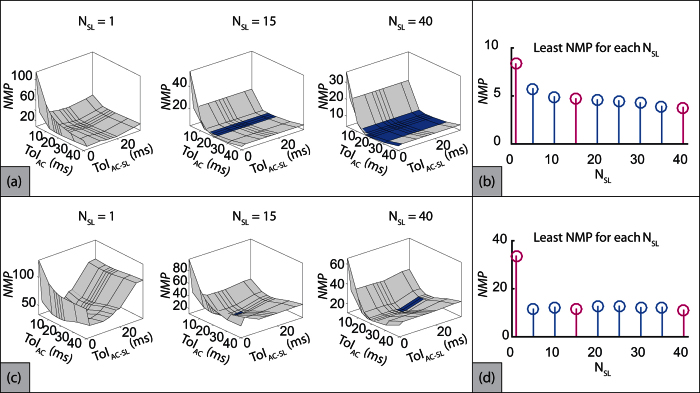
Figure 4. Optimal NSL, TolACsl and TolAC w.r.t. number of misclassified peaks for supine trials.
Dark shade shows region where 3.7895 ≤ NMP ≥ 4.7895 and light region shows NMP > 4.7895.
Figure 5
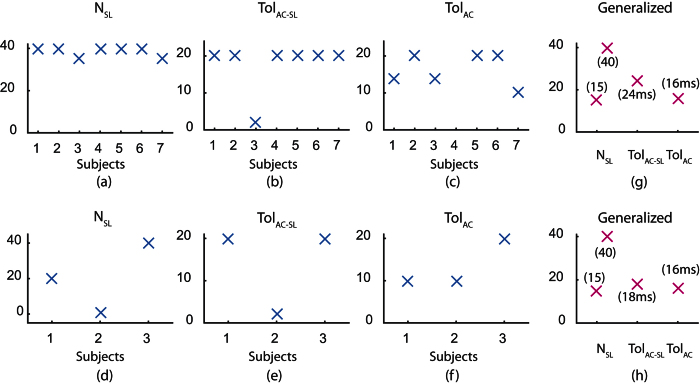
Figure 5
Subject-specific optimal parameters (af) and generalized optimal parameters (g, h). Subplots (ac) and (f) correspond to supine trials while (df) and (h) correspond to seated trials.
Figure 6
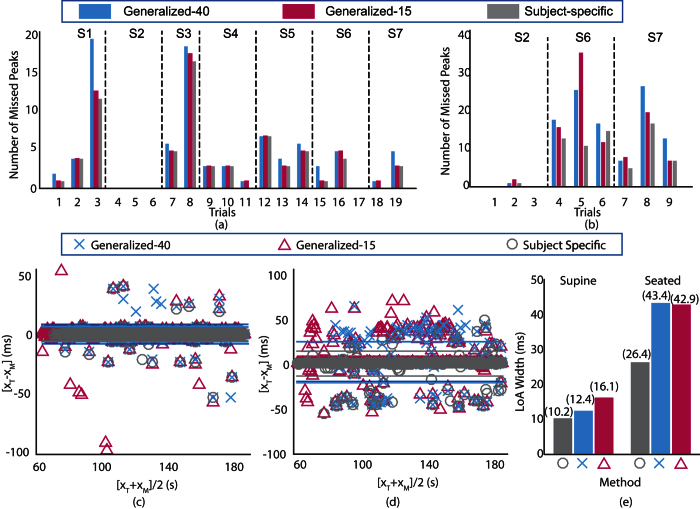
Figure 6. Comparison between detection performance of generalized parameters and subject specific parameters.
Number of misclassified peaks with generalized parameters and subject-specific parameters for supine trials (a) and seated trials (b). BA analysis of annotation error for supine trials (c) and seated trials (d) with the limits of agreements for both conditions (e).
Figure 7
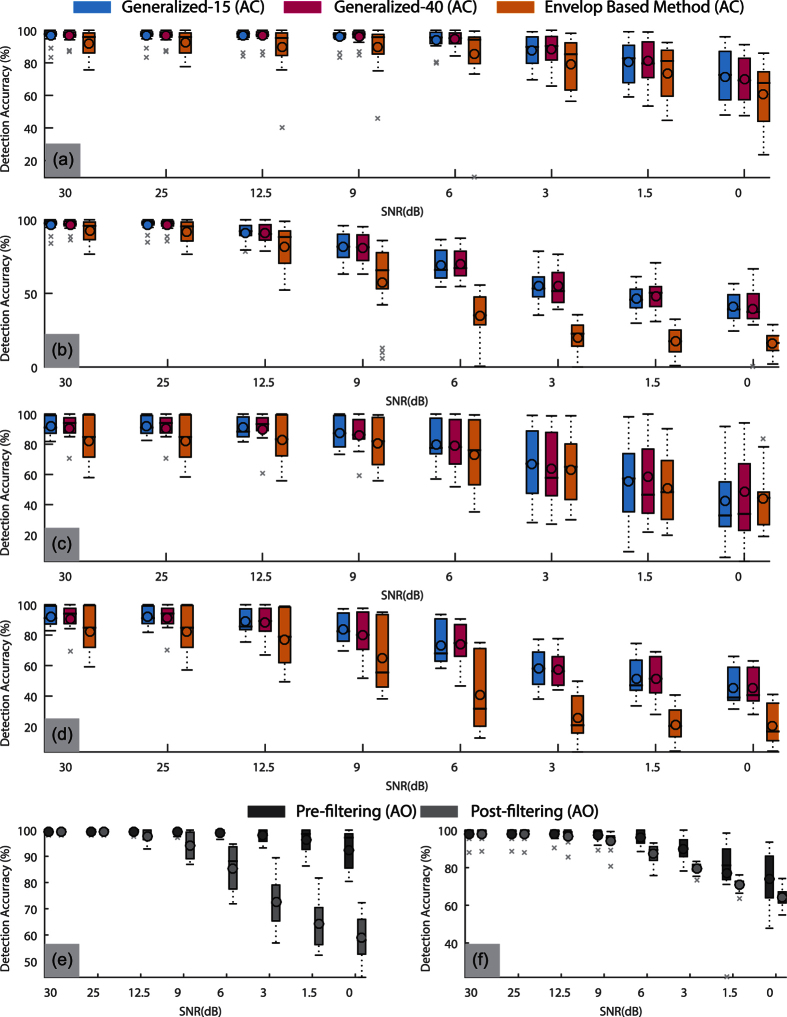
Figure 7. Demonstration of the effect of varying levels of Gaussian noise on AO/AC peak detection accuracy with box plots.
(a) AC detection accuracy in supine trials with pre-filtering noise, (b) AC detection accuracy in supine trials with post-filtering noise, (c) AC detection accuracy in seated trials with pre-filtering noise (d) AC detection accuracy in seated trials with post-filtering noise, (e) AO detection accuracy in supine trials with both pre-filtering and post-filtering noise and (f) AO detection accuracy in seated trials with pre-filtering and post-filtering noise.
Figure 8
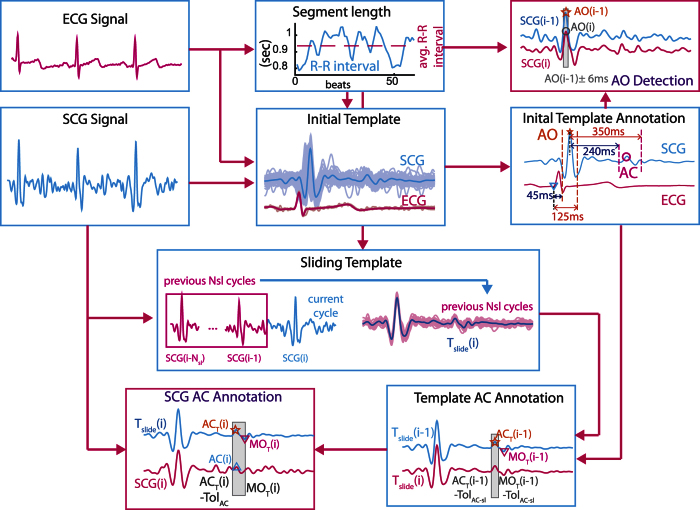
Figure 8. Proposed Approach.

References

    1. Pagidipati N. J. & Gaziano T. A. Estimating deaths from cardiovascular disease: a review of global methodologies of mortality measurement. Circulation 127, 749–756 (2013). - PMC - PubMed
    1. Wiens A. D. & Inan O. T. A novel system identification technique for improved wearable hemodynamics assessment. IEEE T. Bio-Med. Eng. 62, 1345–1354 (2015). - PMC - PubMed
    1. Etemadi M. et al. A Wearable Patch to Enable Long-Term Monitoring of Environmental, Activity and Hemodynamics Variables. IEEE T. Biomed. Circ. S. 10, 280–288 (2015). - PMC - PubMed
    1. Chuo Y. et al. Mechanically flexible wireless multisensor platform for human physical activity and vitals monitoring. IEEE T. Biomed. Circ. S. 4, 281–294 (2010). - PubMed
    1. Di Rienzo M. et al. Wearable seismocardiography: Towards a beat-by-beat assessment of cardiac mechanics in ambulant subjects. Auton. Neurosci-Basic Clin. 178, 50–59 (2013). - PubMed

Publication types

MeSH terms