. 2016 Nov 22:6:37639.
doi: 10.1038/srep37639.

Antimicrobial Peptide Potency is Facilitated by Greater Conformational Flexibility when Binding to Gram-negative Bacterial Inner Membranes

Affiliations

Antimicrobial Peptide Potency is Facilitated by Greater Conformational Flexibility when Binding to Gram-negative Bacterial Inner Membranes

Sarah-Beth T A Amos et al. Sci Rep. .

Erratum in

Abstract

The interaction of antimicrobial peptides (AMPs) with the inner membrane of Gram-negative bacteria is a key determinant of their abilities to exert diverse bactericidal effects. Here we present a molecular level understanding of the initial target membrane interaction for two cationic α-helical AMPs that share structural similarities but have a ten-fold difference in antibacterial potency towards Gram-negative bacteria. The binding and insertion from solution of pleurocidin or magainin 2 to membranes representing the inner membrane of Gram-negative bacteria, comprising a mixture of 128 anionic and 384 zwitterionic lipids, is monitored over 100 ns in all atom molecular dynamics simulations. The effects of the membrane interaction on both the peptide and lipid constituents are considered and compared with new and published experimental data obtained in the steady state. While both magainin 2 and pleurocidin are capable of disrupting bacterial membranes, the greater potency of pleurocidin is linked to its ability to penetrate within the bacterial cell. We show that pleurocidin displays much greater conformational flexibility when compared with magainin 2, resists self-association at the membrane surface and penetrates further into the hydrophobic core of the lipid bilayer. Conformational flexibility is therefore revealed as a key feature required of apparently α-helical cationic AMPs for enhanced antibacterial potency.


Figures
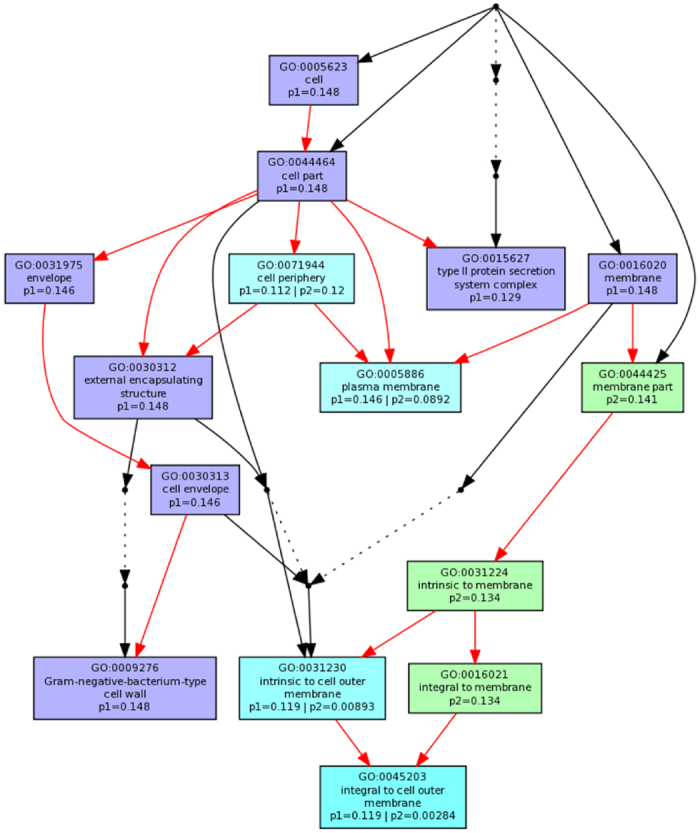
Figure 1
Figure 1. Transcriptome view of AMP mode of action.
Multi GOEAST comparison of gene ontology (GO) terms relating to cellular component for the 200–250 most differentially expressed genes in E. coli NCTC 9001 induced by challenge with sub-lethal concentrations of pleurocidin (blue: p1) or magainin 2 (green: p2). Magainin 2 predominantly affects membrane components while pleurocidin has wider affects within the cell in addition to those detected at the plasma and outer membranes. Red arrows represent relationships between two enriched GO terms, black arrows between enriched and un-enriched terms and black dashed arrows represent relationships between two un-enriched GO terms. Raw p values for GO terms have been adjusted using the Benjamini-Hochberg method allowing FDR < 15%. Figure generated from previously reported data.
Figure 2
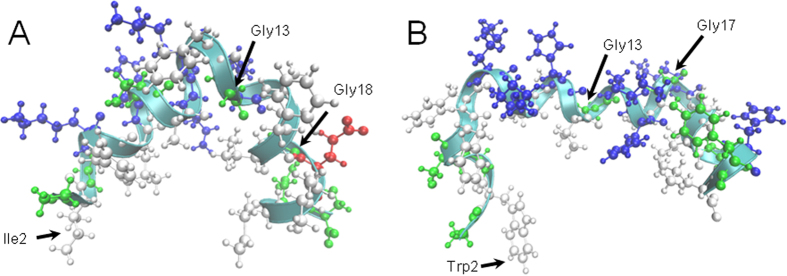
Figure 2. Cartoon representations of the two AMP structures.
Structures were determined by 1H NOESY NMR spectroscopy in the presence of 100 mM SDS-d25 and used as the starting structures for the MD simulations. Key residues described in the text are shown for magainin 2 (A) and pleurocidin (B).
Figure 3
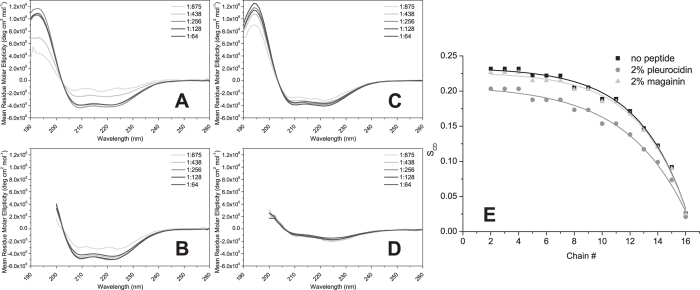
Figure 3. Secondary structure and membrane disordering in the steady state.
Dose dependent changes in far-UV CD spectra characterize the secondary structure of magainin 2 (A,B) or pleurocidin (C,D) in the presence of 5 mM DMPC/DMPG (75:25) (A,C) or POPE/POPG (75:25) (B,D) - pleurocidin or magainin 2 are present at the indicated molar ratios relative to the combined lipid fractions. Smoothed order parameter profile (E) obtained from solid echo 2H solid-state NMR spectra of multi lamellar vesicles comprising POPE/POPG-d31 (80:20) and 2 mol% pleurocidin or magainin 2 in 20 mM Tris-amine pH 7.3.
Figure 4
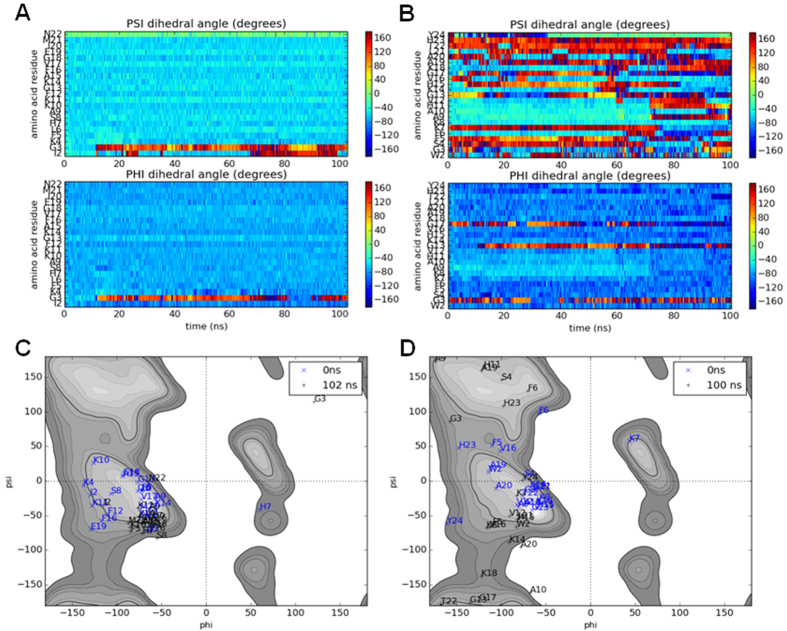
Figure 4. Conformational flexibility of pleurocidin is replicated in MD simulations.
Secondary structure analysis of the binding of a single magainin 2 (A,C) or pleurocidin (B,D) molecule to membranes consisting of 128 POPG and 384 POPE lipids. Ramachandran plots for snapshots obtained at the start and end of 100 ns runs are compared (C,D) while phi and psi angles for individual peptide residues are also plotted as a function of time (A,B).
Figure 5
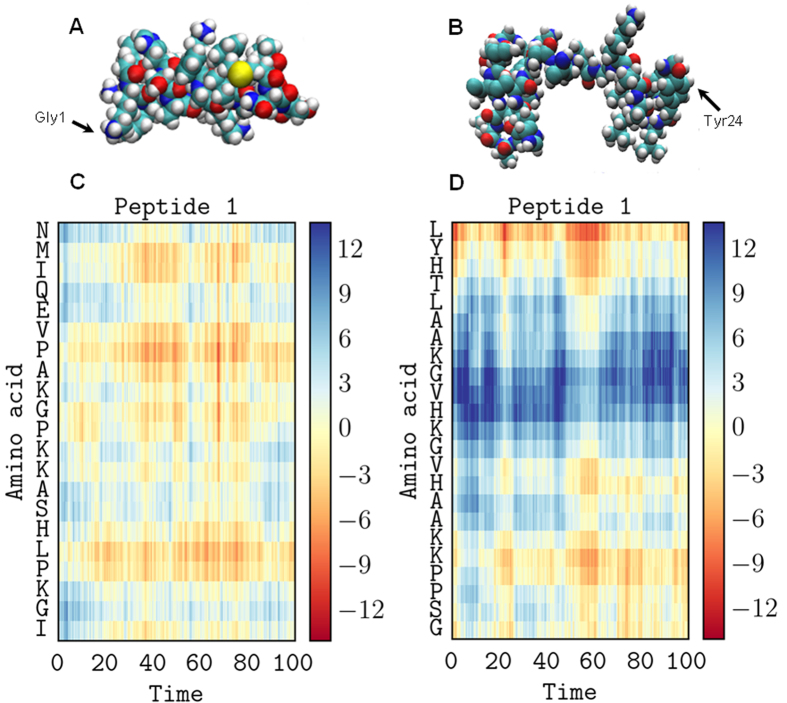
Figure 5. Conformational flexibility and alignment.
Space-filling models of magainin 2 (A) and pleurocidin (B) showing representative conformations in the membrane of one of eight peptides in each simulation at 100 ns. The distance (Å) to the upper membrane leaflet phosphate plane of each amino acid in the representative peptide is plotted over 100 ns for magainin 2 (C) and pleurocidin (D).
Figure 6
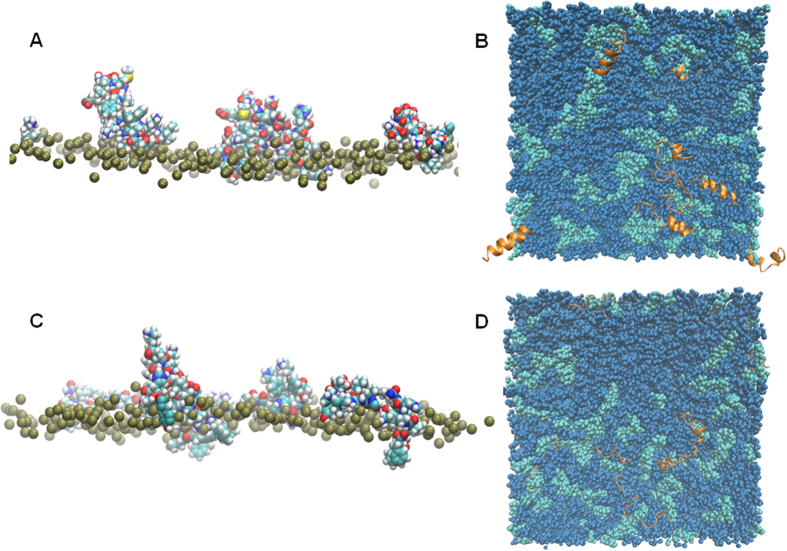
Figure 6. Penetration and aggregation.
Side view of the magainin 2 (A) and pleurocidin (C) four peptide simulations at 100 ns. For clarity, phosphate atoms (gold spheres) are shown for lipids in the top leaflet only. Top view snapshots of simulations for magainin 2 (B) and pleurocidin (D) of eight peptides in POPE/POPG membranes at 100 ns. The results show clustering of the POPG (green) lipids around the peptides, self-association of magainin 2 as well as a substantial loss of ordered helix conformation for pleurocidin (B).
Figure 7
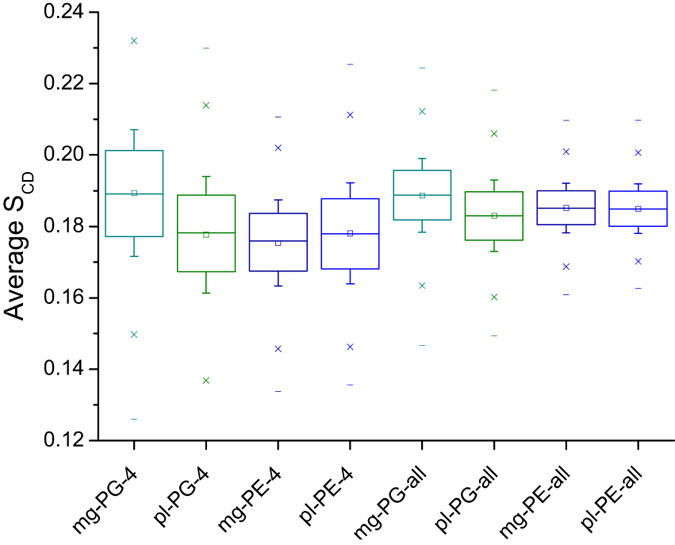
Figure 7. Disordering of individual lipid components.
Average order parameters (last 50 ns) of magainin 2 (mg) and pleurocidin (pl) eight peptide simulations for all lipids (-all) or those lipids within 4 Angstroms (-4) of any peptide. Box – 25–75% of data, whisker - ± one standard deviation. Statistical comparisons described in the text satisfy (p < 0.05) Wilcoxon Signed Ranks Test, Paired Sample t Test and OneWay ANOVA.

References

    1. Hale J. D. F. & Hancock R. E. W. Alternative mechanisms of action of cationic antimicrobial peptides on bacteria. Expert Rev. Anti Infect. Ther. 5, 951–959 (2007). - PubMed
    1. Hancock R. E. W. & Sahl H.-G. Antimicrobial and host-defense peptides as new anti-infective therapeutic strategies. Nature Biotech. 24, 1551–1557 (2006). - PubMed
    1. Brogden K. A. Antimicrobial peptides: pore formers or metabolic inhibitors in bacteria? Nat. Rev. Microbiol. 3, 238–250 (2005). - PubMed
    1. Kozlowska J. et al. Combined systems approaches reveal highly plastic responses to antimicrobial peptide challenge in Escherichia coli. Plos Pathogens 10, e1004104 (2014). - PMC - PubMed
    1. Reddy K. V. R., Yedery R. D. & Aranha C. Antimicrobial peptides: premises and promises. Int. J. Antimicrob. Agents 24, 536–547 (2004). - PubMed

Publication types

MeSH terms