


Weighing serological evidence of human exposure to animal influenza viruses - a literature review
- PMID: 27874827
- PMCID: PMC5114483
- DOI: 10.2807/1560-7917.ES.2016.21.44.30388
Weighing serological evidence of human exposure to animal influenza viruses - a literature review
Abstract
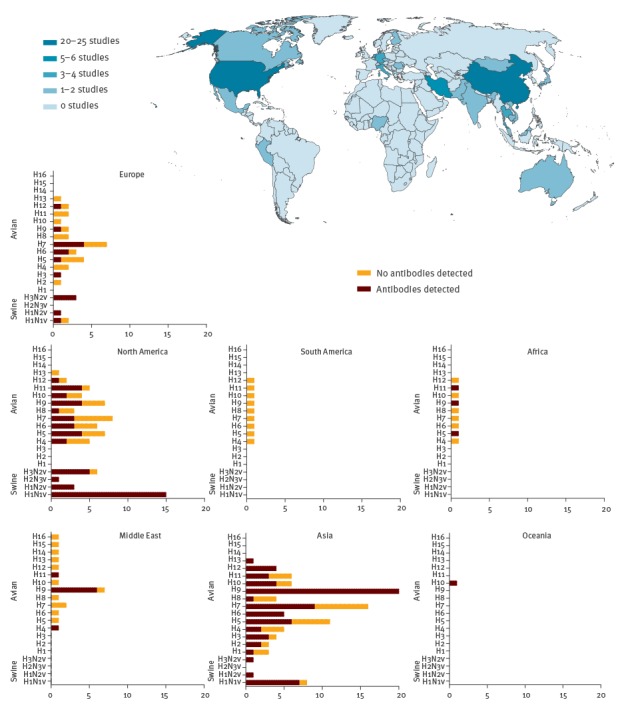
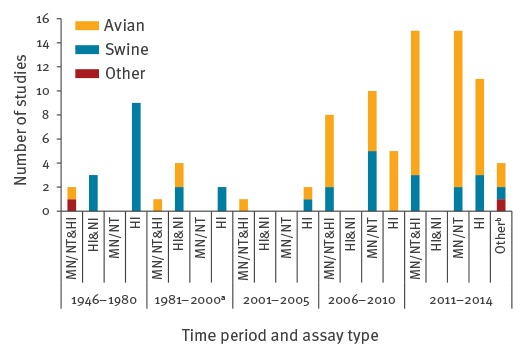
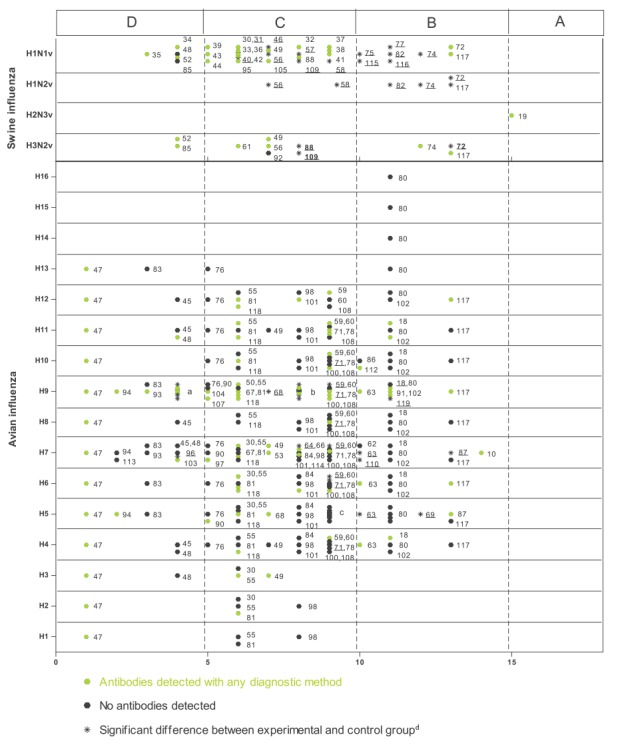
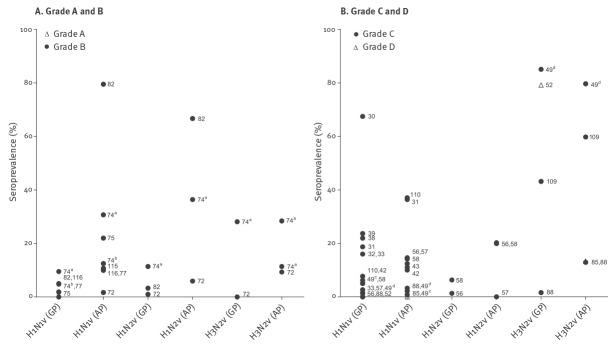
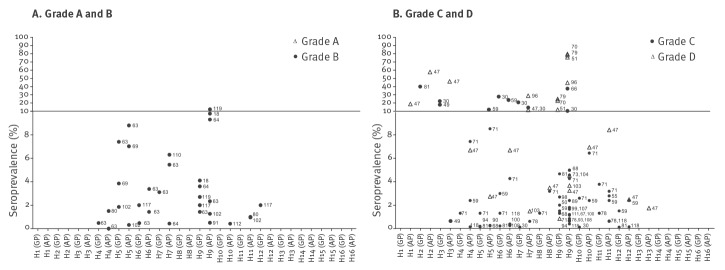
Assessing influenza A virus strains circulating in animals and their potential to cross the species barrier and cause human infections is important to improve human influenza surveillance and preparedness. We reviewed studies describing serological evidence of human exposure to animal influenza viruses. Comparing serological data is difficult due to a lack of standardisation in study designs and in laboratory methods used in published reports. Therefore, we designed a scoring system to assess and weigh specificity of obtained serology results in the selected articles. Many studies report reliable evidence of antibodies to swine influenza viruses among persons occupationally exposed to pigs. Most avian influenza studies target H5, H7 and H9 subtypes and most serological evidence of human exposure to avian influenza viruses is reported for these subtypes. Avian influenza studies receiving a low grade in this review often reported higher seroprevalences in humans compared with studies with a high grade. Official surveillance systems mainly focus on avian H5 and H7 viruses. Swine influenza viruses and avian subtypes other than H5 and H7 (emphasising H9) should be additionally included in official surveillance systems. Surveillance efforts should also be directed towards understudied geographical areas, such as Africa and South America.
Keywords: avian influenza; emerging or re-emerging diseases; influenza; laboratory surveillance; zoonoses; zoonotic infections.
This article is copyright of The Authors, 2016.
Conflict of interest statement
Conflicts of Interest: None declared.
Figures
References
Publication types
MeSH terms
Substances
LinkOut - more resources
Full Text Sources
Other Literature Sources
Medical