Review
. 2017 Jan 15:113:139-151.
doi: 10.1016/j.ymeth.2016.11.013. Epub 2016 Nov 20.

Predicting the pathogenicity of aminoacyl-tRNA synthetase mutations

Affiliations
Review

Predicting the pathogenicity of aminoacyl-tRNA synthetase mutations

Stephanie N Oprescu et al. Methods. .

Abstract

Aminoacyl-tRNA synthetases (ARSs) are ubiquitously expressed, essential enzymes responsible for charging tRNA with cognate amino acids-the first step in protein synthesis. ARSs are required for protein translation in the cytoplasm and mitochondria of all cells. Surprisingly, mutations in 28 of the 37 nuclear-encoded human ARS genes have been linked to a variety of recessive and dominant tissue-specific disorders. Current data indicate that impaired enzyme function is a robust predictor of the pathogenicity of ARS mutations. However, experimental model systems that distinguish between pathogenic and non-pathogenic ARS variants are required for implicating newly identified ARS mutations in disease. Here, we outline strategies to assist in predicting the pathogenicity of ARS variants and urge cautious evaluation of genetic and functional data prior to linking an ARS mutation to a human disease phenotype.

Keywords: Aminoacyl-tRNA synthetases; Charcot-Marie-Tooth (CMT) disease; Functional evaluation of disease-associated mutations; Mendelian disease; Neurodevelopmental disease; Peripheral neuropathy.


Figures

Figure 1
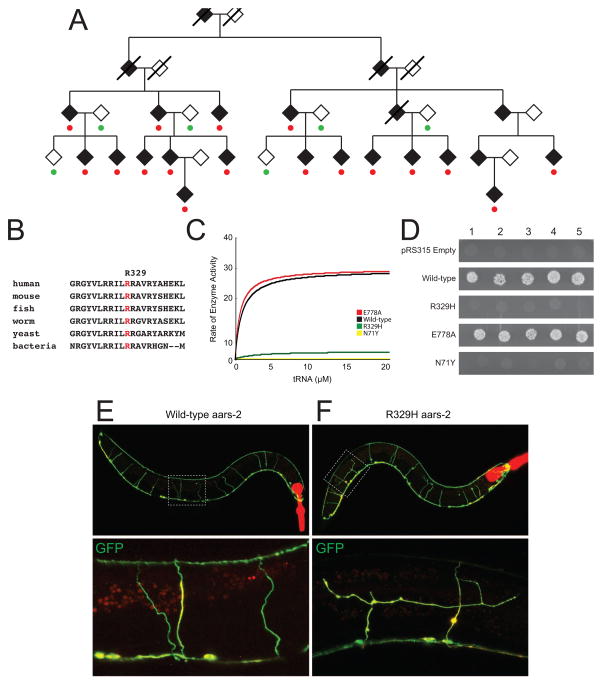
Figure 1. Characterization of the R329H AARS allele associated with dominant CMT disease
(A) R329H AARS segregates with dominant CMT disease in a large pedigree. Filled symbols represent affected individuals, empty symbols represent unaffected individuals, and deceased individuals are crossed out. Red circles denote heterozygosity for the R329H AARS allele and green circles represent homozygosity for wild-type AARS. Diamonds were used to protect the identity of the family. (B) A multiple-species sequence alignment at the R329 amino-acid residue illustrates conservation among diverse species. The affected residue is indicated in red. (C) Aminoacylation results for tRNAALA charging for wild-type (red), E778A (black), R329H (green), and N71Y AARS (yellow). The rate of enzyme activity (pmol/min/pmol enzyme) is plotted against tRNA concentration. (D) Yeast complementation results for wild-type, N71Y, R329H, and E778A AARS modeled in the yeast ortholog, ALA1. Five independent cultures for each indicated genotype were grown on solid medium containing 5-FOA. (E and F) Confocal, fluorescence microscopy of animals over-expressing the wild-type (E) or mutant (R329H; F) worm AARS ortholog (aars-2, tagged with TagRFP. In each panel, merged images of GFP-filled GABA motor neurons (Punc-47::GFP) and the TagRFP::aars-2 fusion protein are shown. The bottom frames are high magnification images and boxes in the top frames indicate the zoomed in area. Panel A was adapted from Latour et al., 2010, and Panels C and D were adapted from McLaughlin et al., 2014.
Figure 2
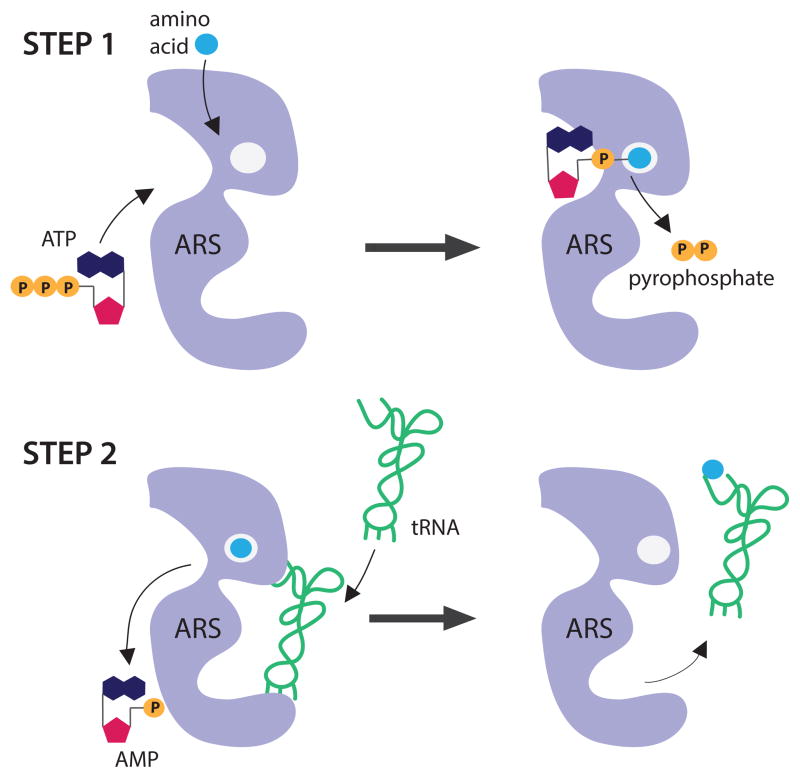
Figure 2. Schematic of the two-step aminoacylation reaction
The aminoacyl-tRNA synthetase (ARS; purple), amino acid (blue), ATP, AMP, pyrophosphate (orange), and tRNA (green) are all indicated. The reaction occurs in two steps, as depicted. First, the ARS binds the amino acid and ATP to form the amino-adenylate intermediate, which releases pyrophosphate. In the second step, the ARS binds the cognate tRNA to facilitate transfer of the amino acid to the tRNA. The tRNA is then released for protein synthesis. The image represents a monomeric enzyme; however, the reaction proceeds similarly for oligomeric enzymes.
Figure 3
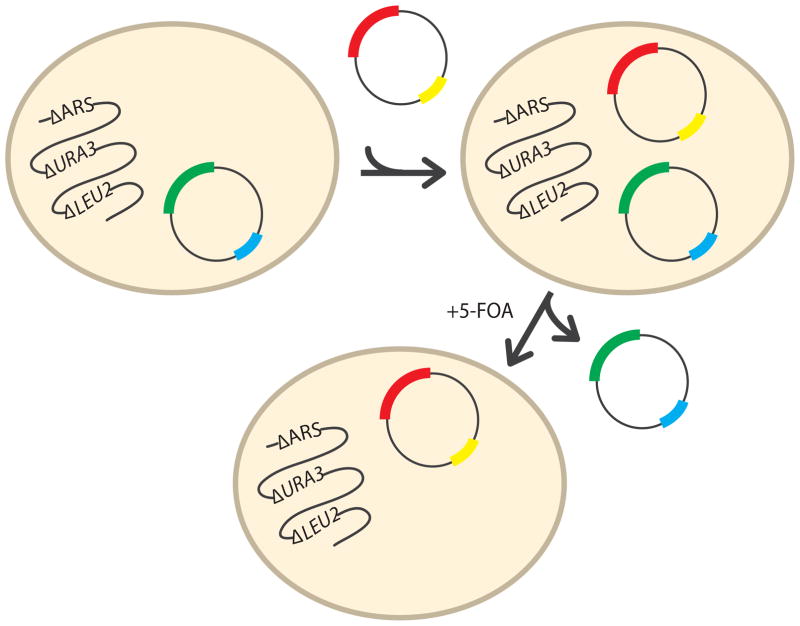
Figure 3. Overview of the yeast complementation assay
Haploid yeast disrupted for the endogenous ARS (ΔARS) locus of interest are maintained viable via a maintenance vector bearing a wild-type copy of the respective ARS locus (green) and the URA3 gene (blue) for selection. Wild-type or mutant alleles (red) are introduced via a LEU2-bearing (yellow) vector and resulting strains are selected for in medium lacking uracil and leucine. Subsequent growth on medium containing 5-FOA allows for the selection of cells that have spontaneously lost the maintenance vector and thus growth is correlated to the function of the ARS allele (red) on the experimental vector.
Figure 4
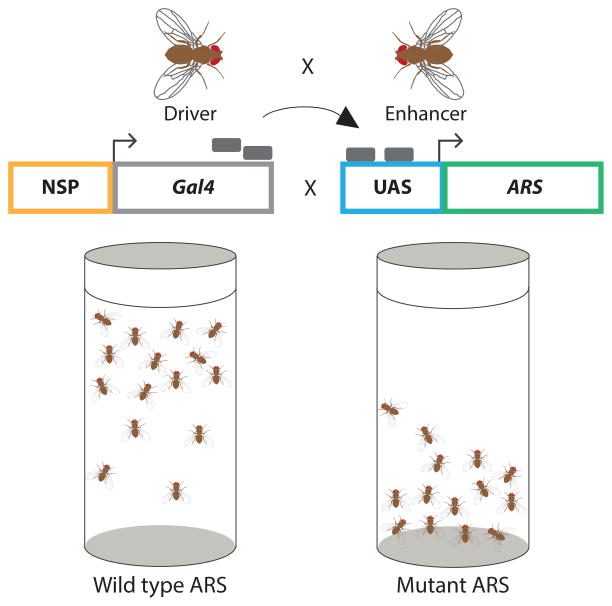
Figure 4. Studying ARS toxicity in Drosophila
Flies expressing Gal4 (grey rectangles) from a neuron-specific promoter (NSP) are crossed with flies bearing a transgene with the ARS cDNA of interest under control of an upstream activation sequence (UAS). In the progeny, Gal4 binds to the UAS to activate transcription of the ARS cDNA of interest in a neuron-specific fashion. Flies are then evaluated for their ability to climb using a negative geotaxis-climbing assay. Motor neuron function is quantified by the average climbing height of each cohort. The cartoon illustrates climbing defects observed in transgenic animals expressing a mutant (right), but not wild-type (left), ARS.
Figure 5
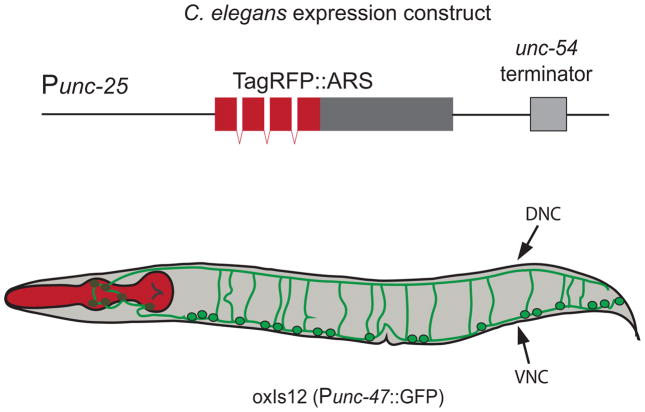
Figure 5. Studying ARS toxicity in C. elegans
GABA-neuron-specific expression of a fluorescently tagged ARS protein (TagRFP::ARS) is achieved via a GABA-specific promoter (Punc-25). The construct is injected into the worm strain oxls12, which stably expresses GFP in GABAergic neurons via the unc-47 promoter (Punc-47). Axons (green) extend ventrally from the cell bodies (green, black outline). The dorsal (DNC) and ventral (VNC) nerve cords are indicated. Fluorescent microscopy is used to assess for abnormalities in axonal morphology (e.g., Figure 1F) and thrash assays are used to quantify motor neuron function.

References

    1. Antonellis A, Green ED. The role of aminoacyl-tRNA synthetases in genetic diseases. Annu Rev Genomics Hum Genet. 2008;9:87–107. doi: 10.1146/annurev.genom.9.081307.164204. - DOI - PubMed
    1. Li L, Francklyn C, Carter CW. Aminoacylating urzymes challenge the RNA world hypothesis. Journal of Biological Chemistry. 2013;288:26856–26863. doi: 10.1074/jbc.M113.496125. - DOI - PMC - PubMed
    1. Steenweg ME, Ghezzi D, Haack T, Abbink TEM, Martinelli D, van Berkel CGM, et al. Leukoencephalopathy with thalamus and brainstem involvement and high lactate “LTBL” caused by EARS2 mutations. Brain. 2012;135:1387–1394. doi: 10.1093/brain/aws070. - DOI - PubMed
    1. Scheper GC, van der Klok T, van Andel RJ, van Berkel CGM, Sissler M, Smet J, et al. Mitochondrial aspartyl-tRNA synthetase deficiency causes leukoencephalopathy with brain stem and spinal cord involvement and lactate elevation. Nat Genet. 2007;39:534–539. doi: 10.1038/ng2013. - DOI - PubMed
    1. Elo JM, Yadavalli SS, Euro L, Isohanni P, Gotz A, Carroll CJ, et al. Mitochondrial phenylalanyl-tRNA synthetase mutations underlie fatal infantile Alpers encephalopathy. Hum Mol Genet. 2012;21:4521–4529. doi: 10.1093/hmg/dds294. - DOI - PubMed

Publication types

MeSH terms

Substances

LinkOut - more resources