. 2016 Nov 8:10:216.
doi: 10.3389/fnbeh.2016.00216. eCollection 2016.

Contexts Paired with Junk Food Impair Goal-Directed Behavior in Rats: Implications for Decision Making in Obesogenic Environments

Affiliations

Contexts Paired with Junk Food Impair Goal-Directed Behavior in Rats: Implications for Decision Making in Obesogenic Environments

Michael D Kendig et al. Front Behav Neurosci. .

Abstract

The high prevalence of obesity and related metabolic diseases calls for greater understanding of the factors that drive excess energy intake. Calorie-dense palatable foods are readily available and often are paired with highly salient environmental cues. These cues can trigger food-seeking and consumption in the absence of hunger. Here we examined the effects of palatable food-paired environmental cues on control of instrumental food-seeking behavior. In Experiment 1, adult male rats received exposures to one context containing three "junk" foods (JFs context) and another containing chow (Chow context). Next, rats were food-deprived and trained to perform instrumental responses (lever-press) for two novel food rewards in a third, distinct context. Contextual influences on flexible control of food-seeking behavior were then assessed by outcome devaluation tests held in the JF, chow and training contexts. Devaluation was achieved using specific satiety and test order was counterbalanced. Rats exhibited goal-directed control over behavior when tested in the training and chow-paired contexts. Notably, performance was habitual (insensitive to devaluation) when tested in the JF context. In Experiment 2 we tested whether the impairment found in the JF context could be ameliorated by the presentation of a discrete auditory cue paired with the chow context, relative to a second cue paired with the JF context. Consistent with the results of Experiment 1, the devaluation effect was not significant when rats were tested in the JF context with the JF cue. However, presenting the chow cue increased the impact of the devaluation treatment leading to a robust devaluation effect. Further tests confirmed that performance in the chow context was goal-directed and that sensory-specific satiety in the JF context was intact. These results show that environments paired with palatable foods can impair goal-directed control over food-seeking behavior, but that this deficit was improved by a cue paired with chow. This has promising implications for assisting individuals in controlling their eating behavior in environments designed to dysregulate it.

Keywords: Pavlovian conditioning; context; habit; instrumental conditioning; junk food; rat; stimulus.


Figures
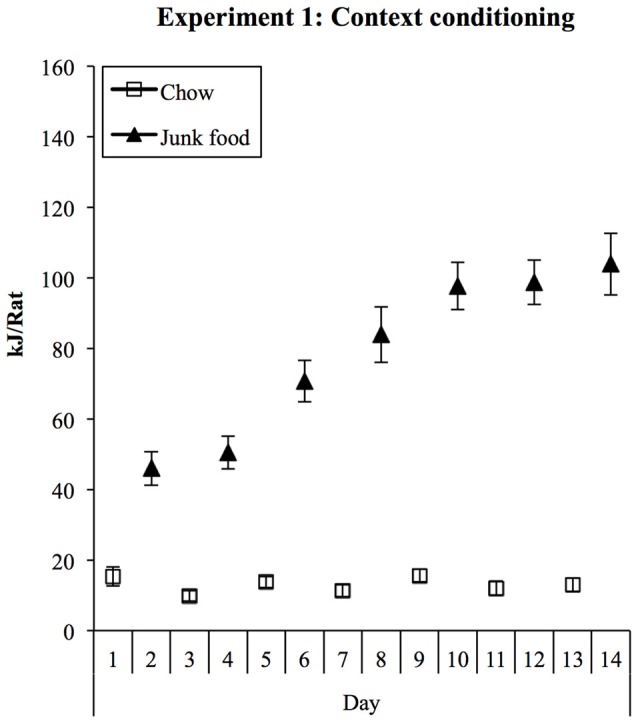
Figure 1
Figure 1
Experiment 1 context conditioning. In 1-h daily sessions, rats were exposed to a context containing three “junk” foods (JFs) or to another context containing chow (Chow). Consumption in the JF context was substantially greater from the first session onwards and increased steadily during training, while consumption in the chow context remained low.
Figure 2
Figure 2
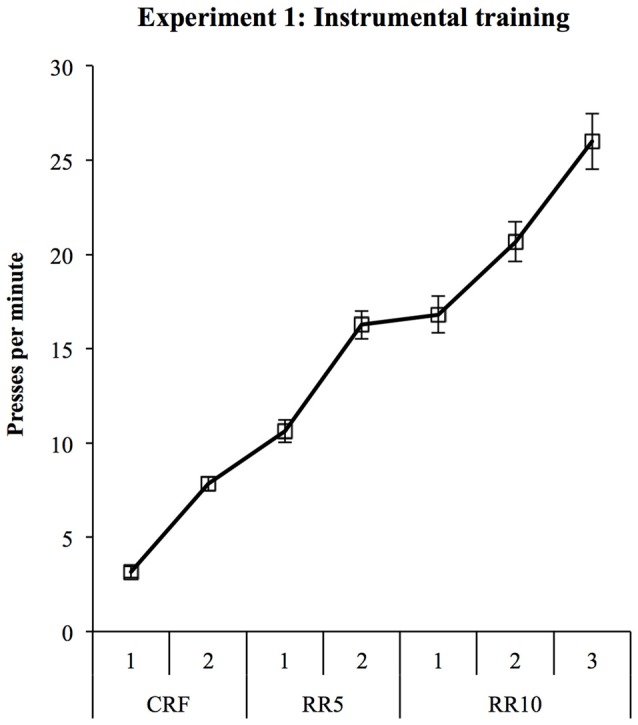
Experiment 1 instrumental training. Rats were trained to make two lever presses for pellets and 20% sucrose solution.
Figure 3
Figure 3
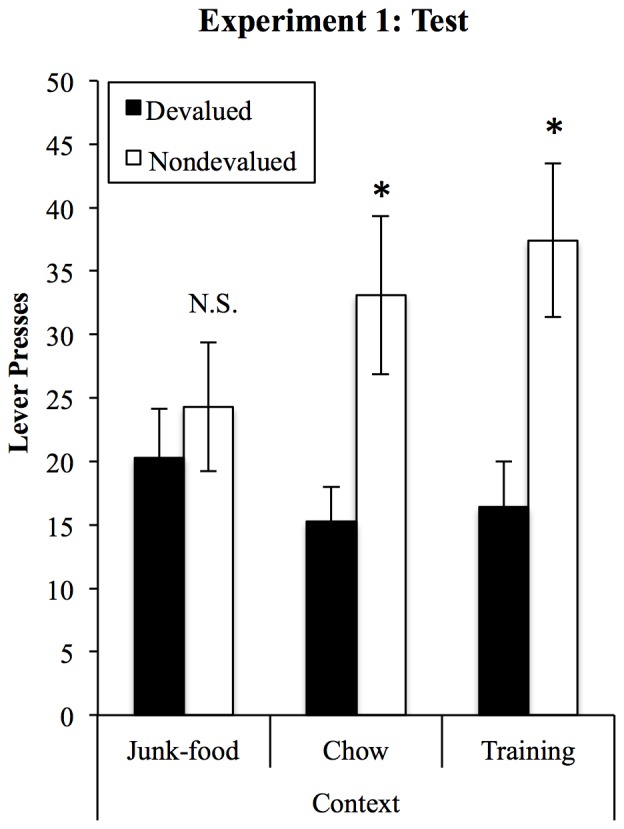
A JF context impairs sensitivity to outcome devaluation. Sensitivity to devaluation was tested in the three contexts, within-subjects and in a counterbalanced order. After devaluation of one outcome by specific satiety, rats selectively reduced responding on the lever that had earned that outcome in training, but only in the chow and training contexts. When tested in the JF context, performance was insensitive to devaluation, with no overall difference in responding between contexts. *Indicates p < 0.05, N.S., non-significant.
Figure 4
Figure 4
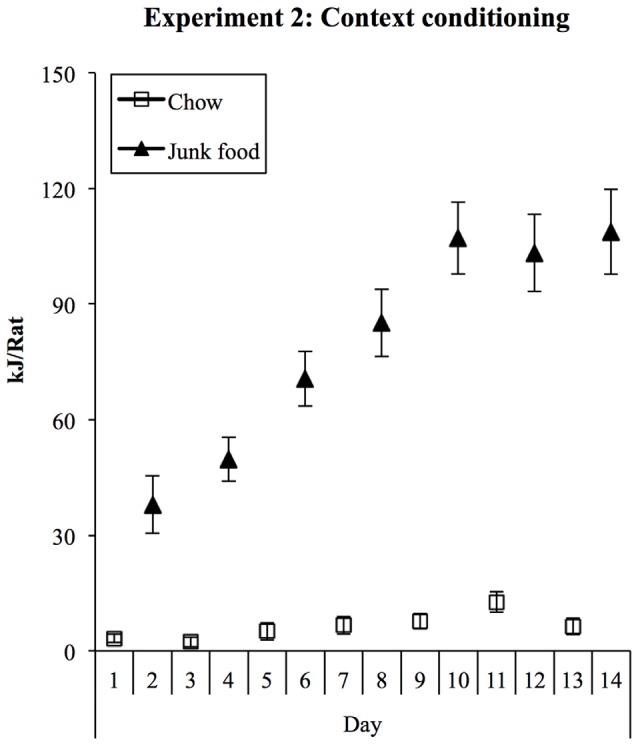
Experiment 2 context conditioning. As in Experiment 1, rats rapidly increased their intake of palatable foods in the JF context and ate minimal amounts of chow in the chow context.
Figure 5
Figure 5
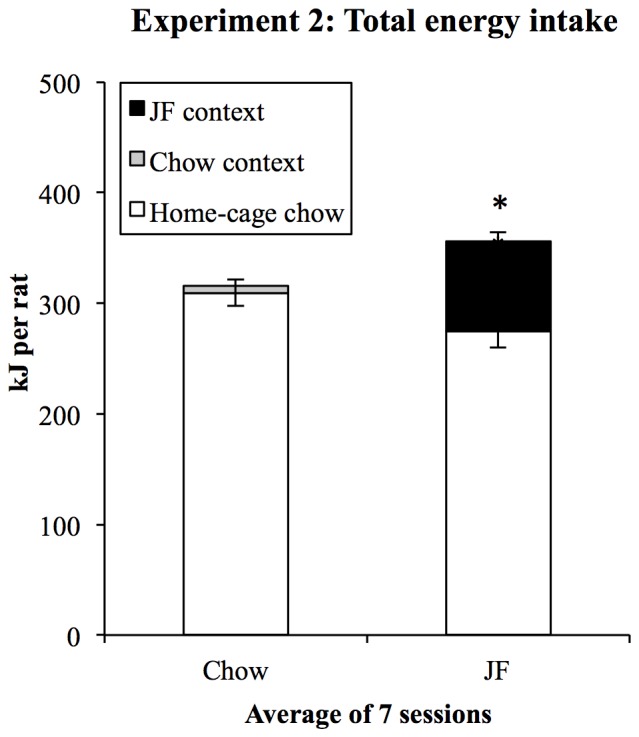
Total energy intake during context conditioning in Experiment 2. On average, rats ate more in 24-h periods beginning with a JF context session *p = 0.002. Since rats were group-housed, consumption in daily context sessions was summed for each cage.
Figure 6
Figure 6
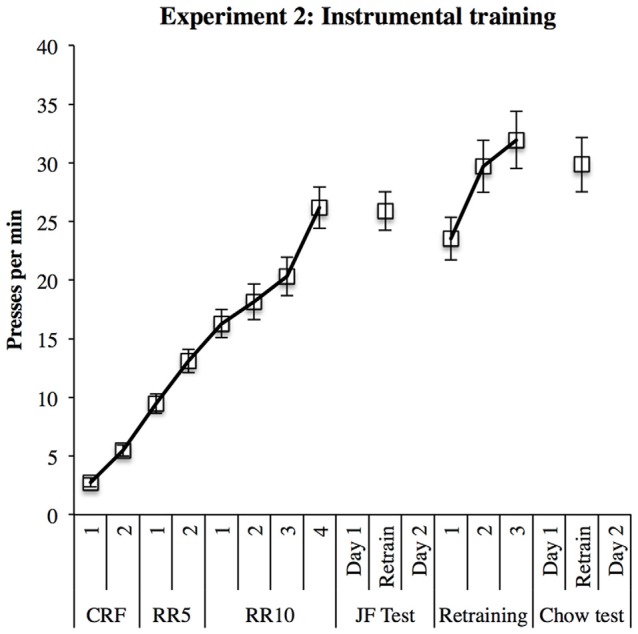
Instrumental training in Experiment 2. Responding increased steadily throughout training and remained high during re-training sessions between outcome devaluation tests.
Figure 7
Figure 7
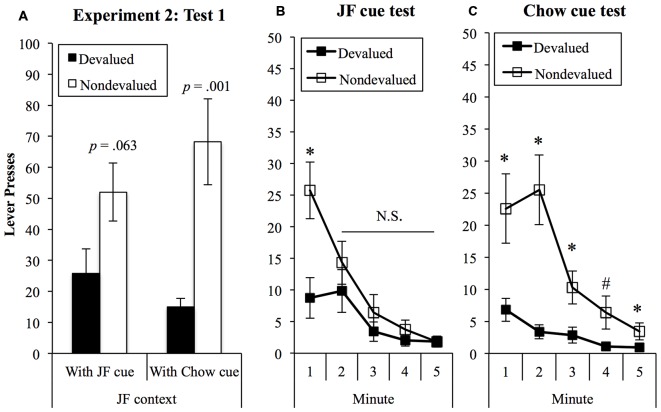
Devaluation tests in the JF contexts. (A) Sensitivity to devaluation in the JF context was significantly improved when the chow cue was presented (interaction p = 0.038). p-values show tests of simple effects in each cue test. Analysis of bin data showed that sensitivity was lost rapidly in the presence of the JF cue (B) but remained statistically significant throughout the chow-cue test (C). *p < 0.05; #p = 0.057.
Figure 8
Figure 8
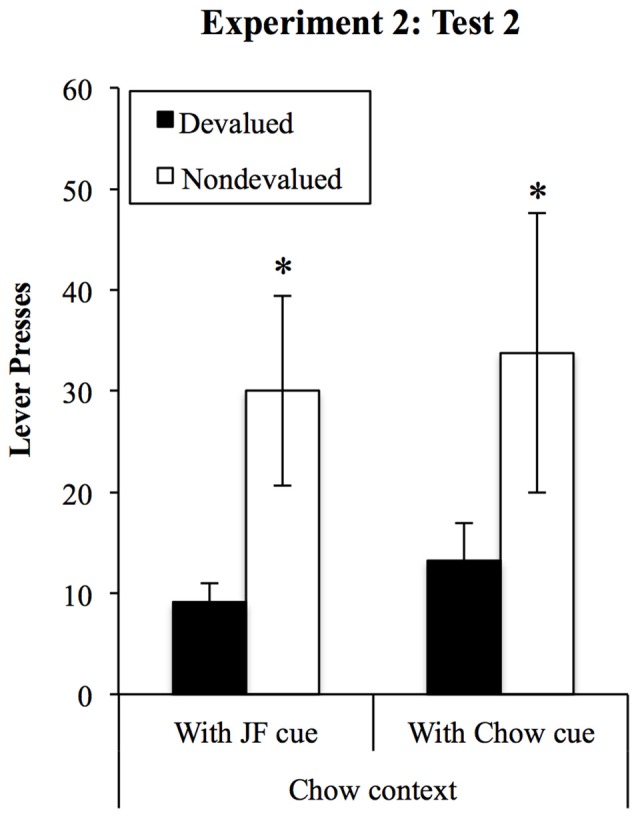
Devaluation tests in the Chow context. Performance was sensitive to outcome devaluation and unaffected by which cue was presented when rats were tested in the chow context, despite an overall reduction in responding from the first set of tests. *Indicates p = 0.015 for devaluation effect.
Figure 9
Figure 9
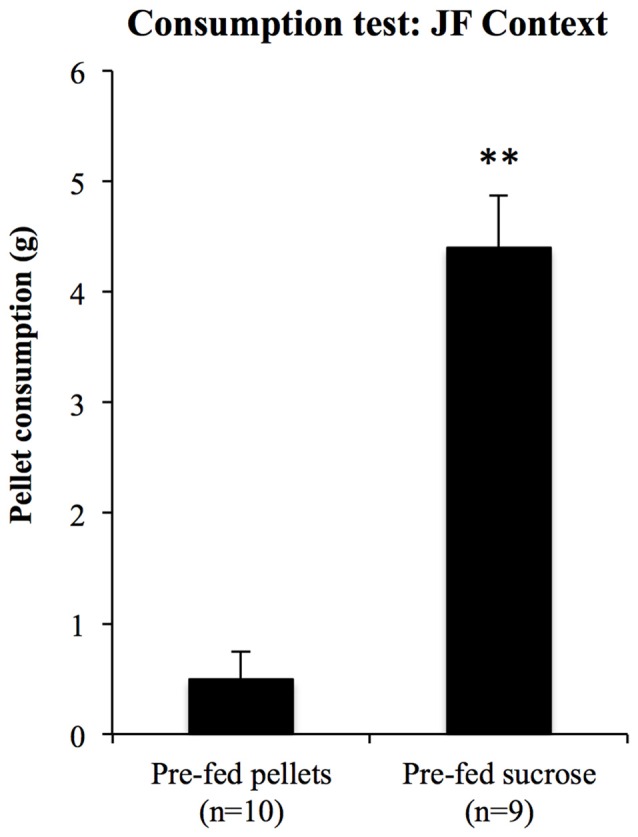
Sensitivity to outcome devaluation measured by consumption. To test whether sensory specific satiety was intact in the JF context, pellet consumption in this context was compared between rats pre-fed with pellets and sucrose solution. Those pre-fed with pellets ate significantly less than those pre-fed with sucrose solution, **indicates p < 0.001.

References

    1. Adams C. D., Dickinson A. (1981). Instrumental responding following reinforcer devaluation. Q. J. Exp. Psychol. 33, 109–121. 10.1080/14640748108400816 - DOI
    1. Balleine B. W., Dickinson A. (1998). The role of incentive learning in instrumental outcome revaluation by sensory-specific satiety. Anim. Learn. Behav. 26, 46–59. 10.3758/bf03199161 - DOI
    1. Berthoud H. R. (2007). Interactions between the “cognitive” and “metabolic” brain in the control of food intake. Physiol. Behav. 91, 486–498. 10.1016/j.physbeh.2006.12.016 - DOI - PubMed
    1. Berthoud H. R. (2012). The neurobiology of food intake in an obesogenic environment. Proc. Nutr. Soc. 71, 478–487. 10.1017/S0029665112000602 - DOI - PMC - PubMed
    1. Boggiano M. M., Dorsey J. R., Thomas J. M., Murdaugh D. L. (2009). The Pavlovian power of palatable food: lessons for weight-loss adherence from a new rodent model of cue-induced overeating. Int. J. Obes. (Lond) 33, 693–701. 10.1038/ijo.2009.57 - DOI - PMC - PubMed

LinkOut - more resources