


4-Hydroxyisoleucine from Fenugreek (Trigonella foenum-graecum): Effects on Insulin Resistance Associated with Obesity
- PMID: 27879673
- PMCID: PMC6273931
- DOI: 10.3390/molecules21111596
4-Hydroxyisoleucine from Fenugreek (Trigonella foenum-graecum): Effects on Insulin Resistance Associated with Obesity
Abstract
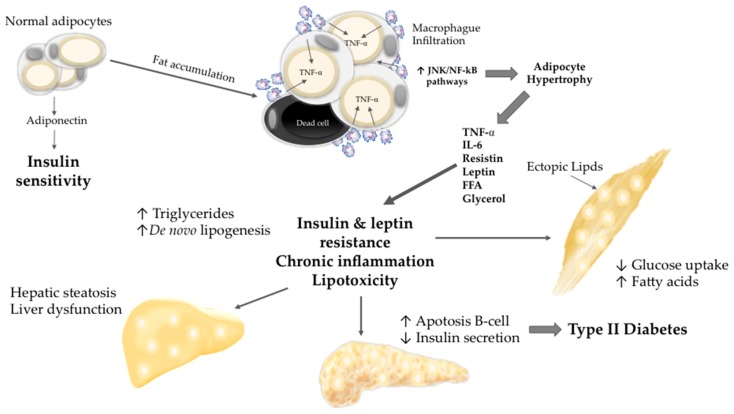
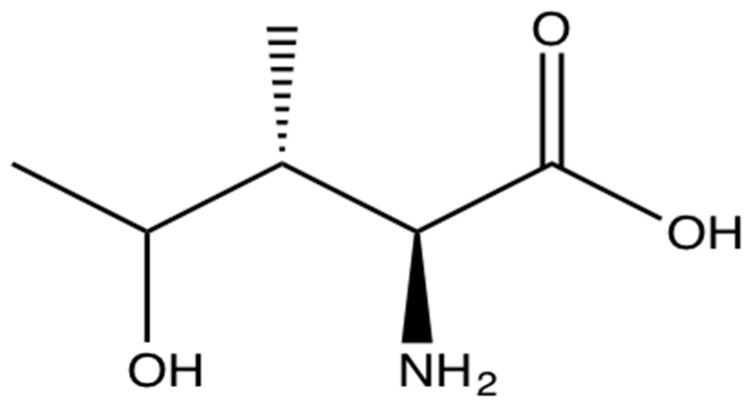
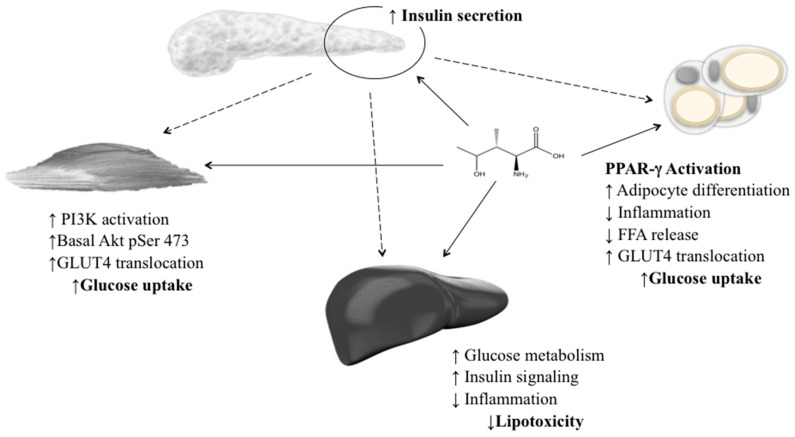
Obesity and insulin resistance (IR) are interdependent multifactorial processes that cannot be understood separately. Obesity leads to systemic inflammation and increased levels of free fatty acids that provoke IR and lipotoxicity. At the same time, IR exacerbates adipose cell dysfunction, resulting in chronic inflammation and major lipotoxic effects on nonadipose tissues. 4-Hydroxyisoleucine (4-OHIle), a peculiar nonprotein amino acid isolated from fenugreek (Trigonella foenum-graecum) seeds, exhibits interesting effects on IR related to obesity. 4-OHIle increases glucose-induced insulin release, and the insulin response mediated by 4-OHIle depends on glucose concentration. The beneficial effects observed are related to the regulation of blood glucose, plasma triglycerides, total cholesterol, free fatty acid levels, and the improvement of liver function. The mechanism of action is related to increased Akt phosphorylation and reduced activation of Jun N-terminal kinase (JNK)1/2, extracellular signal-regulated kinase (ERK)1/2, p38 mitogen-activated protein kinase (MAPK), and nuclear factor (NF)-κB. Here, we present a review of the research regarding the insulinotropic and insulin-sensitising activity of 4-OHIle in in vitro and in vivo models.
Keywords: 4-hydroxyisoleucine; Trigonella foenum-graecum; fenugreek; insulinotropic.
Conflict of interest statement
The authors declare no conflict of interest.
Figures
References
-
- World Health Organization Obesity and Overweight. 2009. [(accessed on 28 May 2016)]. Available online: http://www.who.int/dietphysicalactivity/publications/facts/obesity/en/
-
- Yang C.P., Lin C.C., Li C.I., Liu C.S., Lin W.Y., Hwang K.L., Yang S.Y., Chen H.J., Li T.C. Cardiovascular Risk Factors Increase the Risks of Diabetic Peripheral Neuropathy in Patients with Type 2 Diabetes Mellitus: The Taiwan Diabetes Study. Medicine. 2015;94:e1783. doi: 10.1097/MD.0000000000001783. - DOI - PMC - PubMed
Publication types
MeSH terms
Substances
LinkOut - more resources
Full Text Sources
Other Literature Sources
Medical
Research Materials
Miscellaneous
