


Circadian alterations during early stages of Alzheimer's disease are associated with aberrant cycles of DNA methylation in BMAL1
- PMID: 27883893
- PMCID: PMC5785929
- DOI: 10.1016/j.jalz.2016.10.003
Circadian alterations during early stages of Alzheimer's disease are associated with aberrant cycles of DNA methylation in BMAL1
Abstract
Introduction: Circadian alterations are prevalent in Alzheimer's disease (AD) and may contribute to cognitive impairment, behavioral symptoms, and neurodegeneration. Epigenetic mechanisms regulate the circadian clock, and changes in DNA methylation have been reported in AD brains, but the pathways that mediate circadian deregulation in AD are incompletely understood. We hypothesized that aberrant DNA methylation may affect circadian rhythms in AD.
Methods: We investigated DNA methylation, transcription, and expression of BMAL1, a positive regulator of the circadian clock, in cultured fibroblasts and brain samples from two independent cohorts of aging and AD.
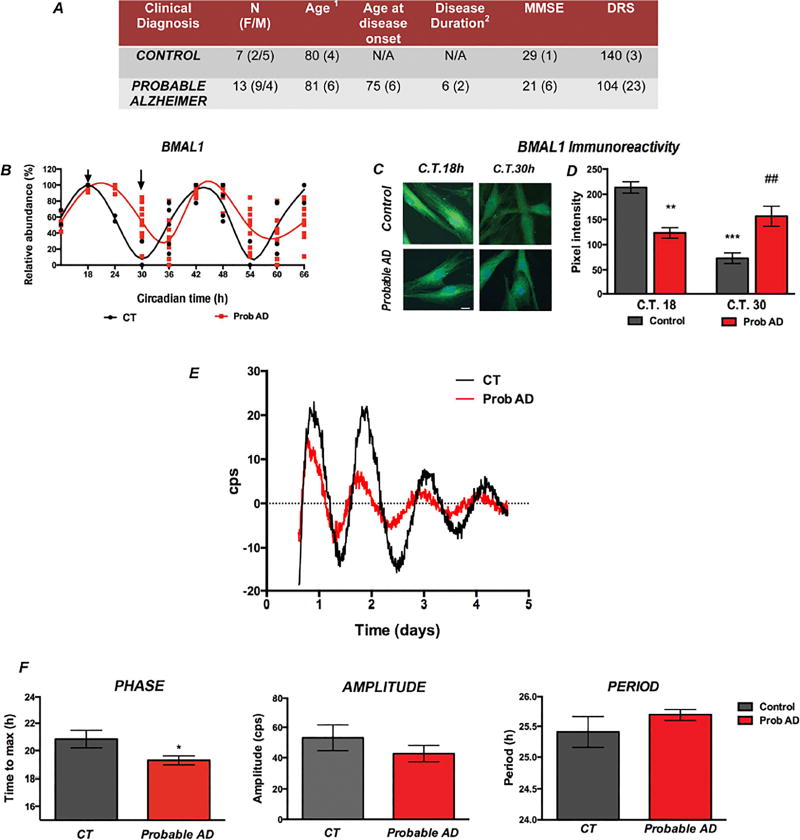
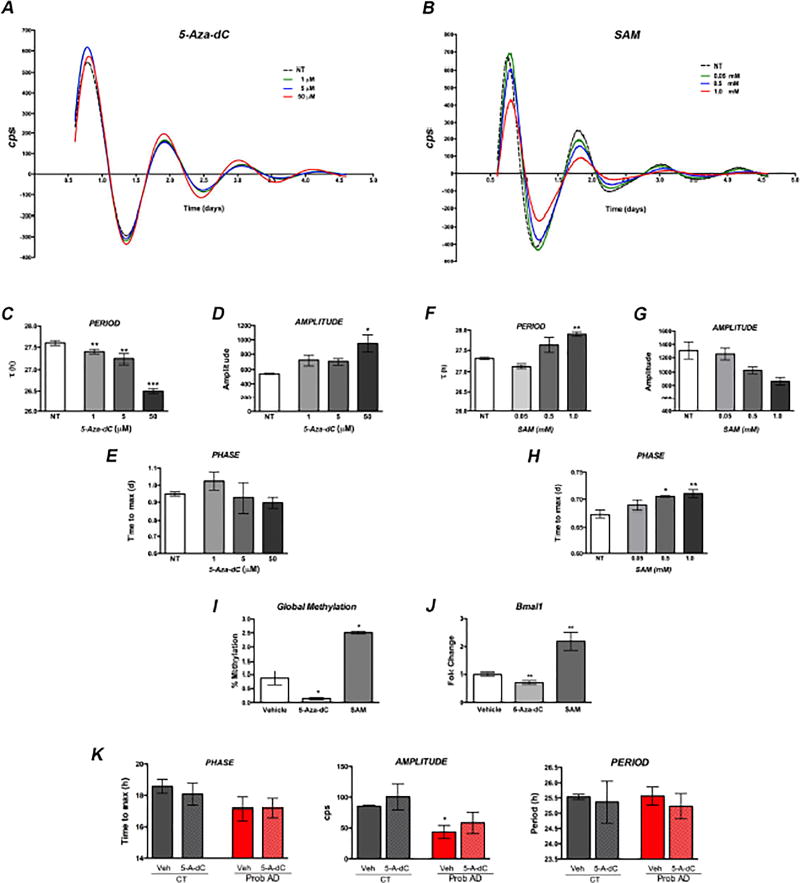
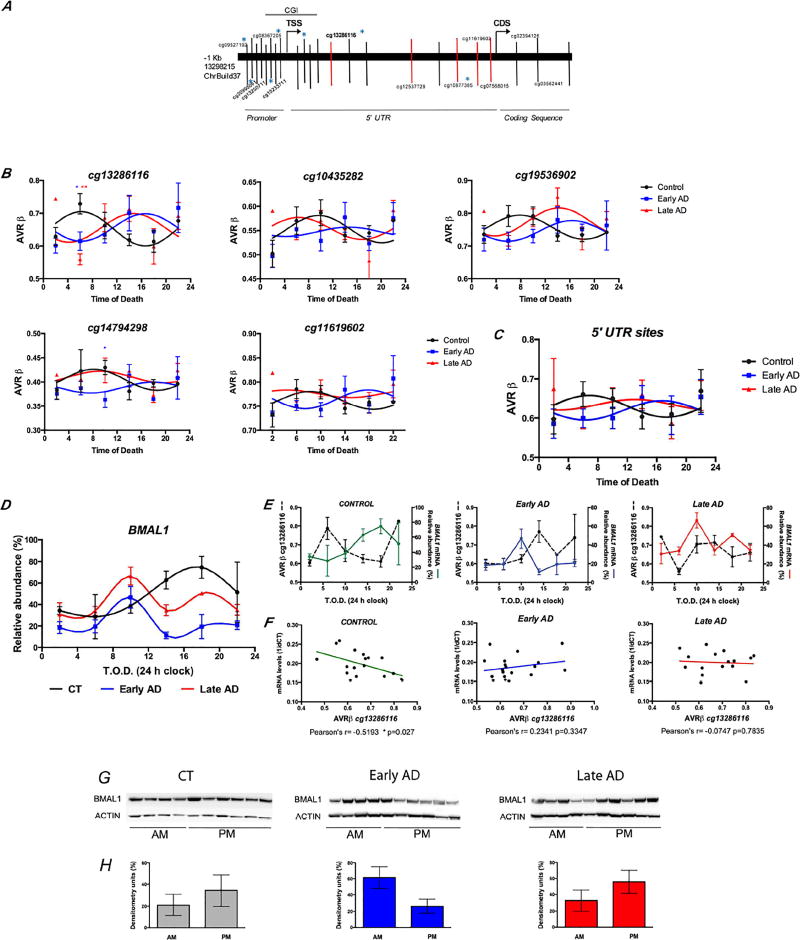
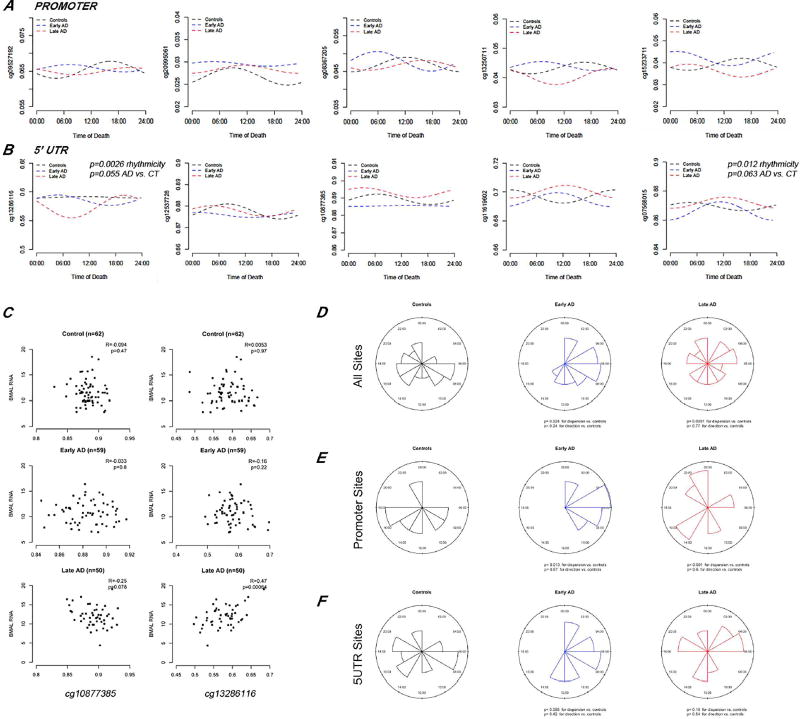
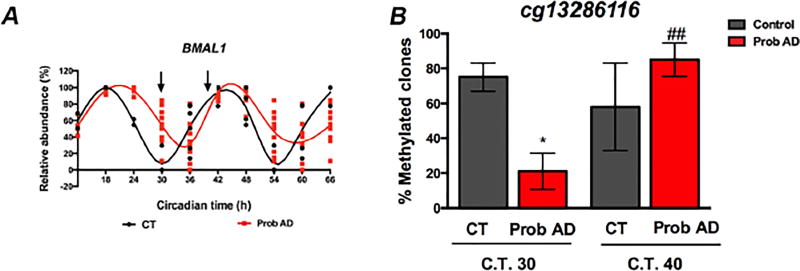
Results: DNA methylation modulated rhythmic expression of clock genes in cultured fibroblasts. Moreover, rhythmic methylation of BMAL1 was altered in AD brains and fibroblasts and correlated with transcription cycles.
Discussion: Our results indicate that cycles of DNA methylation contribute to the regulation of BMAL1 rhythms in the brain. Hence, aberrant epigenetic patterns may be linked to circadian alterations in AD.
Keywords: Alzheimer's disease; BMAL1; Brain; Circadian clock; Circadian rhythms; DNA methylation; Epigenetics; Fibroblasts; Methylation cycles; Neurodegeneration.
Copyright © 2016 the Alzheimer's Association. Published by Elsevier Inc. All rights reserved.
Figures
References
-
- Querfurth HW, LaFerla FM. Alzheimer's disease. N Engl J Med. 2010;362:329–44. - PubMed
-
- Van Someren EJ. Circadian and sleep disturbances in the elderly. Exp Gerontol. 2000;35:1229–37. - PubMed
-
- Gehrman P, Marler M, Martin JL, Shochat T, Corey-Bloom J, Ancoli-Israel S. The timing of activity rhythms in patients with dementia is related to survival. J Gerontol A Biol Sci Med Sci. 2004;59:1050–5. - PubMed
-
- Slats D, Claassen JA, Verbeek MM, Overeem S. Reciprocal interactions between sleep, circadian rhythms and Alzheimer's disease: focus on the role of hypocretin and melatonin. Ageing Res Rev. 2013;12:188–200. - PubMed
-
- Pollak CP, Perlick D. Sleep problems and institutionalization of the elderly. J Geriatr Psychiatry Neurol. 1991;4:204–10. - PubMed
MeSH terms
Substances
Grants and funding
LinkOut - more resources
Full Text Sources
Other Literature Sources
Medical
