Meta-Analysis
. 2017 Jun;47(6):1145-1170.
doi: 10.1007/s40279-016-0644-4.

Left Ventricular Speckle Tracking-Derived Cardiac Strain and Cardiac Twist Mechanics in Athletes: A Systematic Review and Meta-Analysis of Controlled Studies

Affiliations
Meta-Analysis

Left Ventricular Speckle Tracking-Derived Cardiac Strain and Cardiac Twist Mechanics in Athletes: A Systematic Review and Meta-Analysis of Controlled Studies

Alexander Beaumont et al. Sports Med. 2017 Jun.

Abstract

Background: The athlete's heart is associated with physiological remodeling as a consequence of repetitive cardiac loading. The effect of exercise training on left ventricular (LV) cardiac strain and twist mechanics are equivocal, and no meta-analysis has been conducted to date.

Objective: The objective of this systematic review and meta-analysis was to review the literature pertaining to the effect of different forms of athletic training on cardiac strain and twist mechanics and determine the influence of traditional and contemporary sporting classifications on cardiac strain and twist mechanics.

Methods: We searched PubMed/MEDLINE, Web of Science, and ScienceDirect for controlled studies of aged-matched male participants aged 18-45 years that used two-dimensional (2D) speckle tracking with a defined athlete sporting discipline and a control group not engaged in training programs. Data were extracted independently by two reviewers. Random-effects meta-analyses, subgroup analyses, and meta-regressions were conducted.

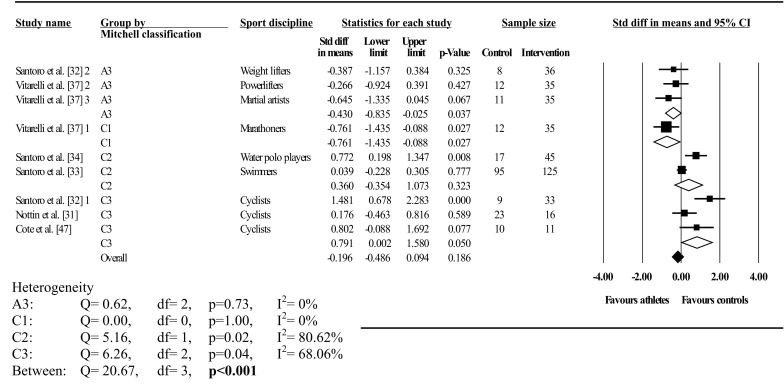
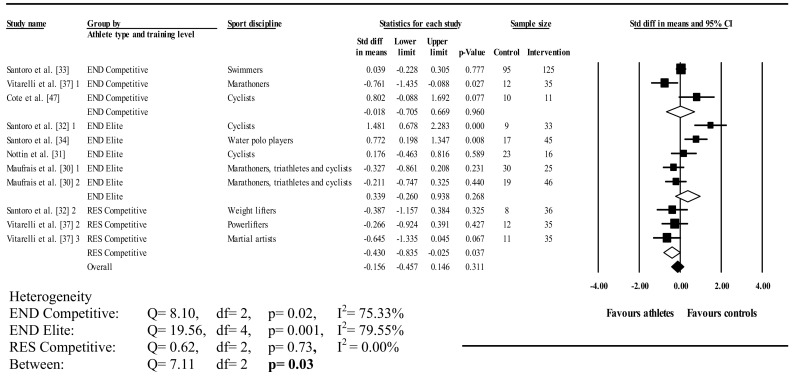
Results: Our review included 13 studies with 945 participants (controls n = 355; athletes n = 590). Meta-analyses showed no athlete-control differences in LV strain or twist mechanics. However, moderator analyses showed greater LV twist in high-static low-dynamic athletes (d = -0.76, 95% confidence interval [CI] -1.32 to -0.20; p < 0.01) than in controls. Peak untwisting velocity (PUV) was greater in high-static low-dynamic athletes (d = -0.43, 95% CI -0.84 to -0.03; p < 0.05) but less than controls in high-static high-dynamic athletes (d = 0.79, 95% CI 0.002-1.58; p = 0.05). Elite endurance athletes had significantly less twist and apical rotation than controls (d = 0.68, 95% CI 0.19-1.16, p < 0.01; d = 0.64, 95% CI 0.27-1.00, p = 0.001, respectively) but no differences in basal rotation. Meta-regressions showed LV mass index was positively associated with global longitudinal (b = 0.01, 95% CI 0.002-0.02; p < 0.05), whereas systolic blood pressure was negatively associated with PUV (b = -0.06, 95% CI -0.13 to -0.001; p = 0.05).

Conclusion: Echocardiographic 2D speckle tracking can identify subtle physiological differences in adaptations to cardiac strain and twist mechanics between athletes and healthy controls. Differences in speckle tracking echocardiography-derived parameters can be identified using suitable sporting categorizations.


Conflict of interest statement

Funding

No sources of funding were used to assist in the preparation of this article.

Conflict of interest

Alexander Beaumont, Fergal Grace, Joanna Richards, John Hough, David Oxborough, and Nicholas Sculthorpe have no conflicts of interest relevant to the content of this review.

Ethical approval

Ethical approval was not required to complete this review.

Figures
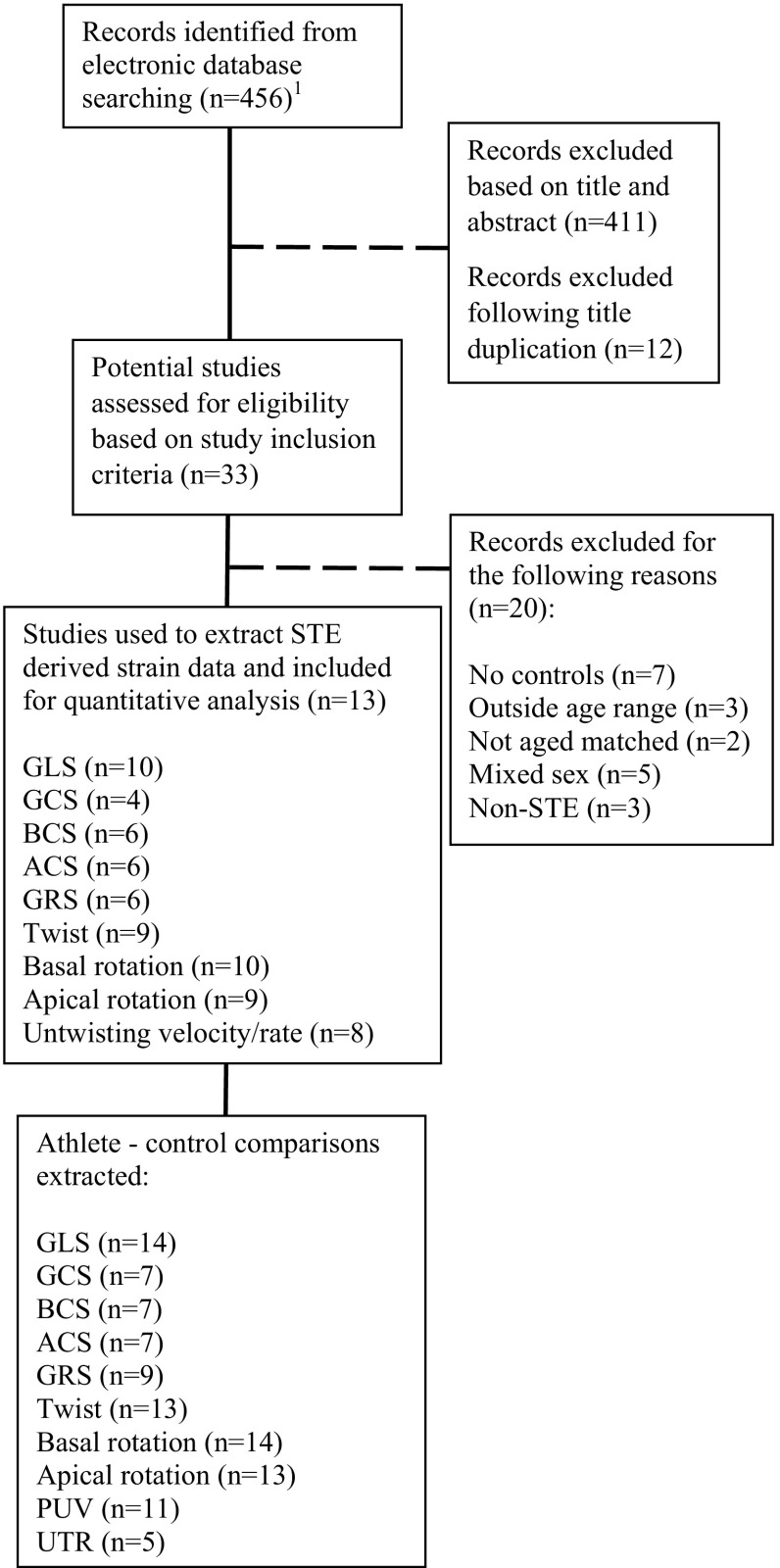
Fig. 1
Fig. 1
Schematic of literature searching and filtration process used for identification of eligible studies. ACS apical circumferential strain, BCS basal circumferential strain, GCS global circumferential strain, GLS global longitudinal strain, GRS global radial strain, n number of studies, PUV peak untwisting velocity, STE speckle tracking echocardiography, UTR untwisting rate. 1The electronic search was conducted as follows: echocardiography[Title/Abstract] OR ultrasound[Title/Abstract] OR left ventricular[Title/Abstract] OR two dimensional[Title/Abstract] NOT right ventricular[Title/Abstract] AND strain[Title/Abstract] OR speckle tracking[Title/Abstract] OR deformation[Title/Abstract] OR mechanics[Title/Abstract] AND athletes[Title/Abstract] OR exercise[Title/Abstract] OR trained[Title/Abstract] AND Journal Article[pytp] AND “2005/01/01”[PDAT]: “2016/01/01[PDAT] AND “humans”[MeSH Terms] AND English[lang]
Fig. 2
Fig. 2
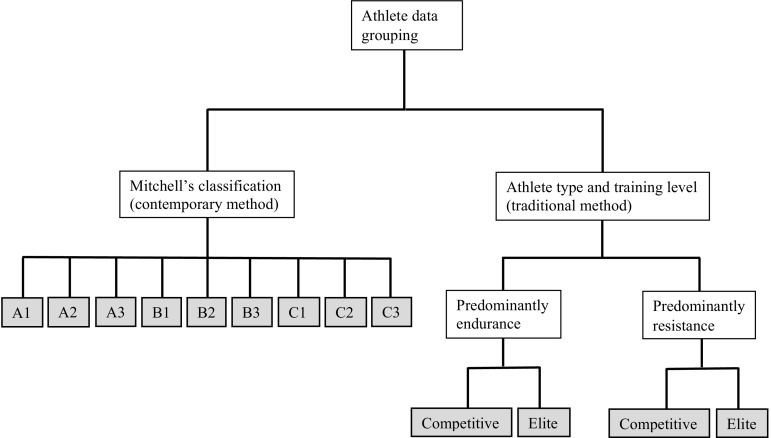
Model of athlete grouping using the contemporary Mitchell’s classification and a traditional dichotomous classification with additional grouping based on athlete training level. Filled boxes indicate endpoints of the classifications; athletes were allocated into one group for each method. A1 low dynamic, low static, A2 low dynamic, moderate static, A3 low dynamic, high static, B1 moderate dynamic, low static, B2 moderate dynamic, moderate static, B3 moderate dynamic, high static, C1 high dynamic, low static, C2 high dynamic, moderate static, C3 high dynamic, high static
Fig. 3
Fig. 3
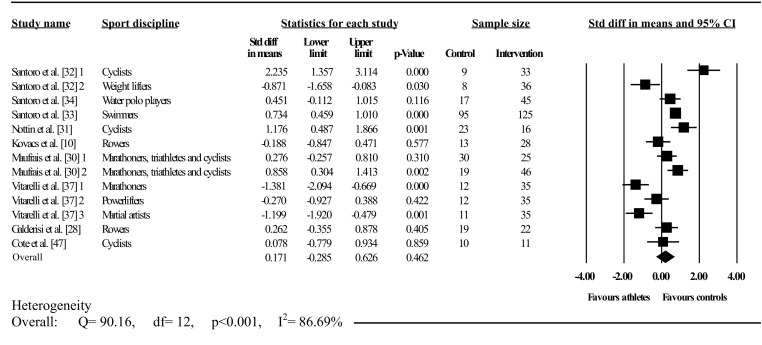
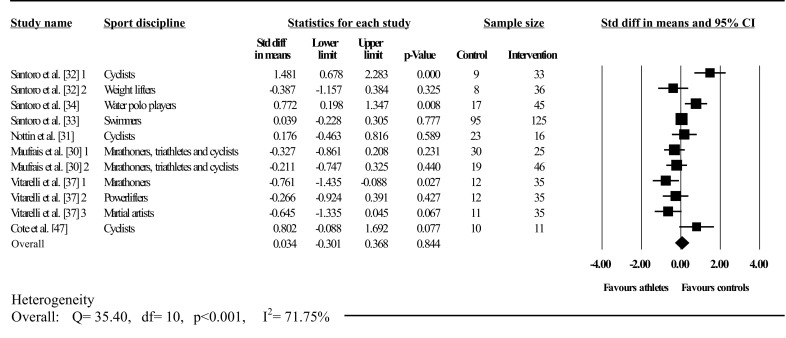
Forest plot showing meta-analysis of overall athlete–control differences in left ventricular twist. Closed square study effect size; the size of the symbol and CIs represent study weight and precision, respectively, in the meta-analysis, closed diamond overall summary effect, diamond width represents overall summary effect precision, CI confidence interval, 1, 2, and 3 denote multiple athlete–control comparisons from the same study
Fig. 4
Fig. 4
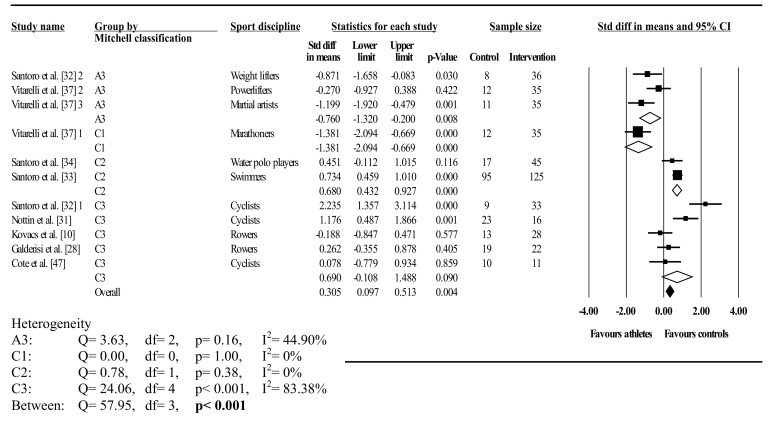
Forest plot showing meta-analysis of athlete–control differences in left ventricular twist categorised by Mitchell’s classification. Closed square study effect size; the size of the symbol and CIs represent study weight and precision, respectively, in the meta-analysis, closed diamond overall summary effect, open diamond overall summary effect within category, diamond width represents overall summary effect precision, A3 high static, low dynamic, C1 high dynamic, low static, C2 high dynamic, moderate static, C3 high dynamic, high static, CI confidence interval, 1, 2, and 3 denote multiple athlete–comparisons from the same study
Fig. 5
Fig. 5
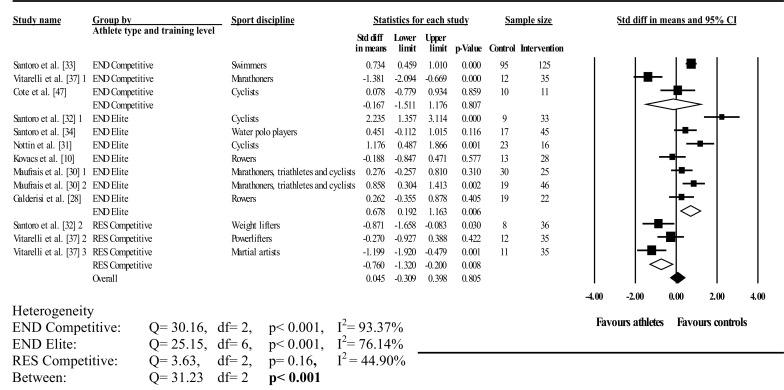
Forest plot showing meta-analysis of athlete–control differences in left ventricular twist using traditional categorization and athlete training level. Closed square study effect size; the size of the symbol and CIs represent study weight and precision, respectively, in the meta-analysis, closed diamond overall summary effect, open diamond overall summary effect within category, diamond width represents overall summary effect precision, CI confidence interval, END endurance, RES resistance, 1, 2, and 3 denote multiple athlete–control comparisons from the same study
Fig. 6
Fig. 6
Forest plot showing meta-analysis of overall athlete–control differences in left ventricular peak untwisting velocity. Closed square study effect size; the size of symbol and CIs represent study weight and precision, respectively, in the meta-analysis, closed diamond overall summary effect, diamond width represents overall summary effect precision, CI confidence interval, 1, 2, and 3 denote multiple athlete–control comparisons from the same study
Fig. 7
Fig. 7
Forest plot showing meta-analysis of athlete–control differences in left ventricular peak untwisting velocity categorized by Mitchell’s classification. Closed square study effect size; the size of symbol and CIs represent study weight and precision, respectively, in the meta-analysis, closed diamond overall summary effect, open diamond overall summary effect within category, diamond width represents overall summary effect precision, A3 high static, low dynamic, C1 high dynamic, low static, C2 high dynamic, moderate static, C3 high dynamic, high static, CI confidence interval, 1, 2, and 3 denote multiple athlete–control comparisons from the same study
Fig. 8
Fig. 8
Forest plot showing meta-analysis of athlete–control differences in left ventricular peak untwisting velocity using traditional categorization and athlete training level. Closed square study effect size; size of symbol and confidence intervals represent study weight and precision, respectively, in the meta-analysis, closed diamond overall summary effect, open diamond overall summary effect within category, diamond width represents overall summary effect precision, CI confidence interval, END endurance, RES resistance, 1, 2, and 3 denote multiple athlete–control comparisons from the same study

References

    1. Baggish AL, Wood MJ. Athlete’s heart and cardiovascular care of the athlete scientific and clinical update. Circulation. 2011;123(23):2723–2735. doi: 10.1161/CIRCULATIONAHA.110.981571. - DOI - PubMed
    1. Henschen S. Skilanglauf und Skiwettlauf. Eine medizinische Sportstudie Mitt med Klin Upsala (Jena). 1899;2:15–8.
    1. Baggish AL, Yared K, Weiner RB, et al. Differences in cardiac parameters among elite rowers and subelite rowers. Med Sci Sports Exerc. 2010;42(6):1215–1220. - PubMed
    1. Paterick TE, Gordon T, Spiegel D. Echocardiography: profiling of the athlete’s heart. J Am Soc Echocardiogr. 2014;27(9):940–948. doi: 10.1016/j.echo.2014.06.008. - DOI - PubMed
    1. Edler I, Lindstrom K. The history of echocardiography. Ultrasound Med Biol. 2004;30(12):1565–1644. doi: 10.1016/S0301-5629(99)00056-3. - DOI - PubMed