


Genetic Overlap Between Attention-Deficit/Hyperactivity Disorder and Bipolar Disorder: Evidence From Genome-wide Association Study Meta-analysis
- PMID: 27890468
- PMCID: PMC7027938
- DOI: 10.1016/j.biopsych.2016.08.040
Genetic Overlap Between Attention-Deficit/Hyperactivity Disorder and Bipolar Disorder: Evidence From Genome-wide Association Study Meta-analysis
Abstract
Background: Attention-deficit/hyperactivity disorder (ADHD) and bipolar disorder (BPD) are frequently co-occurring and highly heritable mental health conditions. We hypothesized that BPD cases with an early age of onset (≤21 years old) would be particularly likely to show genetic covariation with ADHD.
Methods: Genome-wide association study data were available for 4609 individuals with ADHD, 9650 individuals with BPD (5167 thereof with early-onset BPD), and 21,363 typically developing controls. We conducted a cross-disorder genome-wide association study meta-analysis to identify whether the observed comorbidity between ADHD and BPD could be due to shared genetic risks.
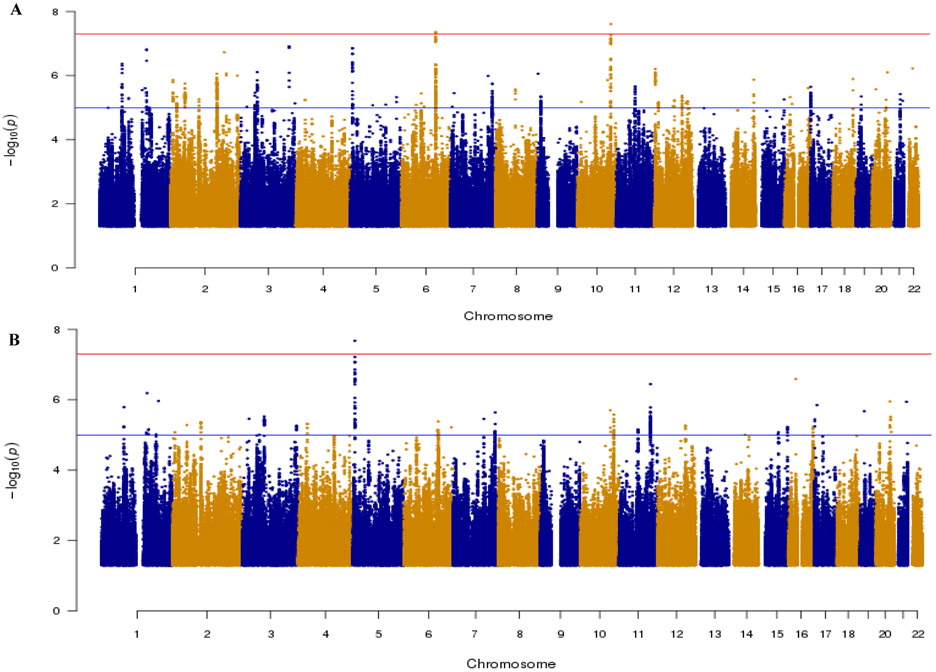
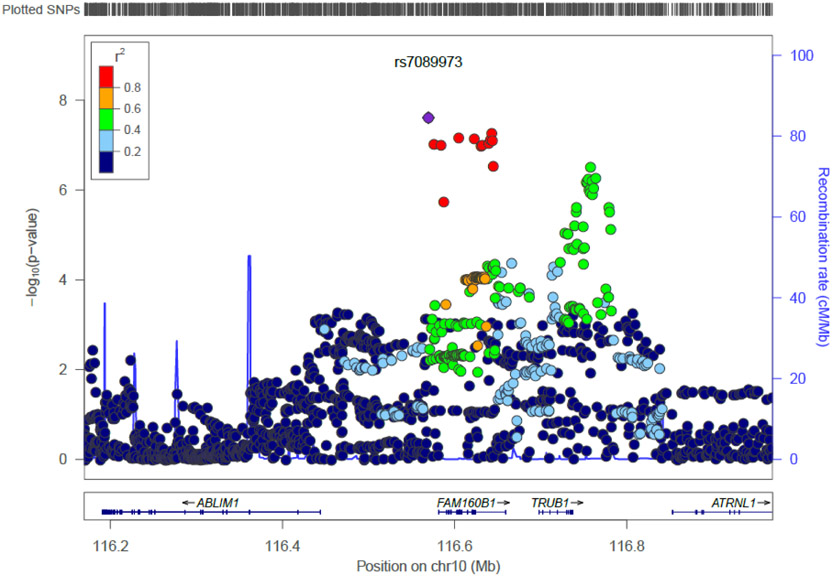
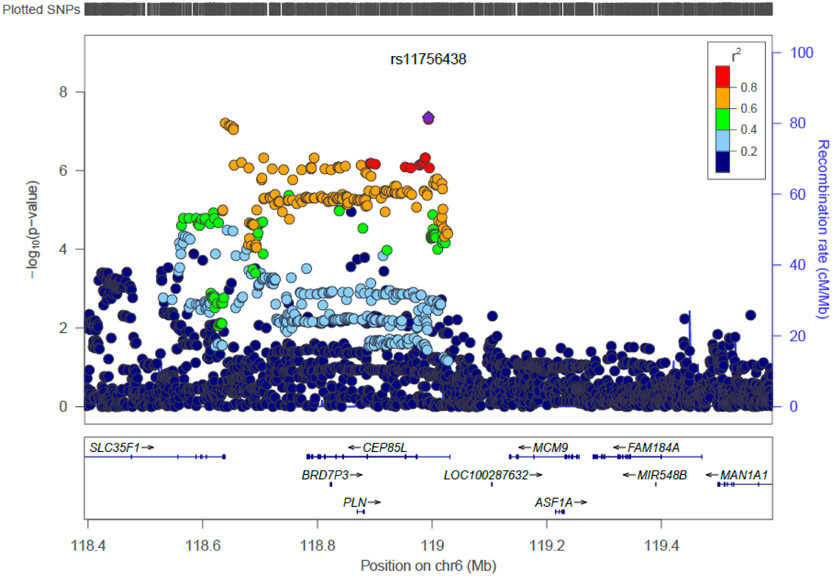
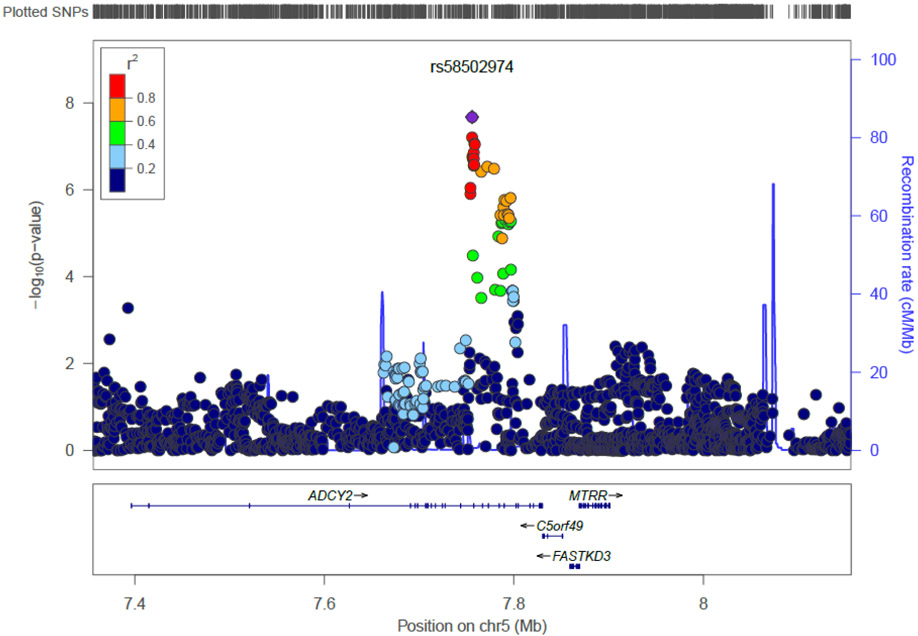
Results: We found a significant single nucleotide polymorphism-based genetic correlation between ADHD and BPD in the full and age-restricted samples (rGfull = .64, p = 3.13 × 10⁻¹⁴; rGrestricted = .71, p = 4.09 × 10⁻¹⁶). The meta-analysis between the full BPD sample identified two genome-wide significant (prs7089973 = 2.47 × 10⁻⁸; prs11756438 = 4.36 × 10⁻⁸) regions located on chromosomes 6 (CEP85L) and 10 (TAF9BP2). Restricting the analyses to BPD cases with an early onset yielded one genome-wide significant association (prs58502974 = 2.11 × 10⁻⁸) on chromosome 5 in the ADCY2 gene. Additional nominally significant regions identified contained known expression quantitative trait loci with putative functional consequences for NT5DC1, NT5DC2, and CACNB3 expression, whereas functional predictions implicated ABLIM1 as an allele-specific expressed gene in neuronal tissue.
Conclusions: The single nucleotide polymorphism-based genetic correlation between ADHD and BPD is substantial, significant, and consistent with the existence of genetic overlap between ADHD and BPD, with potential differential genetic mechanisms involved in early and later BPD onset.
Keywords: Attention-deficit/hyperactivity disorder; GWAS; bipolar disorder; cross-disorder meta-analysis; genetic correlation; genetic overlap.
Copyright © 2016 Society of Biological Psychiatry. Published by Elsevier Inc. All rights reserved.
Figures
Comment in
-
Timely Research in Bipolar Disorder and Attention-Deficit/Hyperactivity Disorder.Biol Psychiatry. 2017 Nov 1;82(9):621-622. doi: 10.1016/j.biopsych.2017.08.019. Biol Psychiatry. 2017. PMID: 28965559 Free PMC article. No abstract available.
References
-
- Faraone SV, Perlis RH, Doyle AE, Smoller JW, Goralnick JJ, Holmgren MA, et al. (2005): Molecular genetics of attention-deficit/hyperactivity disorder. Biological psychiatry. 57:1313–1323. - PubMed
-
- Shih RA, Belmonte PL, Zandi PP (2004): A review of the evidence from family, twin and adoption studies for a genetic contribution to adult psychiatric disorders. International review of psychiatry. 16:260–283. - PubMed
-
- Klassen LJ, Katzman MA, Chokka P (2010): Adult ADHD and its comorbidities, with a focus on bipolar disorder. J Affect Disord. 124:1–8. - PubMed
-
- Gross-Lesch S, Dempfle A, Reichert S, Jans T, Geissler J, Kittel-Schneider S, et al. (2013): Sex- and Subtype-Related Differences in the Comorbidity of Adult ADHDs. J Atten Disord. - PubMed
Publication types
MeSH terms
Grants and funding
LinkOut - more resources
Full Text Sources
Other Literature Sources
Medical
Miscellaneous
