


Evasion of host immune defenses by human papillomavirus
- PMID: 27890631
- PMCID: PMC5325784
- DOI: 10.1016/j.virusres.2016.11.023
Evasion of host immune defenses by human papillomavirus
Abstract
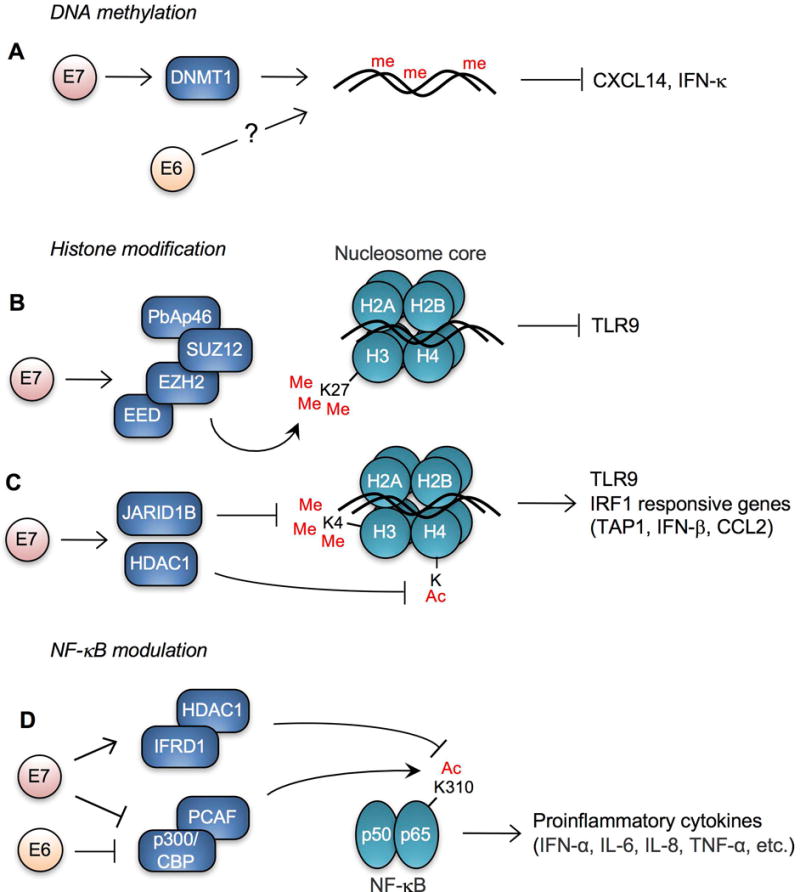
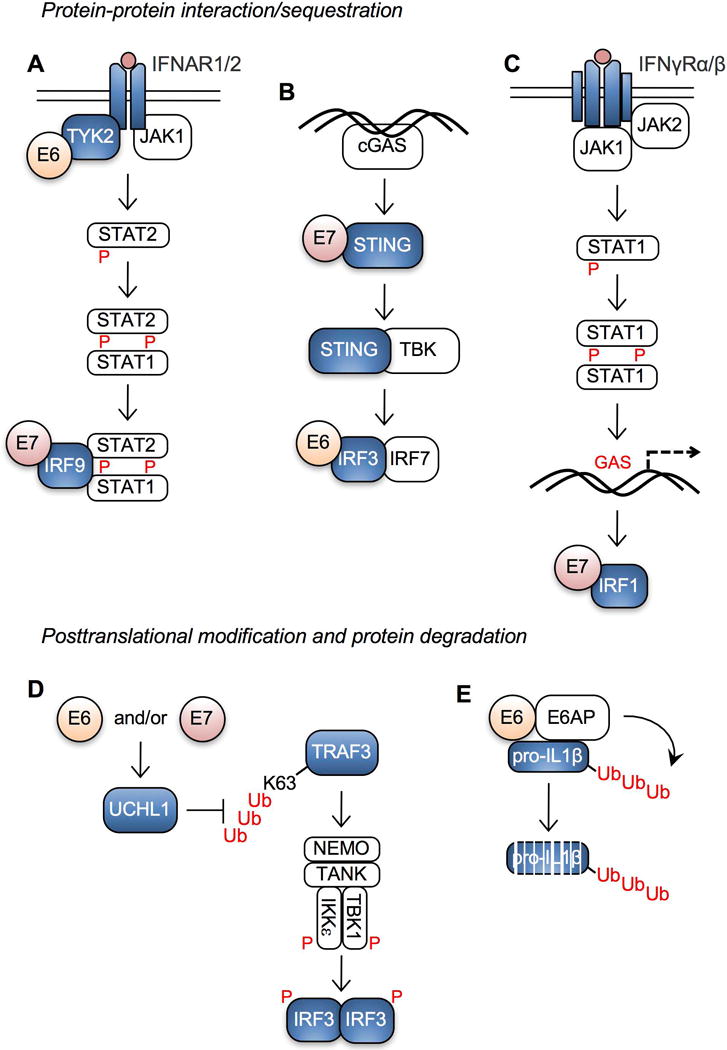
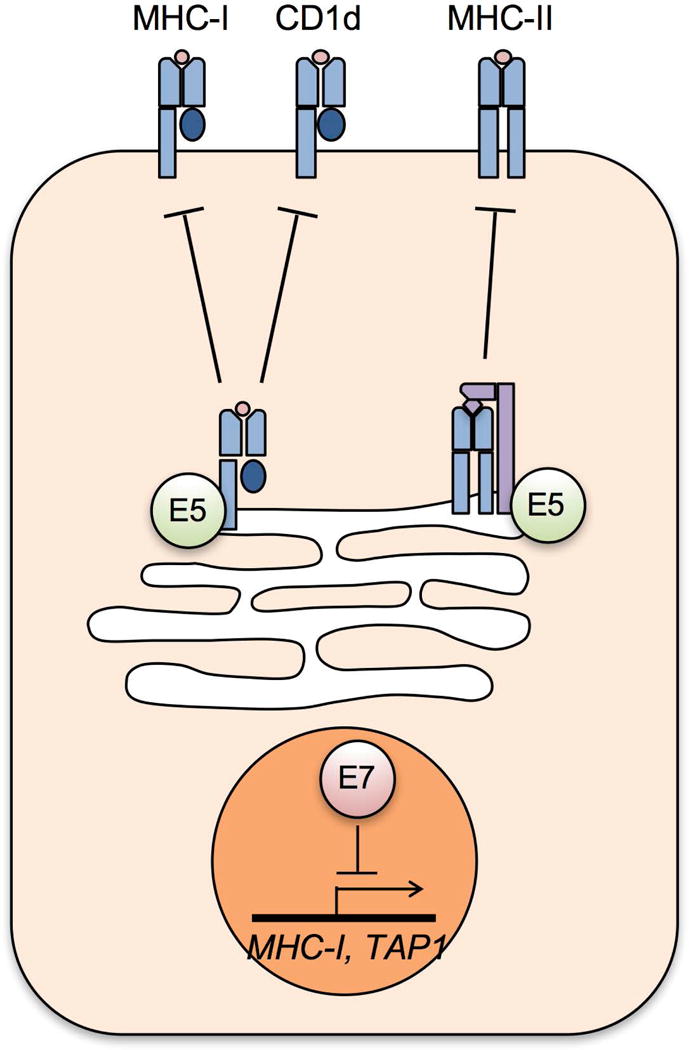
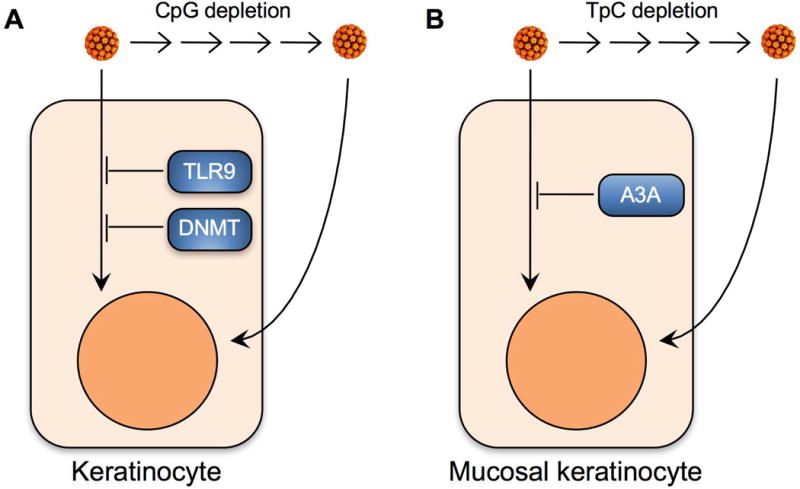
A majority of human papillomavirus (HPV) infections are asymptomatic and self-resolving in the absence of medical interventions. Various innate and adaptive immune responses, as well as physical barriers, have been implicated in controlling early HPV infections. However, if HPV overcomes these host immune defenses and establishes persistence in basal keratinocytes, it becomes very difficult for the host to eliminate the infection. The HPV oncoproteins E5, E6, and E7 are important in regulating host immune responses. These oncoproteins dysregulate gene expression, protein-protein interactions, posttranslational modifications, and cellular trafficking of critical host immune modulators. In addition to the HPV oncoproteins, sequence variation and dinucleotide depletion in papillomavirus genomes has been suggested as an alternative strategy for evasion of host immune defenses. Since anti-HPV host immune responses are also considered to be important for antitumor immunity, immune dysregulation by HPV during virus persistence may contribute to immune suppression essential for HPV-associated cancer progression. Here, we discuss cellular pathways dysregulated by HPV that allow the virus to evade various host immune defenses.
Keywords: APOBEC3; Adaptive immunity; DNA methylation; HPV; Histone modification; Immune evasion; Innate immunity; Oncogene; Papillomavirus; Restriction factor; Tumor virus; Virus evolution.
Copyright © 2016 The Authors. Published by Elsevier B.V. All rights reserved.
Figures
References
-
- Ahasan MM, Wakae K, Wang Z, Kitamura K, Liu G, Koura M, Imayasu M, Sakamoto N, Hanaoka K, Nakamura M, Kyo S, Kondo S, Fujiwara H, Yoshizaki T, Mori S, Kukimoto I, Muramatsu M. APOBEC3A and 3C decrease human papillomavirus 16 pseudovirion infectivity. Biochem Biophys Res Commun. 2015;457:295–299. - PubMed
-
- Antonsson A, Payne E, Hengst K, McMillan NA. The human papillomavirus type 16 E7 protein binds human interferon regulatory factor-9 via a novel PEST domain required for transformation. J Interferon Cytokine Res. 2006;26:455–461. - PubMed
-
- Ashrafi GH, Haghshenas M, Marchetti B, Campo MS. E5 protein of human papillomavirus 16 downregulates HLA class I and interacts with the heavy chain via its first hydrophobic domain. Int J Cancer. 2006;119:2105–2112. - PubMed
Publication types
MeSH terms
Substances
Grants and funding
LinkOut - more resources
Full Text Sources
Other Literature Sources
