Review
. 2017 May 15;11(3):323-334.
doi: 10.5009/gnl15557.

Obesity-Related Digestive Diseases and Their Pathophysiology

Affiliations
Review

Obesity-Related Digestive Diseases and Their Pathophysiology

Su Youn Nam. Gut Liver. .

Abstract

Obesity is a growing medical and public health problem worldwide. Many digestive diseases are related to obesity. In this article, the current state of our knowledge of obesity-related digestive diseases, their pathogenesis, and the medical and metabolic consequences of weight reduction are discussed. Obesity-related digestive diseases include gastroesophageal reflux disease, Barrett's esophagus, esophageal cancer, colon polyp and cancer, nonalcoholic fatty liver disease, hepatitis C-related disease, hepatocellular carcinoma, gallstone, cholangiocarcinoma, and pancreatic cancer. Although obesity-related esophageal diseases are associated with altered mechanical and humoral factors, other obesity-related digestive diseases seem to be associated with obesity-induced altered circulating levels of adipocytokines and insulin resistance. The relationship between functional gastrointestinal disease and obesity has been debated. This review provides a comprehensive evaluation of the obesity-related digestive diseases, including pathophysiology, obesity-related risk, and medical and metabolic effects of weight reduction in obese subjects.

Keywords: Cytokines; Gastrointestinal disease; Obesity.


Conflict of interest statement

CONFLICTS OF INTEREST

No potential conflict of interest relevant to this article was reported.

Figures
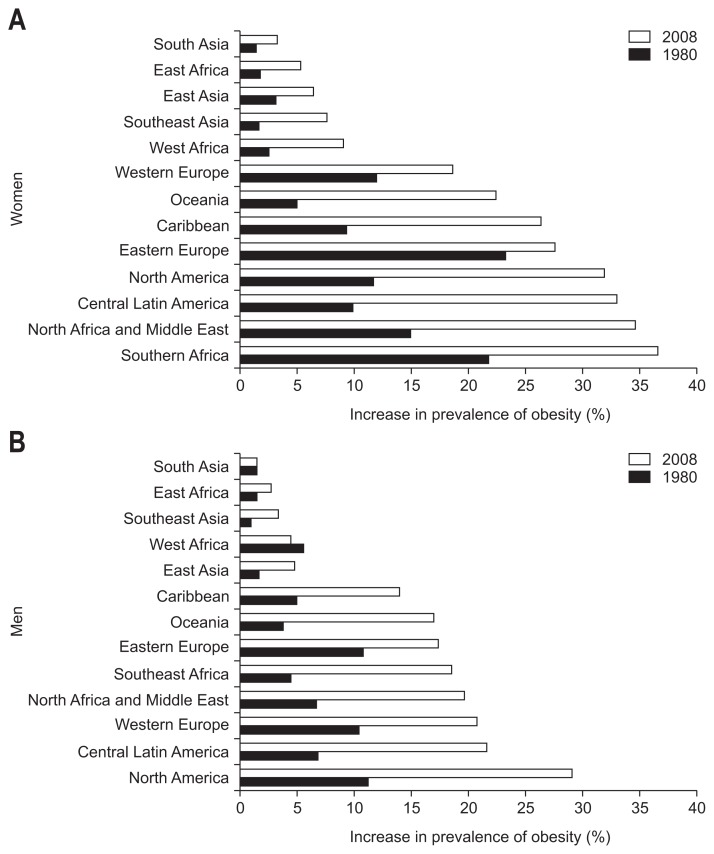
Fig. 1
Fig. 1
Estimates of obesity prevalence in women (A) and men (B). Among women, obesity prevalence has increased in all regions. The greatest magnitudes of increase (>20%) were observed in central Latin America, North America, North Africa, and the Middle East. For men, obesity has increased in all regions except South Asia. The greatest magnitude of increase was observed in North America, with an increase of >18%. Adapted from Malik VS, et al. Nat Rev Endocrinol 2013;9:13–27, with permission from Nature Publishing Group.
Fig. 2
Fig. 2
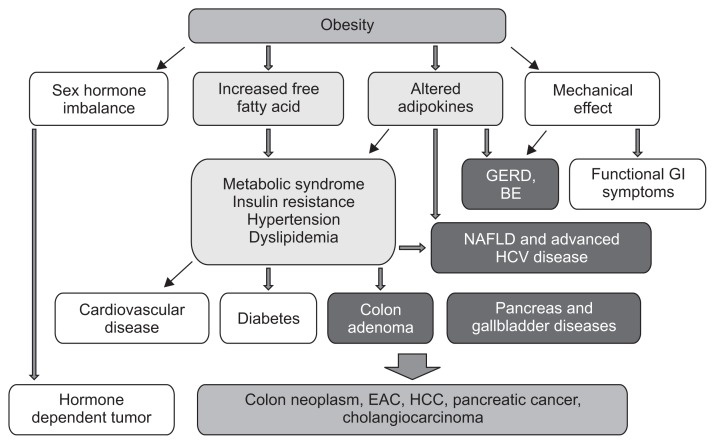
Medical effect of obesity on digestive diseases. Obesity increases free fatty acids and alters adipocy-tokines. This metabolic alteration induces metabolic syndrome, including insulin resistance, dyslipidemia, and hypertension. Metabolic alteration and metabolic syndrome contribute to benign and malignant digestive disease. Mechanical effect of obesity may contribute to esophageal disease and several gastrointestinal symptoms. GERD, gastroesophageal reflux disease; BE, Barrett’s esophagus; GI, gastrointestinal; NAFLD, non-alcoholic fatty liver disease; HCV, hepatitis C virus; EAC, esophageal adenocarcinoma; HCC, hepatocellular carcinoma.

References

    1. Malik VS, Willett WC, Hu FB. Global obesity: trends, risk factors and policy implications. Nat Rev Endocrinol. 2013;9:13–27. doi: 10.1038/nrendo.2012.199. - DOI - PubMed
    1. Fujihara S, Mori H, Kobara H, et al. Metabolic syndrome, obesity, and gastrointestinal cancer. Gastroenterol Res Pract. 2012;2012:483623. doi: 10.1155/2012/483623. - DOI - PMC - PubMed
    1. Nam SY, Choi IJ, Ryu KH, Park BJ, Kim HB, Nam BH. Abdominal visceral adipose tissue volume is associated with increased risk of erosive esophagitis in men and women. Gastroenterology. 2010;139:1902–1911.e2. doi: 10.1053/j.gastro.2010.08.019. - DOI - PubMed
    1. Nam SY, Kim BC, Han KS, et al. Abdominal visceral adipose tissue predicts risk of colorectal adenoma in both sexes. Clin Gastroenterol Hepatol. 2010;8:443–450.e2. doi: 10.1016/j.cgh.2010.02.001. - DOI - PubMed
    1. Colicchio P, Tarantino G, del Genio F, et al. Non-alcoholic fatty liver disease in young adult severely obese non-diabetic patients in South Italy. Ann Nutr Metab. 2005;49:289–295. doi: 10.1159/000087295. - DOI - PubMed

MeSH terms

LinkOut - more resources