Potential of Small Molecule-Mediated Reprogramming of Rod Photoreceptors to Treat Retinitis Pigmentosa
- PMID: 27893103
- PMCID: PMC5134355
- DOI: 10.1167/iovs.16-20177
Potential of Small Molecule-Mediated Reprogramming of Rod Photoreceptors to Treat Retinitis Pigmentosa
Abstract
Purpose: Mutations in rod photoreceptor genes can cause retinitis pigmentosa (RP). Rod gene expression is regulated by the nuclear hormone receptor, Nr2e3. Genetic deletion of Nr2e3 reprograms rods into cells that resemble cone photoreceptors, and might therefore prevent their death from some forms of RP. There are no identified ligands for Nr2e3; however, reverse agonists might mimic the genetic rescue effect and may be therapeutically useful for the treatment of RP.
Methods: We screened for small molecule modulators of Nr2e3 using primary retinal cell cultures and characterized the most potent, which we have named photoregulin1 (PR1), in vitro and in vivo. We also tested the ability of PR1 to slow the progression of photoreceptor degeneration in two common mouse models of autosomal dominant RP, the RhoP23H and the Pde6brd1 mutations.
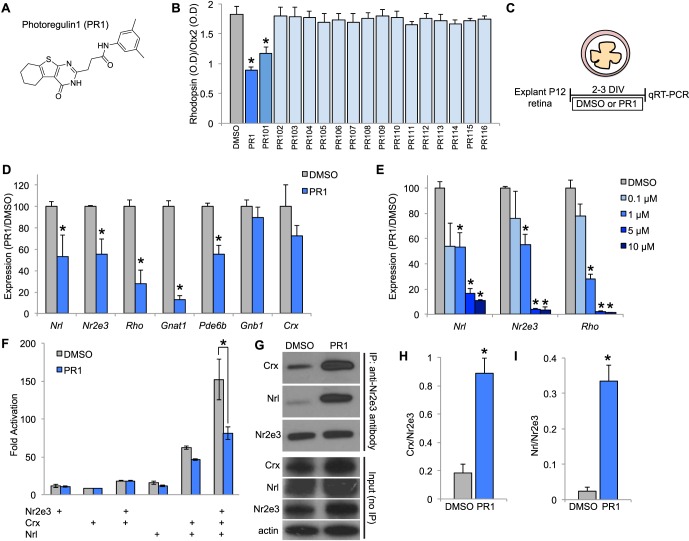
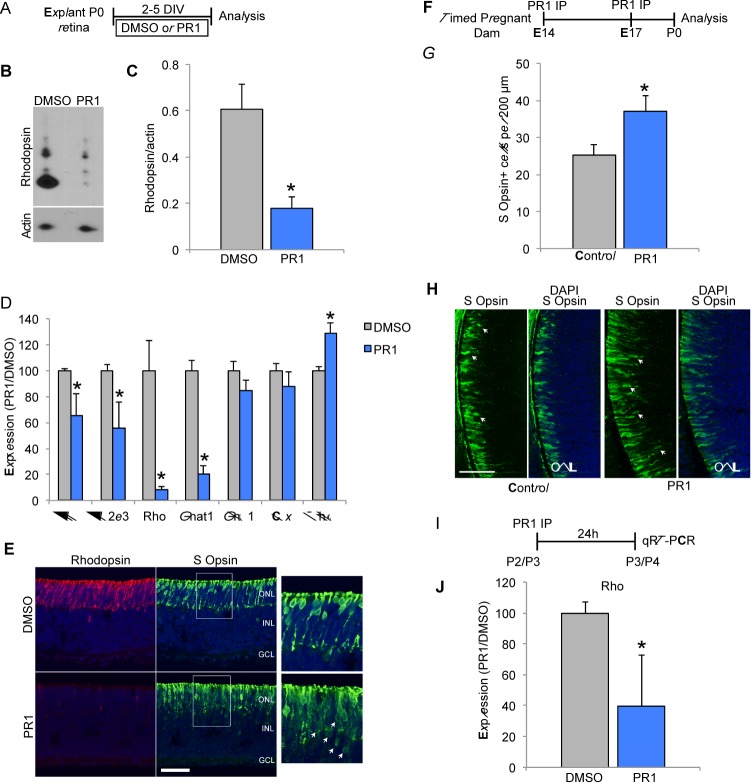
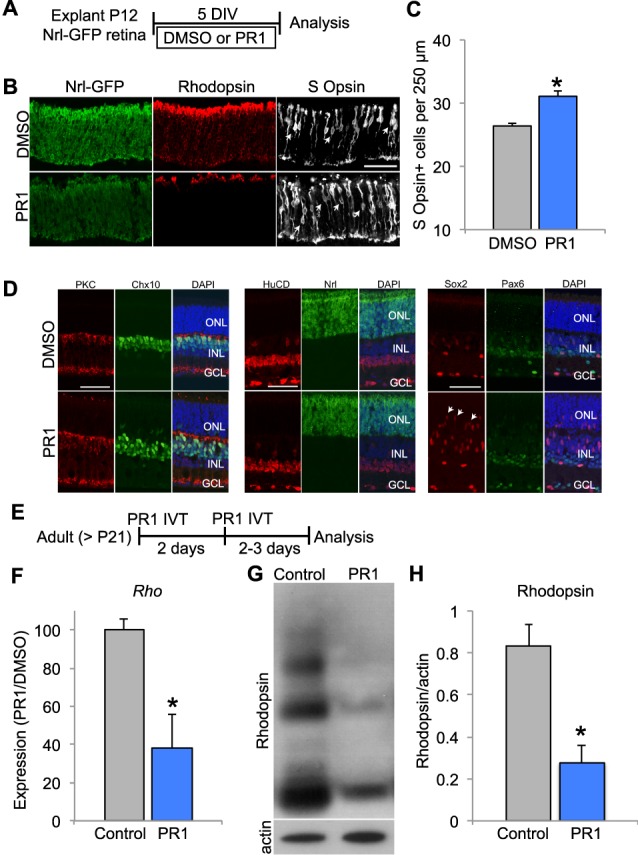
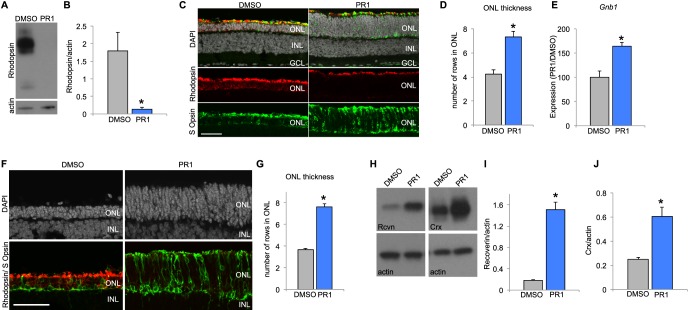
Results: In developing retina, PR1 causes a decrease in rod gene expression and an increase in S opsin+ cones. Photoregulin1 continues to inhibit rod gene expression in adult mice. When applied to two mouse models of RP, PR1 slows the degeneration of photoreceptors.
Conclusions: Chemical compounds identified as modulators of Nr2e3 activity may be useful for the treatment of RP through their effects on expression of disease-causing mutant genes.
Figures
References
-
- Hartong DT,, Berson EL,, Dryja TP. Retinitis pigmentosa. Lancet. 2006; 368: 1795– 1809. - PubMed
-
- Nguyen AT,, Campbell M,, Kiang AS,, Humphries MM,, Humphries P. Current therapeutic strategies for P23H RHO-linked RP. Adv Exp Med Biol. 2014; 801: 471– 476. - PubMed
-
- Carter-Dawson LD,, LaVail MM. Rods and cones in the mouse retina. I. Structural analysis using light and electron microscopy. J Comp Neurol. 1979; 188 245– 262. - PubMed
Publication types
MeSH terms
Substances
Grants and funding
LinkOut - more resources
Full Text Sources
Other Literature Sources
Molecular Biology Databases