. 2016 Nov 28;11(11):e0165955.
doi: 10.1371/journal.pone.0165955. eCollection 2016.

Fenugreek Seed Powder Nullified Aluminium Chloride Induced Memory Loss, Biochemical Changes, Aβ Burden and Apoptosis via Regulating Akt/GSK3β Signaling Pathway

Affiliations

Fenugreek Seed Powder Nullified Aluminium Chloride Induced Memory Loss, Biochemical Changes, Aβ Burden and Apoptosis via Regulating Akt/GSK3β Signaling Pathway

Asokan Prema et al. PLoS One. .

Abstract

Alzheimer's disease (AD) is the most common form of dementia that mainly affects the cognitive functions of the aged populations. Trigonella foenum-graecum (L.) (fenugreek), a traditionally well utilized medicinal plant ubiquitously used as one of the main food additive worldwide, is known to have numerous beneficial health effects. Fenugreek seed extract could be able to inhibit the activity of acetylcholinesterase (AChE), a key enzyme involved in the pathogenesis of AD, and further shown to have anti-parkinsonic effect. The present study was aimed to explore the neuroprotective effect of fenugreek seed powder (FSP) against aluminium chloride (AlCl3) induced experimental AD model. Administration of germinated FSP (2.5, 5 and 10% mixed with ground standard rat feed) protected AlCl3 induced memory and learning impairments, Al overload, AChE hyperactivity, amyloid β (Aβ) burden and apoptosis via activating Akt/GSK3β pathway. Our present data could confirm the neuroprotective effect of fenugreek seeds. Further these results could lead a possible therapeutics for the management of neurodegenerative diseases including AD in future.


Conflict of interest statement

The authors have declared that no competing interests exist.

Figures
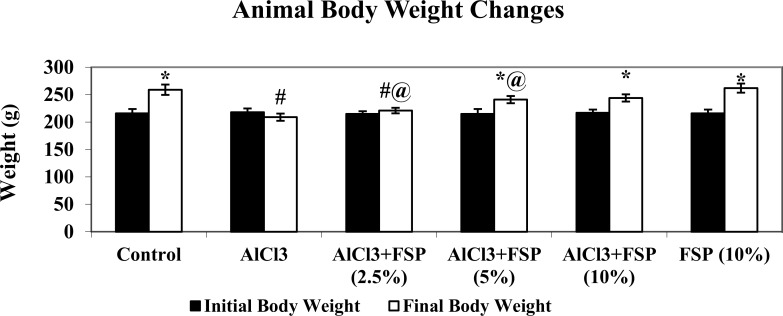
Fig 1
Fig 1. Rats induced with AlCl3 showed a significant (P<0.05) decrease in body weight when compared with control rats.
Oral treatment with FSP to AlCl3 induced rats significantly (P<0.05) increased the body weight dose dependently. There are no significant changes in weight gain of FSP alone treated rats when compared with control rats. Data are expressed as mean ± SEM (one-way ANOVA followed by DMRT) for six rats in each group. Values not sharing the same symbols differ significantly.
Fig 2
Fig 2. AlCl3 treated rats exhibited increased step-through latency (STL) in passive avoidance test.
AlCl3 induced STL was reduced dose dependently by FSP co-treatment. Data are expressed as mean ± SEM (one-way ANOVA followed by DMRT) for six rats in each group. Values not sharing the same symbols differ significantly−*p < 0.05 compared to the control, #p < 0.05 compared to the AlCl3 treated rats, @p < 0.05 compared to the AlCl3 + FSP (2.5%).
Fig 3
Fig 3. AlCl3 rats took more time to reach both the visible (on day 20) and hidden (on day 21 and 42) indicating memory deficits.
Co-treatment of FSP (5%) significantly enhanced memory performance on day 20, 21 and 42 in both training and retention phase. Data are expressed as mean ± SEM (a repeated-measured ANOVA followed by DMRT) for six rats in each group. Values not sharing the same symbols differ significantly−*p < 0.05 compared to the control, #p < 0.05 compared to the AlCl3 treated rats.
Fig 4
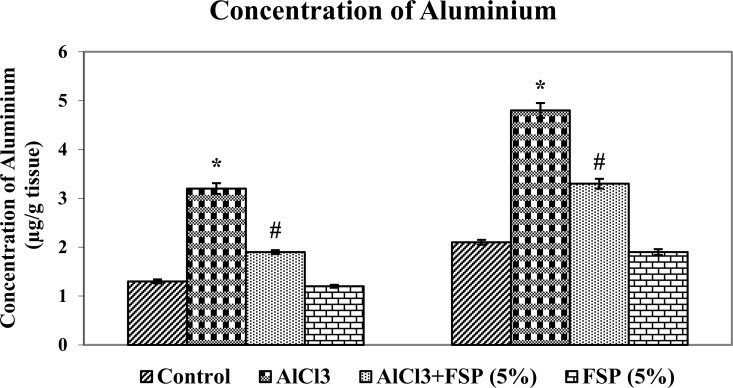
Fig 4. AlCl3 animals exhibited enhanced levels of Al in hippocampus and cortex.
Cotreatment of FSP (2.5, 5 and 10%) dose dependently attenuated the AlCl3 mediated Al burden. Data are expressed as mean ± SEM (one-way ANOVA followed by DMRT) for six rats in each group. Values not sharing the same symbols differ significantly−*p < 0.05 compared to the control, #p < 0.05 compared to the AlCl3 treated rats.
Fig 5
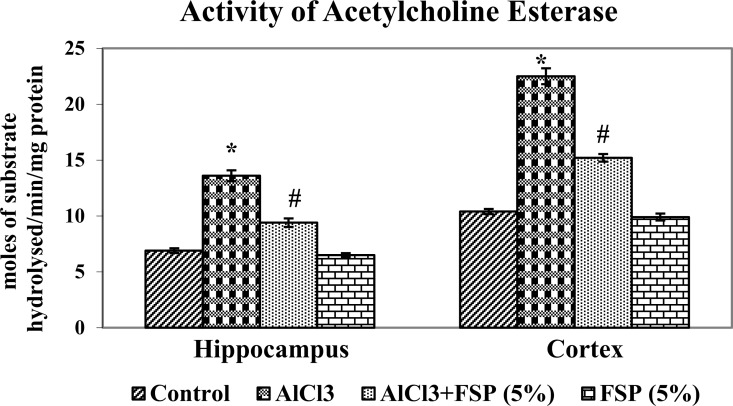
Fig 5. AlCl3 group showed significantly enhanced AChE activity in hippocampus and cortex.
However, FSP (2.5,5 and 10%) co-treatment significantly attenuated the AChE hyperactivity in both regions of brain. It was observed that 5% and 10% FSP treatment showed similar reduction in Al levels and AChE activity, but more significant than 2.5% FSP. As a consequence, we have chosen the optimum dose (5% FSP) for our further study. Data are expressed as mean ± SEM (one-way ANOVA followed by DMRT) for six rats in each group. Values not sharing the same symbols differ significantly−*p < 0.05 compared to the control, #p < 0.05 compared to the AlCl3 treated rats.
Fig 6
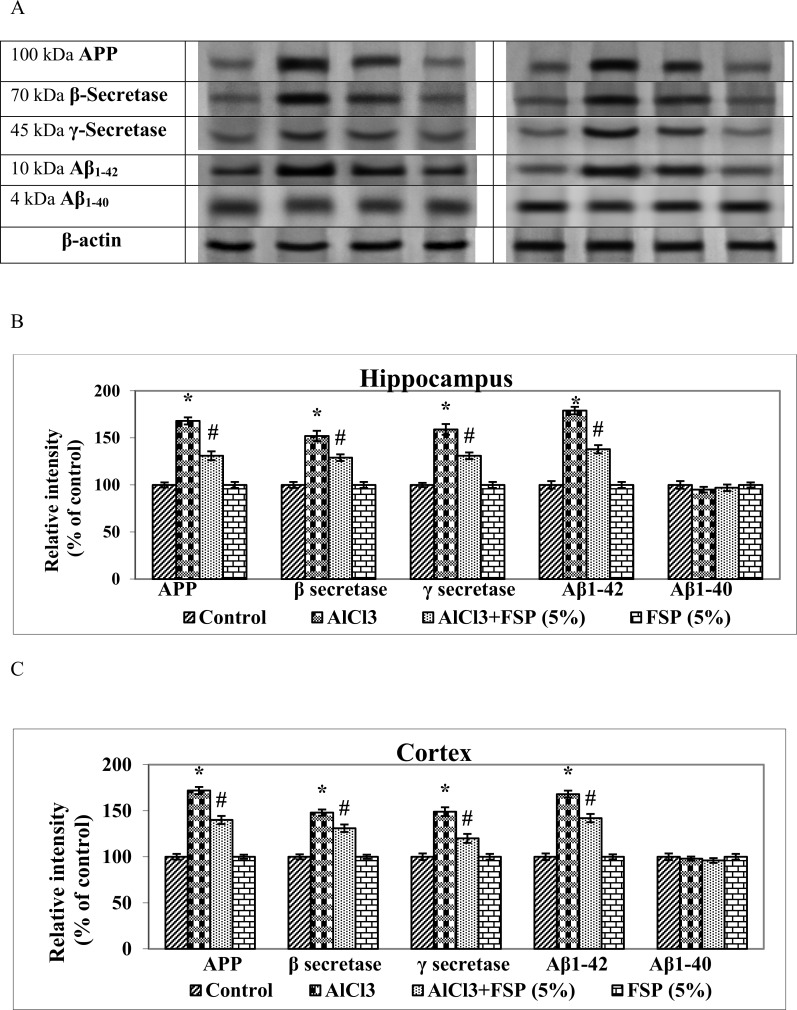
Fig 6. AlCl3 treatment significantly enhanced the protein expressions of APP, Aβ1–42, β and γ secretases and favours amyloid biosynthesis.
Coadministration of FSP attenuated the AlCl3 mediated amyloid biosynthesis. Data are expressed as mean ± SEM (one-way ANOVA followed by DMRT) for three rats in each group. Values not sharing the same symbols differ significantly−*p < 0.05 compared to the control, #p < 0.05 compared to the AlCl3 treated rats.
Fig 7
Fig 7. Chronic treatment of AlCl3 significantly increased the protein expressions of Bax, Bad, cyto c, caspases -9 and cyto c (mitochondrial fraction) and decreased the expressions of Bcl-2, Bcl—xL and cyto c (cytosolic fraction) in the hippocampus and cortex and favours apoptosis.
However, FSP supplementation (5%) attenuated the AlCl3 induced apoptosis. No-significant changes in the expressions of pro-caspase-3 (32 kDa) were found in control and experimental groups. The activated caspase-3 (17 kDa) expression is enhanced following aluminum treatment and inhibited by the FSP co-treatment, which further proves the antiapoptotic property of FSP. Data are expressed as mean ± SEM (one-way ANOVA followed by DMRT) for three rats in each group. Values not sharing the same symbols differ significantly−*p < 0.05 compared to the control, #p < 0.05 compared to the AlCl3 treated rats.
Fig 8
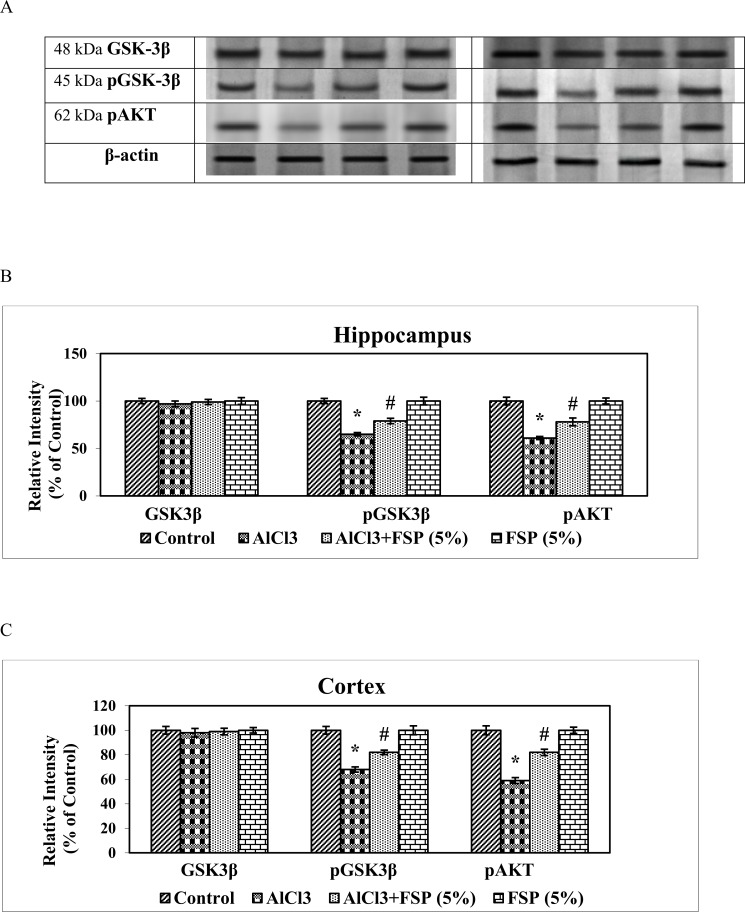
Fig 8. AlCl3 rats exhibited significantly lowered the expressions of pAkt and pGSK-3β in hippocampus and cortex.
Western blot studies indicated that their expressions were significantly attenuated by co-treatment with FSP (5%). Data are expressed as mean ± SEM (one-way ANOVA followed by DMRT) for three rats in each group. Values not sharing the same symbols differ significantly−*p < 0.05 compared to the control, #p < 0.05 compared to the AlCl3 treated rats.

References

    1. Mani V, Parle M (2009) Memory enhancing activity of Coriandrum sativum in rats. Pharmacology online 2: 827–839.
    1. Walton JR (2012) Cognitive deterioration and associated pathology induced by chronic low level aluminum ingestion in a translational rat model provides an explanation of Alzheimer's disease, tests for susceptibility and avenues for treatment. Int J Alzheimer’s Dis 1–17. 10.1155/2012/914947 - DOI - PMC - PubMed
    1. Humpel C (2011) Chronic mild cerebrovascular dysfunction as a cause for Alzheimer’s disease? Exp Gerontol 46:225–232. 10.1016/j.exger.2010.11.032 - DOI - PMC - PubMed
    1. Justin Thenmozhi A, William Raja TR, Manivasagam T, Janakiraman U, Essa MM (2016) Hesperidin ameliorates cognitive dysfunction, oxidative stress and apoptosis against aluminium chloride induced rat model of Alzheimer's disease. Nutr Neurosci (in press). - PubMed
    1. Sharma P, Mishra KP (2006) Aluminum-induced maternal and developmental toxicity and oxidative stress in rat brain: response to combined administration of tiron and glutathione. Reprod Toxicol 21:313–321. 10.1016/j.reprotox.2005.06.004 - DOI - PubMed

MeSH terms