


Retained surgical items after abdominal and pelvic surgery: Incidence, trend and predictors- observational study
- PMID: 27895909
- PMCID: PMC5121141
- DOI: 10.1016/j.amsu.2016.11.006
Retained surgical items after abdominal and pelvic surgery: Incidence, trend and predictors- observational study
Abstract
Introduction: Surgical retained items (RSIs) are associated with increase in perioperative morbidity and mortality. We used a large national database to investigate the incidence, trends and possible predictors for RSIs after major abdominal and pelvic procedures.
Methods: The nationwide inpatient sample data were queried to identify patients who underwent major abdominal and pelvic procedures and discharged with secondary ICD-9-CM diagnosis code of (998.44 and 998.7). McNemar's tests and conditional logistic regression analyses of a 1:1 matched sample were conducted to explore possible predictive factors for RSI.
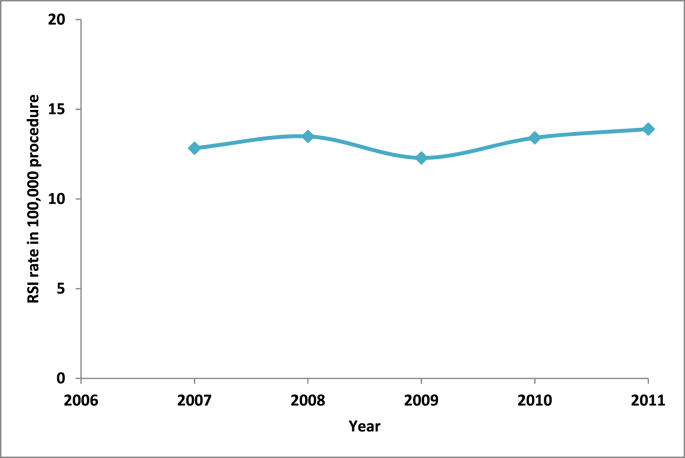
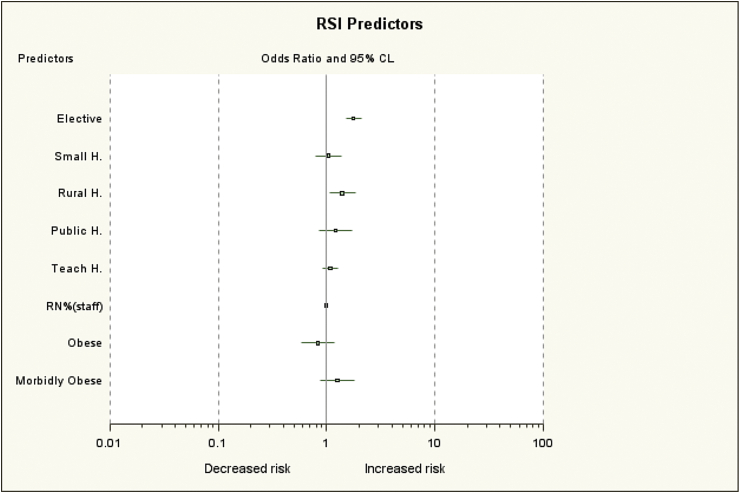
Results: RSI incidence rate was 13 in 100,000 cases-years from 2007 to 2011 after major abdominal and pelvic procedures. RSI incidence remained steady over the five-year study period. Rural hospitals and elective procedures were associated with a higher RSI incidence rate [(OR 1.391, 95% CL 1.056-1.832), p = 0.019] and [(OR 1.775, 95%CL 1.501-2.098), p < 0.001] respectively.
Conclusions: Our study was able to add more to the epidemiological perspective and the risk profile of retained surgical items in abdominal and pelvic surgery. Surgical cases associated with these factors may need further testing to rule out RSI.
Keywords: Never event; Retained surgical item; Sentinel event; Unretrieved surgical device.
Figures
References
-
- Gibbs V. NoThing Left Behind: a national surgical patient-safety project to prevent retained surgical items. New policies, practices and posters. Retained surgical items [online]. [cited 2012 Jun 12]. http://www.nothingleftbehind.org. Accessed April 8, 2016.
-
- CMS. Fact sheet: Details for: CMS proposes additions to list of hospital-acquired conditions for fiscal year 2009 https://www.cms.gov/Newsroom/MediaReleaseDatabase/Fact-sheets/2008-Fact-.... Accessed April 8, 2016.
-
- HCUP Nationwide Inpatient Sample (NIS) Agency for Healthcare Research and Quality; Rockville, MD: 2007-2011. Healthcare Cost and Utilization Project (HCUP)www.hcup-us.ahrq.gov/nisoverview.jsp Accessed April 8, 2016.
-
- http://www.qualityindicators.ahrq.gov/Downloads/Modules/PSI/V50/TechSpec.... Accessed April 9, 2016.
-
- Parsons L.S. Proceedings of the Twenty-sixth Annual SAS Users Group International Conference. SAS Institute Inc.; Cary, NC: 2001. Reducing bias in a propensity score matched-pair sample using greedy matching techniques.
LinkOut - more resources
Full Text Sources
Other Literature Sources
