


The impact of ageing, physical activity, and pre-frailty on skeletal muscle phenotype, mitochondrial content, and intramyocellular lipids in men
- PMID: 27897402
- PMCID: PMC5377417
- DOI: 10.1002/jcsm.12139
The impact of ageing, physical activity, and pre-frailty on skeletal muscle phenotype, mitochondrial content, and intramyocellular lipids in men
Abstract
Background: The exact impact of ageing on skeletal muscle phenotype and mitochondrial and lipid content remains controversial, probably because physical activity, which greatly influences muscle physiology, is rarely accounted for. The present study was therefore designed to investigate the effects of ageing, physical activity, and pre-frailty on skeletal muscle phenotype, and mitochondrial and intramyocellular lipid content in men.
Methods: Recreationally active young adult (20-30 yo; YA); active (ACT) and sedentary (SED) middle-age (50-65 yo; MA-ACT and MA-SED); and older (65 + yo; 65 + ACT and 65 + SED) and pre-frail older (65 + PF) men were recruited. Muscle biopsies from the vastus lateralis were collected to assess, on muscle cross sections, muscle phenotype (using myosin heavy chain isoforms immunolabelling), the fibre type-specific content of mitochondria (by quantifying the succinate dehydrogenase stain intensity), and the fibre type-specific lipid content (by quantifying the Oil Red O stain intensity).
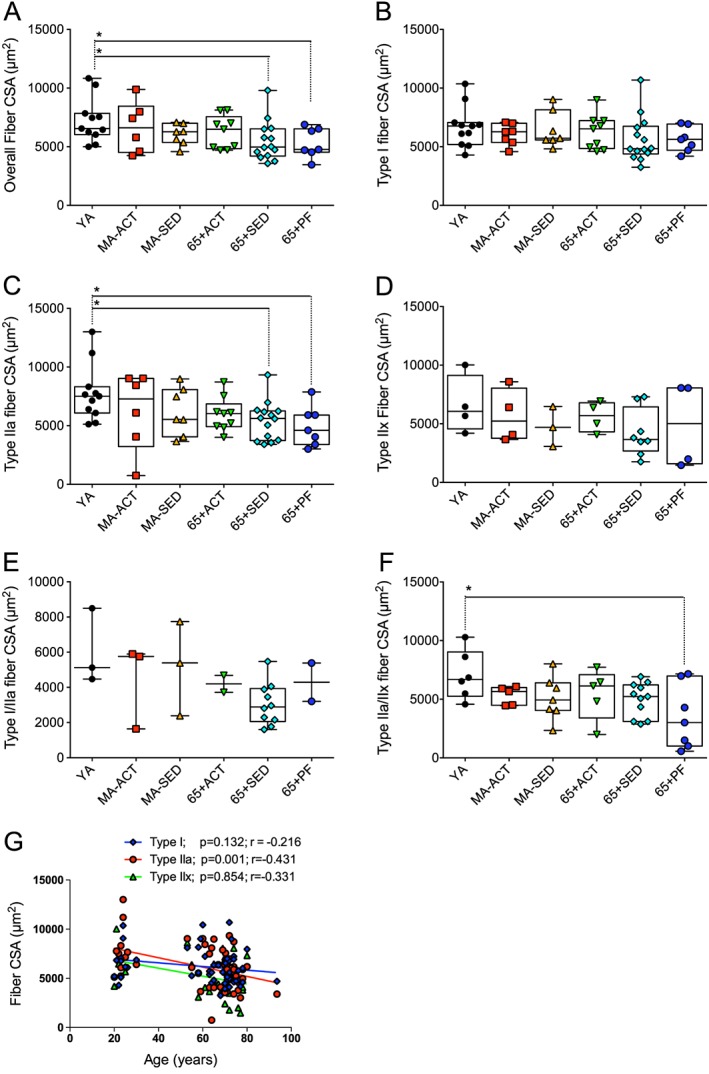
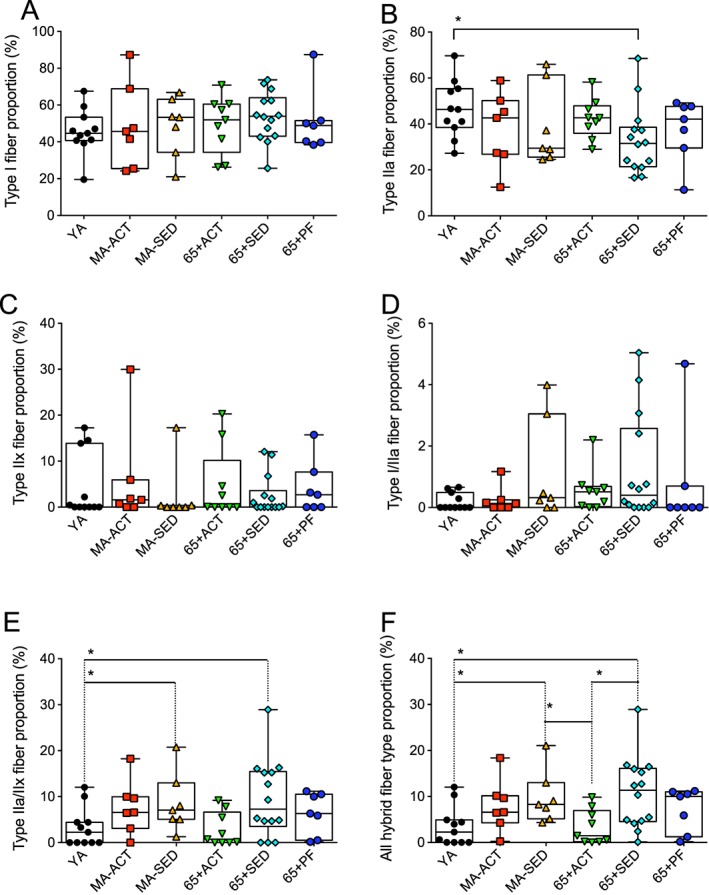
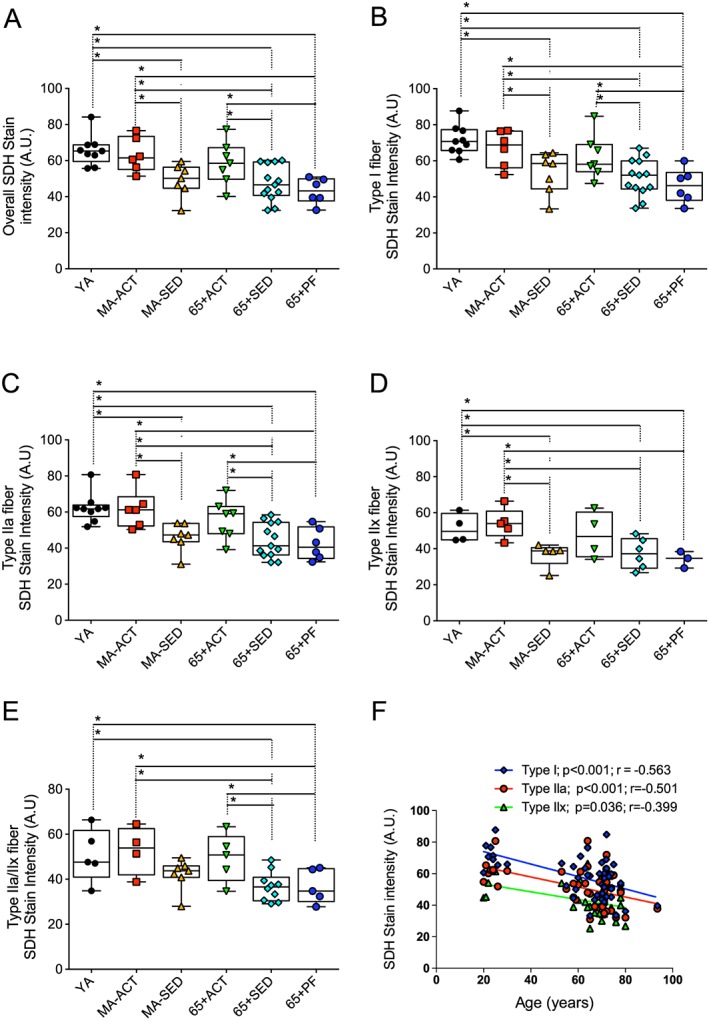
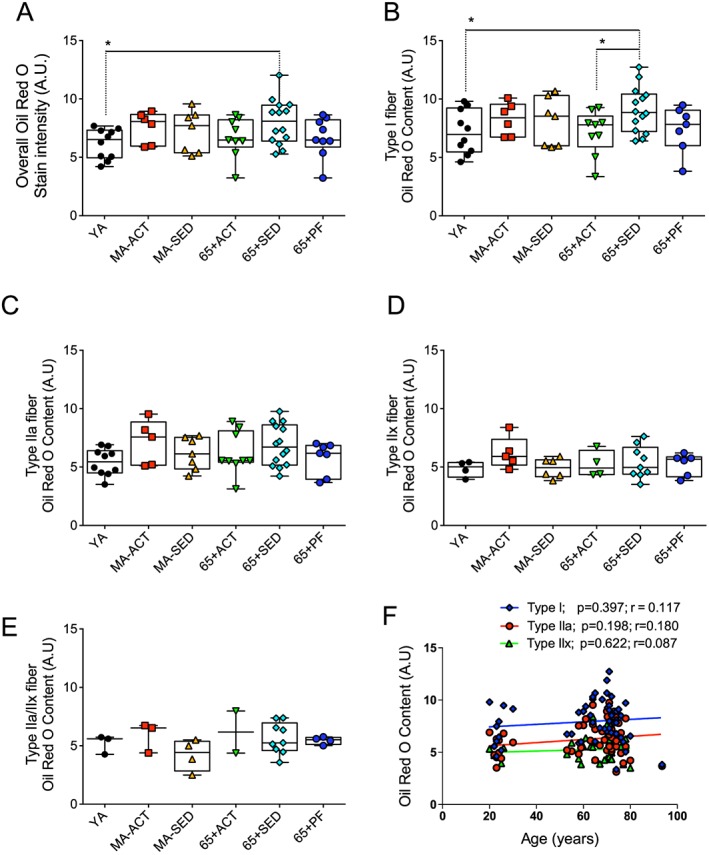
Results: Only 65 + SED and 65 + PF displayed significantly lower overall and type IIa fibre sizes vs. YA. 65 + SED displayed a lower type IIa fibre proportion vs. YA. MA-SED and 65 + SED displayed a higher hybrid type IIa/IIx fibre proportion vs. YA. Sedentary and pre-frail, but not active, men displayed lower mitochondrial content irrespective of fibre type vs. YA. 65 + SED, but not 65 + ACT, displayed a higher lipid content in type I fibres vs. YA. Finally, mitochondrial content, but not lipid content, was positively correlated with indices of muscle function, functional capacity, and insulin sensitivity across all subjects.
Conclusions: Taken altogether, our results indicate that ageing in sedentary men is associated with (i) complex changes in muscle phenotype preferentially affecting type IIa fibres; (ii) a decline in mitochondrial content affecting all fibre types; and (iii) an increase in lipid content in type I fibres. They also indicate that physical activity partially protects from the effects of ageing on muscle phenotype, mitochondrial content, and lipid accumulation. No skeletal specific muscle phenotype of pre-frailty was observed.
Keywords: Atrophy; Exercise; Human muscle ageing; Lipid content; Mitochondria; Sarcopenia.
© 2016 The Authors. Journal of Cachexia, Sarcopenia and Muscle published by John Wiley & Sons Ltd on behalf of the Society on Sarcopenia, Cachexia and Wasting Disorders.
Figures

References
-
- Janssen I, Heymsfield SB, Ross R. Low relative skeletal muscle mass (sarcopenia) in older persons is associated with functional impairment and physical disability. J Am Geriatr Soc 2002;50:889–896. - PubMed
-
- Rosenberg IH. Sarcopenia: origins and clinical relevance. J Nutr 1997;127:990S–991S. - PubMed
-
- Barbat‐Artigas S, Rolland Y, Cesari M, Abellan van Kan G, Vellas B, Aubertin‐Leheudre M. Clinical relevance of different muscle strength indexes and functional impairment in women aged 75 years and older. J Gerontol A Biol Sci Med Sci 2013;68:811–819. - PubMed
-
- Eddinger TJ, Moss RL, Cassens RG. Fiber number and type composition in extensor digitorum longus, soleus, and diaphragm muscles with aging in Fisher 344 rats. J Histochem and Cytochem official J Histochem Society 1985;33:1033–1041. - PubMed
MeSH terms
Substances
Grants and funding
LinkOut - more resources
Full Text Sources
Other Literature Sources
Medical
