


Elevated brain lactate in schizophrenia: a 7 T magnetic resonance spectroscopy study
- PMID: 27898072
- PMCID: PMC5290358
- DOI: 10.1038/tp.2016.239
Elevated brain lactate in schizophrenia: a 7 T magnetic resonance spectroscopy study
Abstract
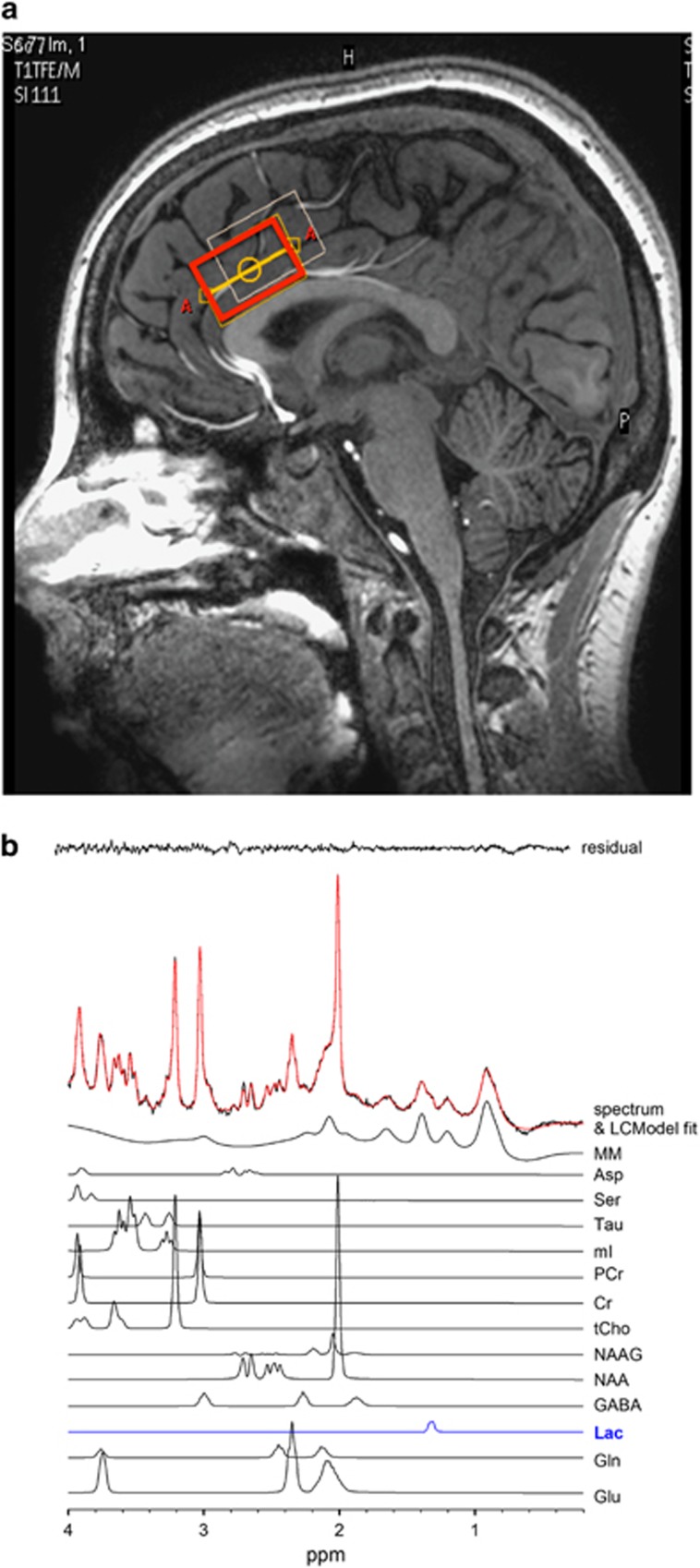
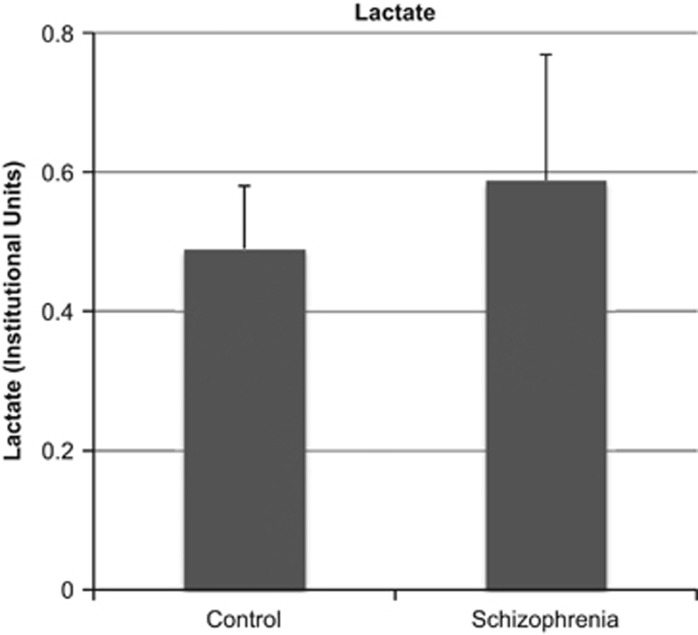
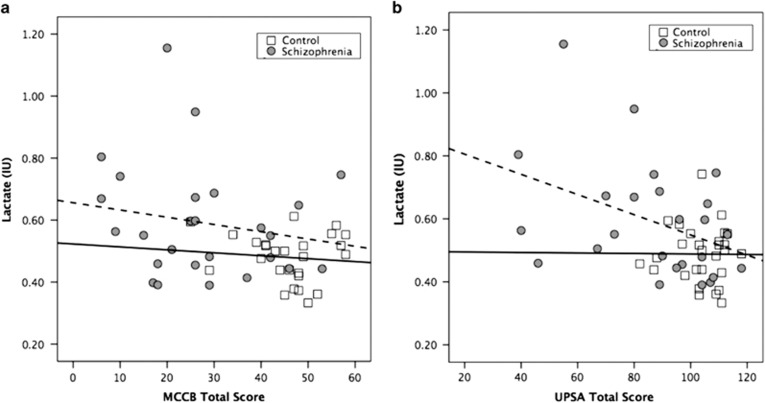
Various lines of evidence suggest that brain bioenergetics and mitochondrial function may be altered in schizophrenia. On the basis of prior phosphorus-31 (31P)-magnetic resonance spectroscopy (MRS), post-mortem and preclinical studies, this study was designed to test the hypothesis that abnormal glycolysis leads to elevated lactate concentrations in subjects with schizophrenia. The high sensitivity of 7 Tesla proton (1H)-MRS was used to measure brain lactate levels in vivo. Twenty-nine controls and 27 participants with schizophrenia completed the study. MRS scanning was conducted on a Philips 'Achieva' 7T scanner, and spectra were acquired from a voxel in the anterior cingulate cortex. Patients were assessed for psychiatric symptom severity, and all participants completed the MATRICS Consensus Cognitive Battery (MCCB) and University of California, San Diego Performance-Based Skills Assessment (UPSA). The relationship between lactate, psychiatric symptom severity, MCCB and UPSA was examined. Lactate was significantly higher in patients compared with controls (P=0.013). Higher lactate was associated with lower MCCB (r=-0.36, P=0.01) and UPSA total scores (r=-0.43, P=0.001). We believe this is the first study to report elevated in vivo cerebral lactate levels in schizophrenia. Elevated lactate levels in schizophrenia may reflect increased anaerobic glycolysis possibly because of mitochondrial dysfunction. This study also suggests that altered cerebral bioenergetics contribute to cognitive and functional impairments in schizophrenia.
Conflict of interest statement
LEH reported receiving or planning to receive research funding or consulting fees from Mitsubishi, Your Energy Systems LLC, Neuralstem, Taisho Pharmaceutical, Heptares and Pfizer. The remaining authors declare no conflict of interest.
Figures
References
-
- Manji H, Kato T, Di Prospero NA, Ness S, Beal MF, Krams M et al. Impaired mitochondrial function in psychiatric disorders. Nat Rev Neurosci 2012; 13: 293–307. - PubMed
-
- Prabakaran S, Swatton JE, Ryan MM, Huffaker SJ, Huang JT, Griffin JL et al. Mitochondrial dysfunction in schizophrenia: evidence for compromised brain metabolism and oxidative stress. Mol Psychiatry 2004; 9: 684–697, 643. - PubMed
-
- das Neves Duarte JM, Kulak A, Gholam-Razaee MM, Cuenod M, Gruetter R, Do KQ. N-acetylcysteine normalizes neurochemical changes in the glutathione-deficient schizophrenia mouse model during development. Biol Psychiatry 2012; 71: 1006–1014. - PubMed
Publication types
MeSH terms
Substances
Grants and funding
LinkOut - more resources
Full Text Sources
Other Literature Sources
Medical
Miscellaneous
