Predicting Bradycardia in Preterm Infants Using Point Process Analysis of Heart Rate
- PMID: 27898379
- PMCID: PMC5606224
- DOI: 10.1109/TBME.2016.2632746
Predicting Bradycardia in Preterm Infants Using Point Process Analysis of Heart Rate
Abstract
Objective: Episodes of bradycardia are common and recur sporadically in preterm infants, posing a threat to the developing brain and other vital organs. We hypothesize that bradycardias are a result of transient temporal destabilization of the cardiac autonomic control system and that fluctuations in the heart rate signal might contain information that precedes bradycardia. We investigate infant heart rate fluctuations with a novel application of point process theory.
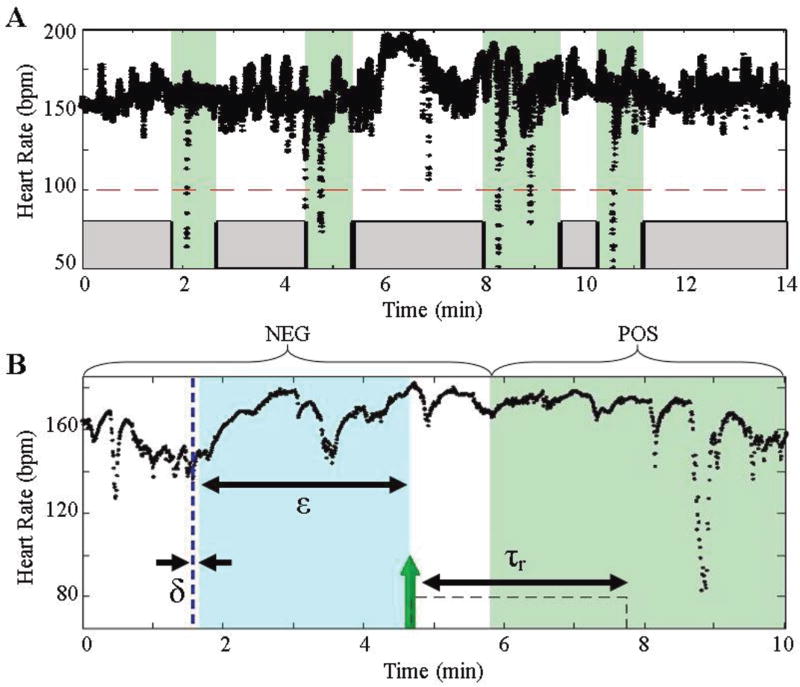
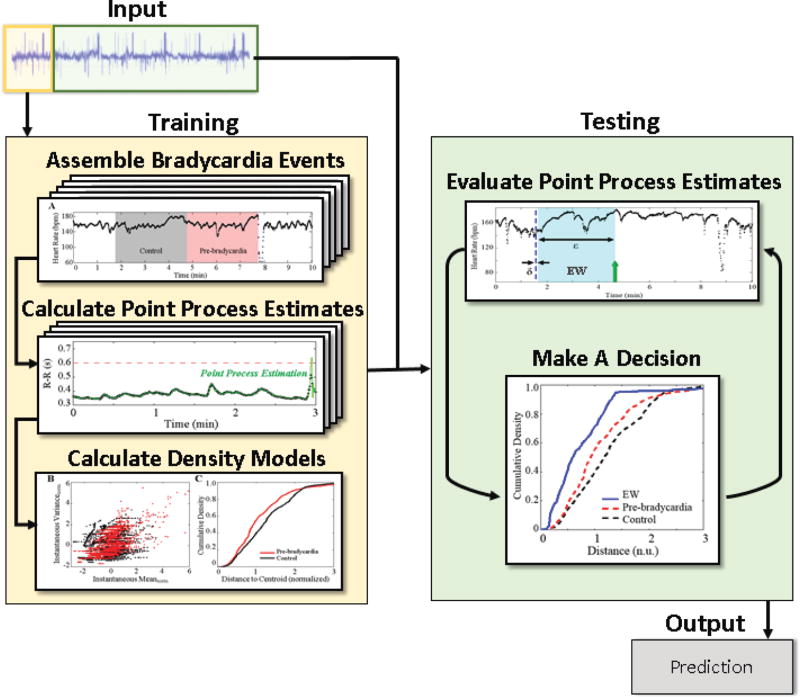
Methods: In ten preterm infants, we estimate instantaneous linear measures of the heart rate signal, use these measures to extract statistical features of bradycardia, and propose a simplistic framework for prediction of bradycardia.
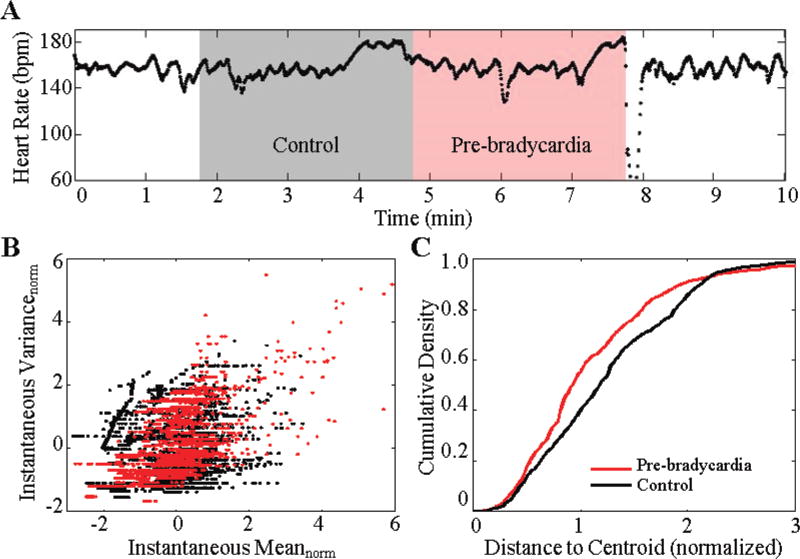
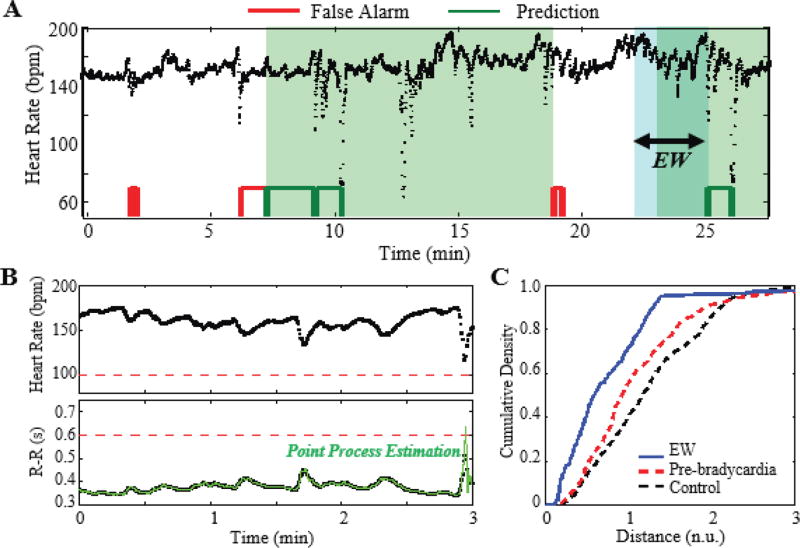
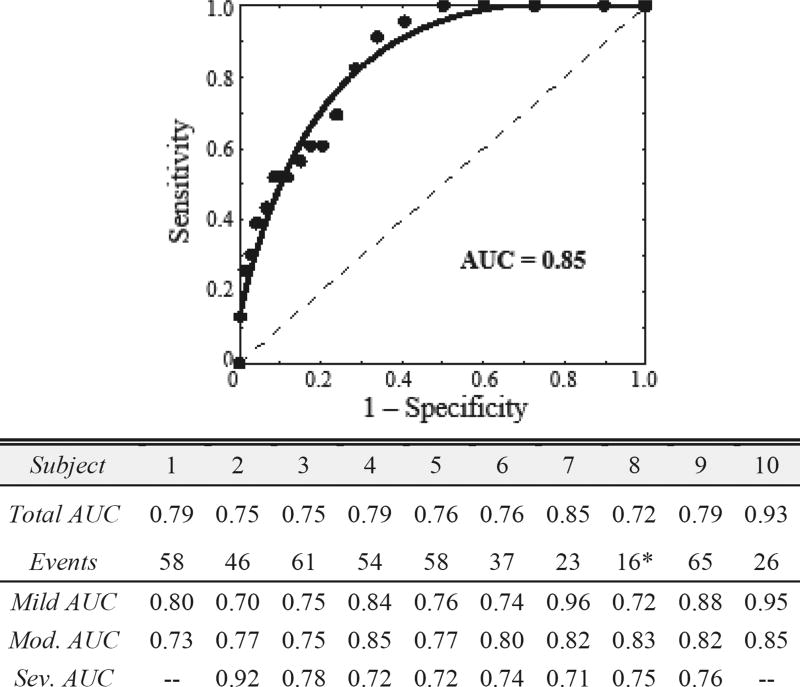
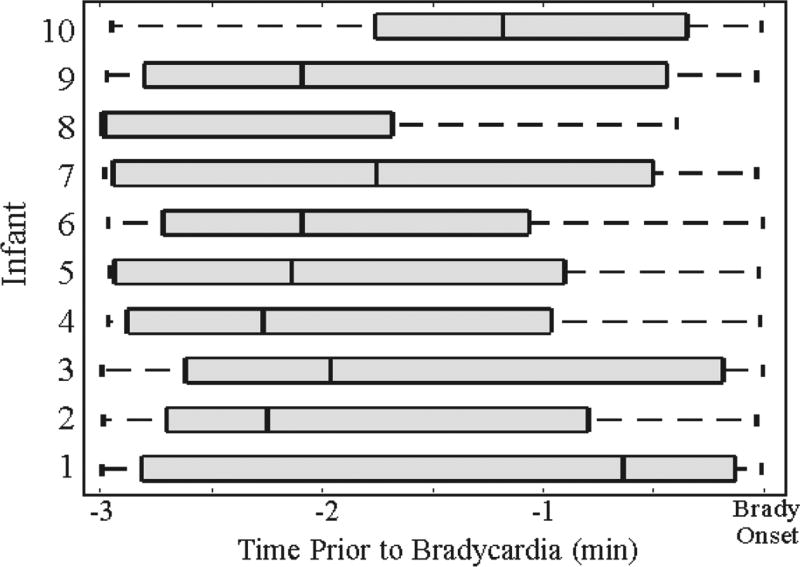
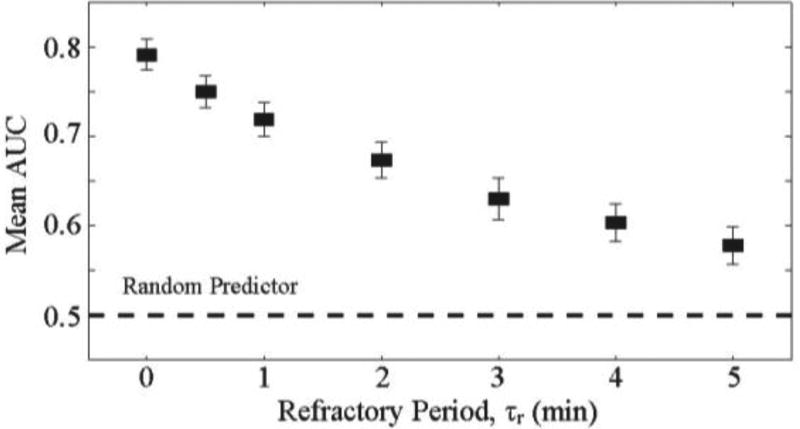
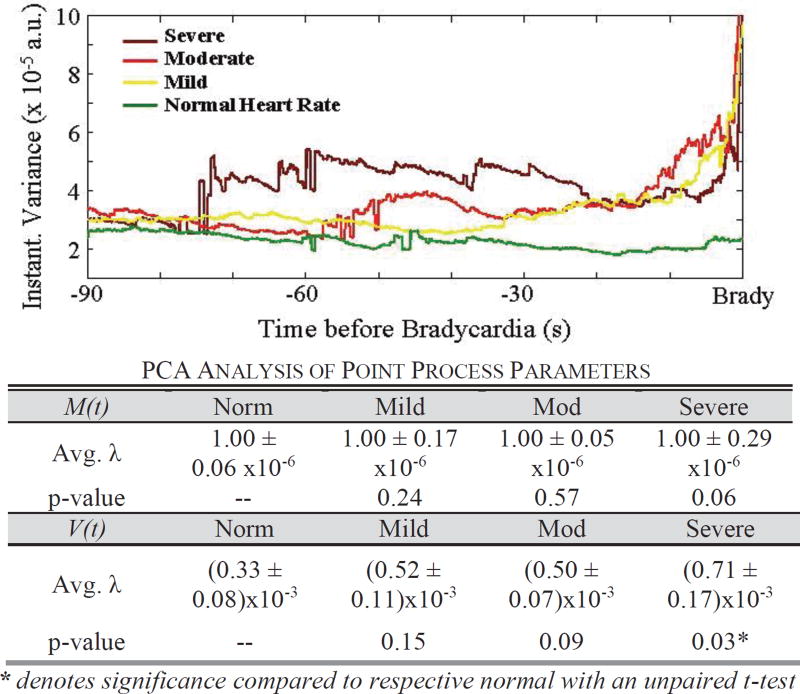
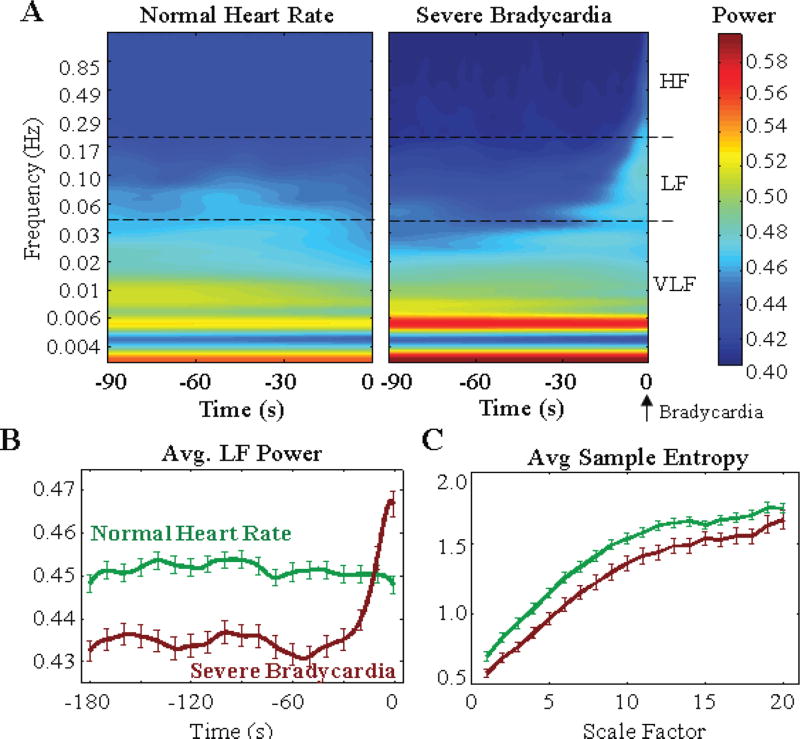
Results: We present the performance of a prediction algorithm using instantaneous linear measures (mean area under the curve = 0.79 ± 0.018) for over 440 bradycardia events. The algorithm achieves an average forecast time of 116 s prior to bradycardia onset (FPR = 0.15). Our analysis reveals that increased variance in the heart rate signal is a precursor of severe bradycardia. This increase in variance is associated with an increase in power from low content dynamics in the LF band (0.04-0.2 Hz) and lower multiscale entropy values prior to bradycardia.
Conclusion: Point process analysis of the heartbeat time series reveals instantaneous measures that can be used to predict infant bradycardia prior to onset.
Significance: Our findings are relevant to risk stratification, predictive monitoring, and implementation of preventative strategies for reducing morbidity and mortality associated with bradycardia in neonatal intensive care units.
Figures
References
-
- Janvier A, et al. Apnea is associated with neurodevelopmental impairment in very low birth weight infants. J Perinatol. 2004;24:763–8. - PubMed
-
- Serenius F, et al. Neurodevelopmental outcome in extremely preterm infants at 2.5 years after active perinatal care in Sweden. JAMA. 2013;309:1810–20. - PubMed
-
- Aylward GP. Neurodevelopmental outcomes of infants born prematurely. J Dev Behav Pediatr. 2014 Jul-Aug;35:394–407. - PubMed
-
- Martin RJ, Wilson CG. Apnea of Prematurity. Compr Physiol. 2012;2:2923–2931. - PubMed
-
- Vyas H, et al. Relationship between apnoea and bradycardia in preterm infants. Acta Paediatr Scand. 1981 Nov;70:785–90. - PubMed
Publication types
MeSH terms
Grants and funding
LinkOut - more resources
Full Text Sources
Other Literature Sources