


Cognitive behavioral therapy for cancer-related cognitive dysfunction
- PMID: 27898511
- PMCID: PMC5285475
- DOI: 10.1097/SPC.0000000000000247
Cognitive behavioral therapy for cancer-related cognitive dysfunction
Abstract
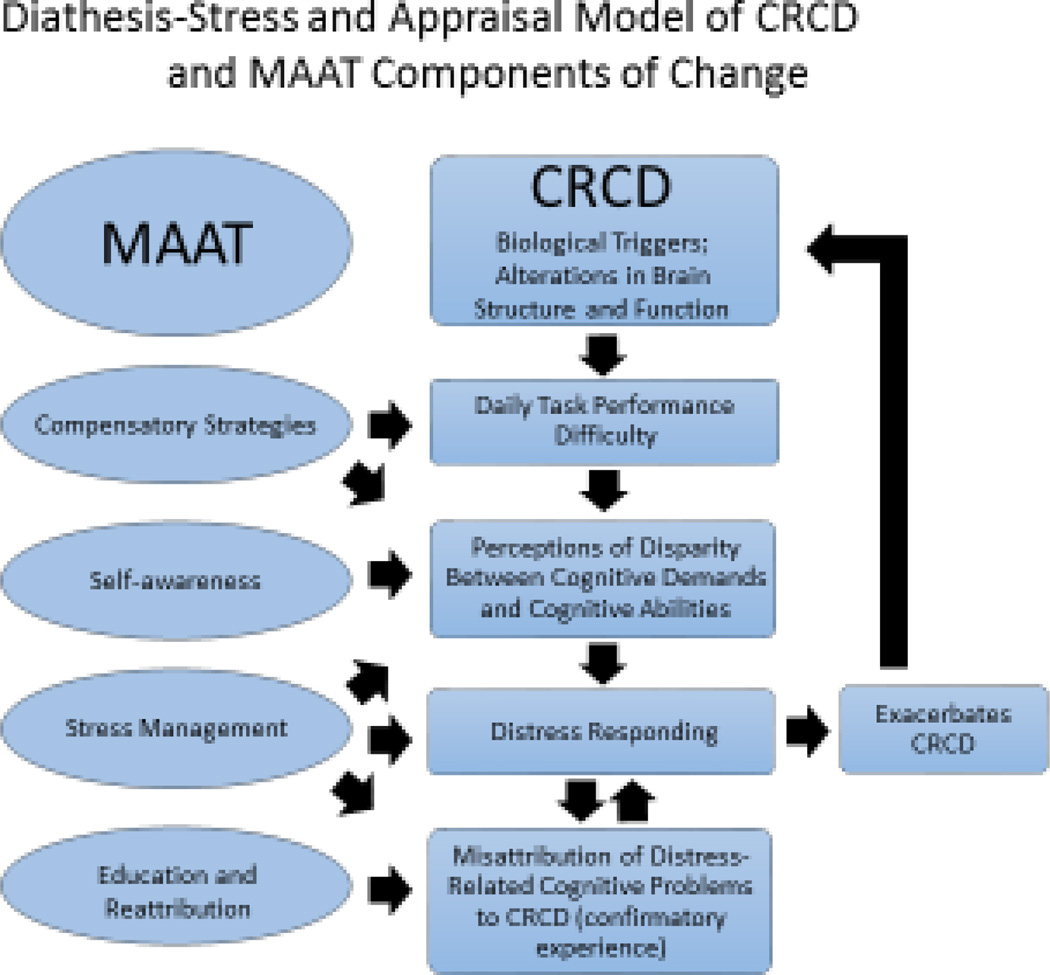
Purpose of review: To provide the reader with an overview of the cognitive-behavioral conceptualization of cancer-related cognitive dysfunction (CRCD) and how cognitive behavioral therapy (CBT) can play an important role in treatment.
Recent findings: Recent findings show that Memory and Attention Adaptation Training (MAAT), a CBT developed to help cancer survivors develop adaptive skills to improve daily cognitive performance and emotional coping, may be an efficacious treatment of CRCD and can be delivered through videoconference technology to improve survivor access to care.
Summary: The etiology of CRCD remains largely undetermined and likely is produced by multiple mechanisms. This can include neuronal death, microvascular damage, inflammatory processes, and psychological factors of perceptions of inadequate cognitive capacity to meet performance demands and related emotional distress. As a result, there are a variety of treatments currently being researched. More research with larger sample sizes, multiple clinicians and multiple sites are needed to confirm efficacy, but CBT approaches such as Memory and Attention Adaptation Training that address multiple psychological factors involved may offer a flexible nonpharmacological approach to CRCD that optimizes quality of life outcomes.
Conflict of interest statement
Drs. Kucherer and Ferguson report no conflicts of interest between industry, funding sources and results and conclusions contained within this report.
Figures
References
-
-
Miller KD, Siegel RL, Lin CC, Mariotto AB, Kramer JL, Rowland JH, et al. Cancer treatment and survivorship statistics, 2016. CA: a cancer journal for clinicians. 2016 **This article is an important, updated report on vital survivorship stauts and needs going forward that is critical for survivorship research investigators.
-
-
-
Stanton AL, Rowland JH, Ganz PA. Life after diagnosis and treatment of cancer in adulthood: Contributions from psychosocial oncology research. American Psychologist. 2015;70(2):159. **This article is an excellent overview of critical survivorship areas of concern that requrire further clinical investigation to promote well-being of survivors of the future.
-
Publication types
MeSH terms
Grants and funding
LinkOut - more resources
Full Text Sources
Other Literature Sources
Research Materials
