. 2016 Nov 29;9(456):ra117.
doi: 10.1126/scisignal.aai8441.

Biased agonists of the kappa opioid receptor suppress pain and itch without causing sedation or dysphoria

Affiliations

Biased agonists of the kappa opioid receptor suppress pain and itch without causing sedation or dysphoria

Tarsis F Brust et al. Sci Signal. .

Abstract

Agonists targeting the kappa opioid receptor (KOR) have been promising therapeutic candidates because of their efficacy for treating intractable itch and relieving pain. Unlike typical opioid narcotics, KOR agonists do not produce euphoria or lead to respiratory suppression or overdose. However, they do produce dysphoria and sedation, side effects that have precluded their clinical development as therapeutics. KOR signaling can be fine-tuned to preferentially activate certain pathways over others, such that agonists can bias signaling so that the receptor signals through G proteins rather than other effectors such as βarrestin2. We evaluated a newly developed G protein signaling-biased KOR agonist in preclinical models of pain, pruritis, sedation, dopamine regulation, and dysphoria. We found that triazole 1.1 retained the antinociceptive and antipruritic efficacies of a conventional KOR agonist, yet it did not induce sedation or reductions in dopamine release in mice, nor did it produce dysphoria as determined by intracranial self-stimulation in rats. These data demonstrated that biased agonists may be used to segregate physiological responses downstream of the receptor. Moreover, the findings suggest that biased KOR agonists may present a means to treat pain and intractable itch without the side effects of dysphoria and sedation and with reduced abuse potential.


Figures

Fig. 1
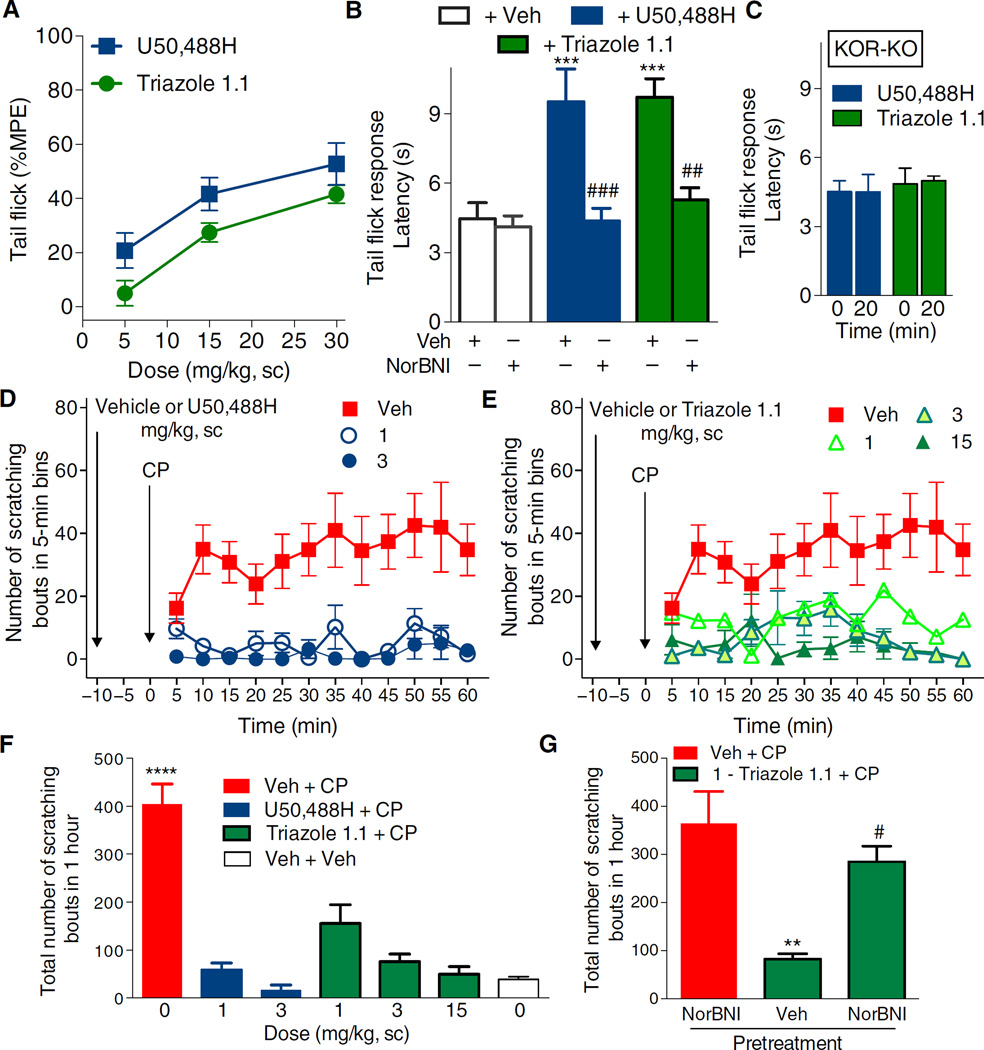
Fig. 1. Triazole 1.1 induces KOR-mediated antinociception and suppresses chloroquine phosphate–induced scratching responses in C57BL/6 mice
(A) U50,488H or triazole 1.1 produced an increase in response latency in a dose-dependent manner in the warm water tail flick assay (49°C). A 10-s cutoff was imposed to calculate the %MPE (maximum possible effect). For this group, the average baseline response was 2.7 ± 0.1 s. For dose effect: F2,48 = 19.11, P < 0.0001; for drug comparison: F1,48 = 9.054, P = 0.0042; Bonferroni post hoc comparison of the means at each dose indicated no differences (P > 0.05), n = 7 to 11 mice per treatment. sc, subcutaneous. (B) NorBNI [15 mg/kg, intraperitoneally (ip), 10 min before agonist] prevented both U50,488H- and triazole 1.1–induced antinociception in the tail flick test. ***P < 0.001 compared to vehicle (Veh) + Veh; ###P < 0.001, ##P < 0.01 compared to respective agonist alone, one-way analysis of variance (ANOVA), Bonferroni post hoc analysis. For this group, the average baseline response was 4.2 ± 0.2 s; n = 5 to 7 mice per treatment. (C) Neither U50,488H nor triazole 1.1 (30 mg/kg, ip) delayed response latencies in KOR-KO (knockout) mice. The average baseline response was 4.7 ± 0.2 s. n = 4 KOR-KO mice per treatment. (D and E) U50,488H (D) (dose effect: F2,204 = 71.67, P < 0.0001) and triazole 1.1 (E) (dose effect: F3,252 = 44.57, P < 0.0001) dose-dependently suppressed scratching in response to chloroquine phosphate (CP) (40 mg/kg, sc neck) in C57BL/6 mice when administered 10 min before chloroquine phosphate challenge. Two-way ANOVA for dose effect in (A) and (B), P < 0.0001. (F) Total number of scratching bouts over the 1-hour period. U50,488H and triazole 1.1 significantly suppressed the scratching response at all doses tested (****P < 0.0001, one-way ANOVA). Triazole 1.1 and U50,488H did not significantly differ at each dose or from “veh + veh”–treated mice (P > 0.05). (G) NorBNI (10 mg/kg, ip, 24 hours prior) blocked the antipruritic effects of triazole 1.1 (1 mg/kg, sc). **P < 0.01 compared to NorBNI + CP; #P < 0.05 compared to triazole 1.1 + CP, one-way ANOVA. Data are means ± SEM; n = 5 to 9 C57BL/6 mice per dose for (D) to (G).
Fig. 2
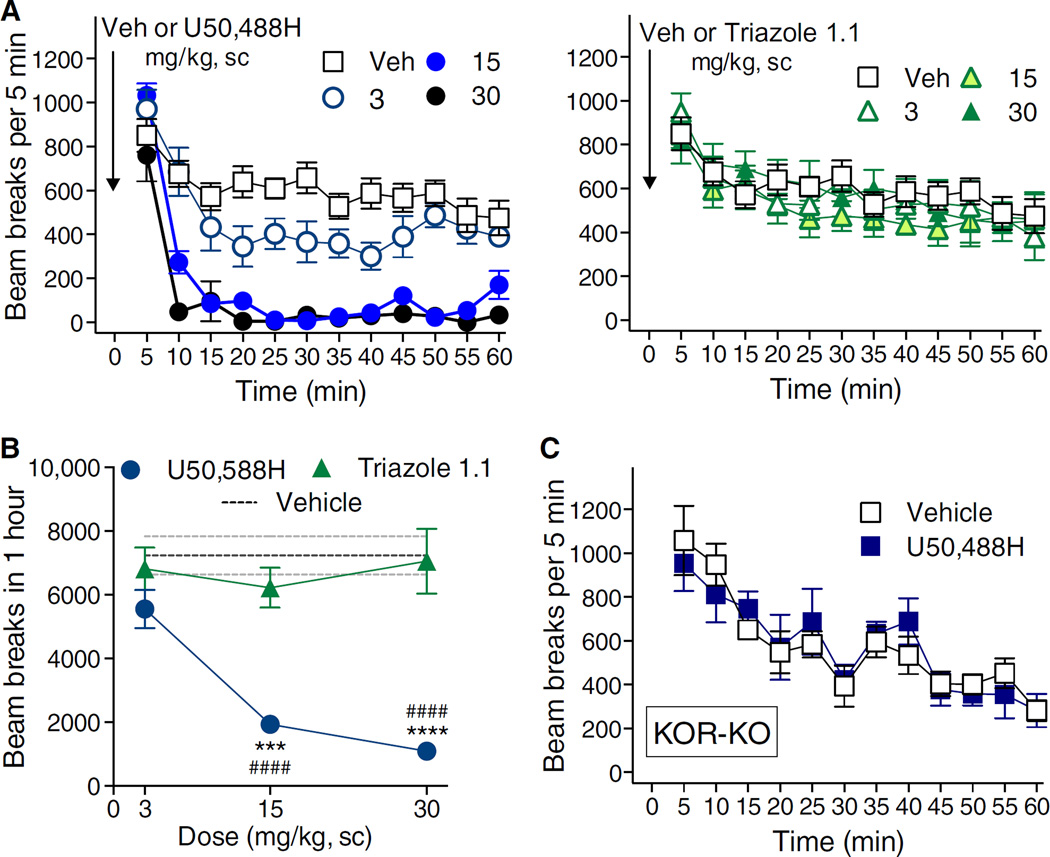
Fig. 2. Triazole 1.1 does not affect ambulatory behaviors in mice
(A) U50,488H (left) dose-dependently decreased locomotor activity over time (two-way ANOVA for dose, P < 0.0001), whereas triazole 1.1 (right) has no effect (P > 0.05). n = 4 to 11 mice per dose and treatment. (B) The total number of beam breaks observed in 1 hour significantly differed between U50,488H and triazole 1.1 treatment. Two-way ANOVA for interaction of dose and treatment: F2,28 = 12.54, P = 0.0083; Bonferroni post hoc analysis: ***P < 0.001, ****P < 0.0001 compared to triazole 1.1; U50,488H effects significantly differed from vehicle (interaction of dose and treatment: F1,44 = 66.86, P < 0.0001; Bonferroni post hoc analysis: ####P < 0.0001 compared to vehicle). n = 4 to 11 mice per dose and treatment. (C) KOR-KO mice did not differ in their responses to U50,488H (30 mg/kg, sc) and vehicle whether analyzed over time or as the summation of activity over the hour (two-way ANOVA for drug effect: P < 0.05, n = 4 to 7 mice per treatment). Data are means ± SEM.
Fig. 3
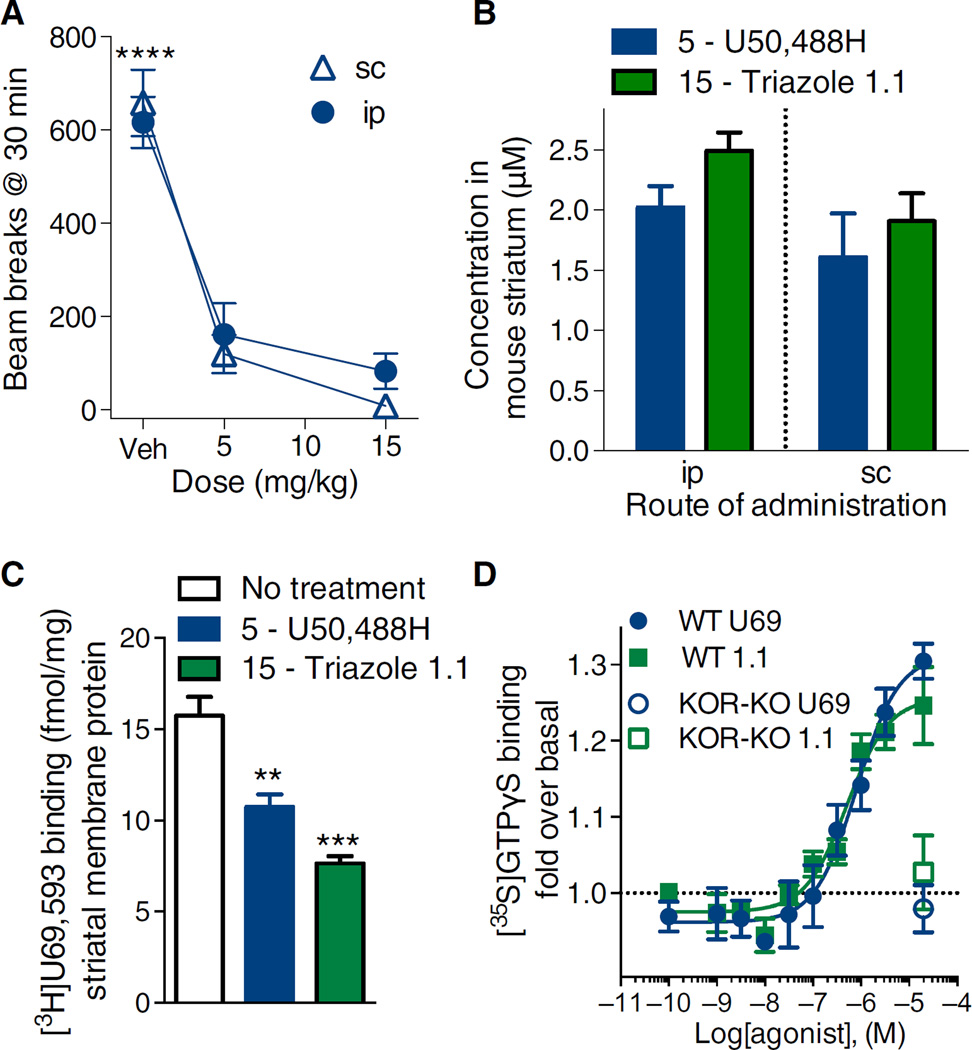
Fig. 3. Triazole 1.1 and U50,488H are present in striatum at comparable amounts where they activate KOR-mediated G protein signaling in striatum
(A) U50,488H suppressed activity to a similar extent at 5 and 15 mg/kg (ip or sc) at the 30-min time point (****P < 0.0001 compared to 5 and 15 mg/kg compared within route of administration, two-way ANOVA). The 5 and 15 mg/kg doses did not differ (P > 0.05). n = 5 to 11 mice per dose and administration method. (B) Compound amounts detected in mouse striatum 30 min after injection are similar regardless of route of administration (ip or sc). The systemically administered 5 mg/kg dose of U50,488H resulted in equivalent distribution as the 15 mg/kg dose of triazole 1.1. P > 0.05. n = 3 to 4 mice per treatment and administration method. (C) Intraperitoneal injection of agonist reduced the amount of [3H]U69,593 binding that was detected compared to striatum taken from untreated mice (**P < 0.01, ***P < 0.0001 compared to no treatment group, one-way ANOVA). n = 3 to 6 independent experiments. (D) Triazole 1.1 activates G protein coupling that did not significantly differ from the effects of the KOR-selective agonist U69,593 in the mouse striatum (U69,593: EC50 = 620 ± 169 nM; triazole 1.1: EC50 = 497 ± 34 nM, P > 0.05). n = 3 to 7 independent experiments. WT, wild type.
Fig. 4
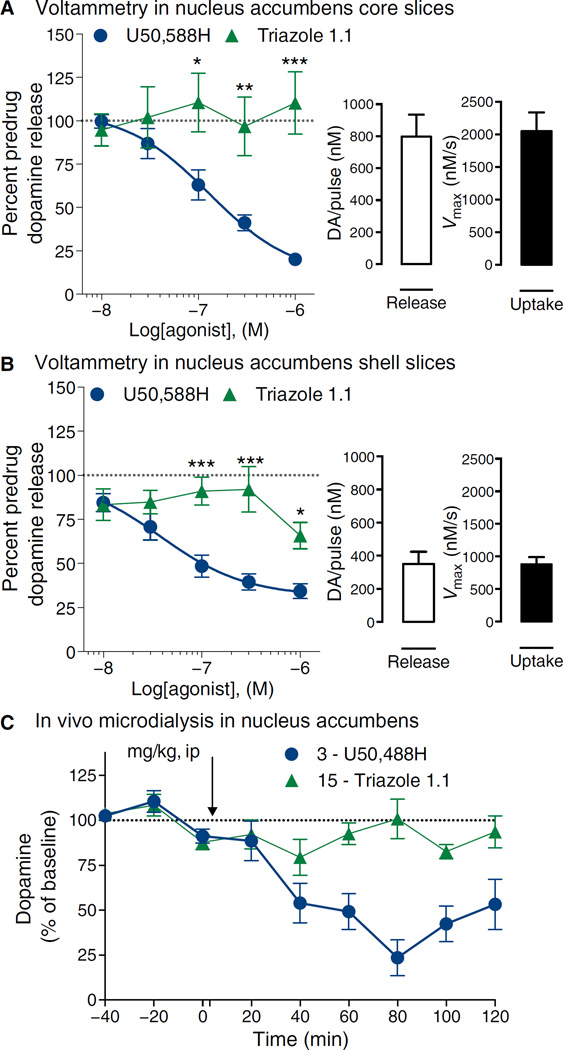
Fig. 4. U50,488H but not triazole 1.1 decreases dopamine concentrations in the nucleus accumbens in mice
(A and B) Cyclic voltammetric measures of dopamine release were made in slices of mouse brain in the nucleus accumbens. Triazole 1.1 did not induce decreases in dopamine release (nonconvergence of curves), whereas U50,488H did in a dose-dependent manner in both the core (A) [EC50 = 129 nM (95% CI, 51 to 230)] and the shell of the nucleus accumbens (B) [EC50 = 38 nM (95% CI, 9 to 157)]. Two-way ANOVA for dose and drug interaction: P = 0.0009; Bonferroni post hoc analysis: *P < 0.05, **P < 0.01, ***P < 0.001. The basal concentrations of dopamine (DA) release and rate of clearance are provided for each section in the bar charts. Data are means ± SEM of six to seven mice per treatment. (C) Microdialysis in nucleus accumbens of freely moving mice confirms a decrease in dopamine in response to U50,488H (3 mg/kg, ip), whereas triazole 1.1 (15 mg/kg, ip) did not decrease the baseline and was significantly different from U50,488H (P < 0.05, two-way ANOVA). n = 6 to 7 mice per treatment.
Fig. 5
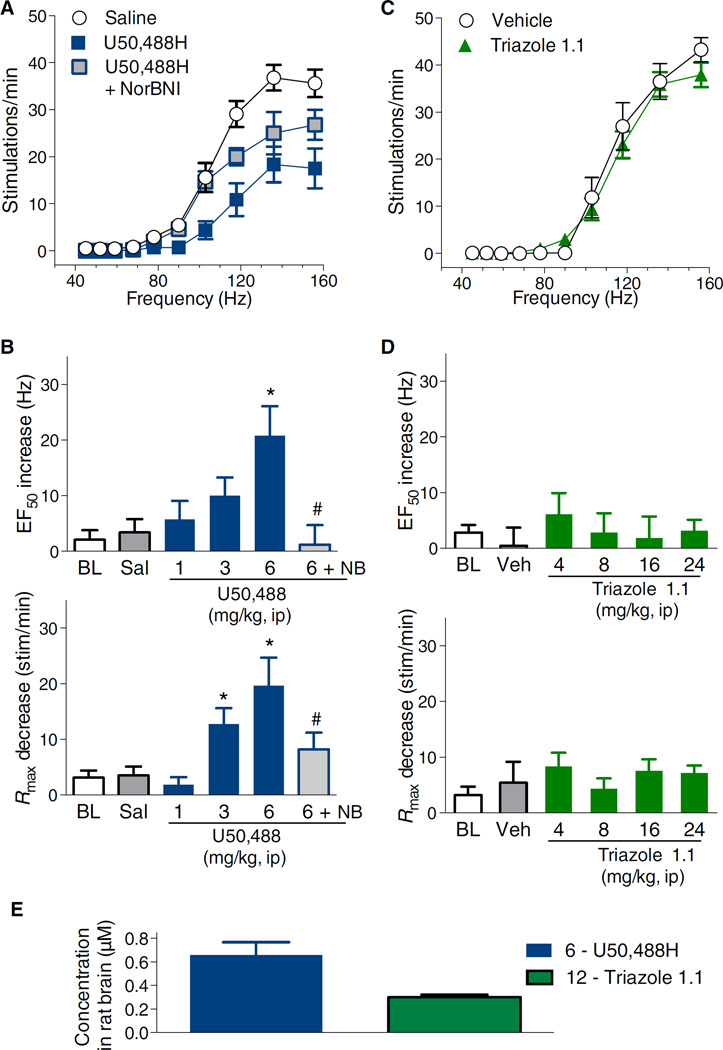
Fig. 5. U50,488H but not triazole 1.1 suppresses VTA ICSS in rats
(A) U50,488H (6 mg/kg, ip) suppressed VTA ICSS in a NorBNI (NB, 32 mg/kg, ip, 24 hours prior) reversible manner. (B) Dose-response effects on shifts in frequency (EF50) and maximal responses (Rmax) from frequency-rate curves are shown. The effects of U50,488H on EF50 (F3,51 = 4.3, P = 0.009) and Rmax (F3,51 = 7.2, P = 0.0004) are dose-dependent compared to saline treatment. One-way ANOVA for drug effect for EF50 (top) indicates *P < 0.05 compared to saline (Sal); #P < 0.05 compared to U50,488H (6 mg/kg, ip). One-way ANOVA for Rmax (bottom) indicates P < 0.05 compared to saline and #P < 0.05 compared to U50,488H (6 mg/kg). BL, baseline. (C) Triazole 1.1 (24 mg/kg, ip) had no effect on frequency-rate curves (EF50: F4,53 = 0.3, P = 0.9; Rmax: F4,53 = 0.6, P = 0.7). (D) Dose-response comparisons are shown for EF50 (top) and Rmax (bottom) compared to vehicle treatment (means ± SEM). No values were significantly different from vehicle, α = 0.05. n = 8 to 13 rats for all groups and each graph in (A) to (D). BL data were obtained from all sessions before pharmacological manipulations and averaged for each subject, with the data shown being the between-subject means ± SEM. (E) Compound amounts detected in rat brain 30 min after U50,488H (6 mg/kg, ip) or triazole 1.1 (12 mg/kg, ip) shown as the means ± SEM of three rats per treatment.
Fig. 6
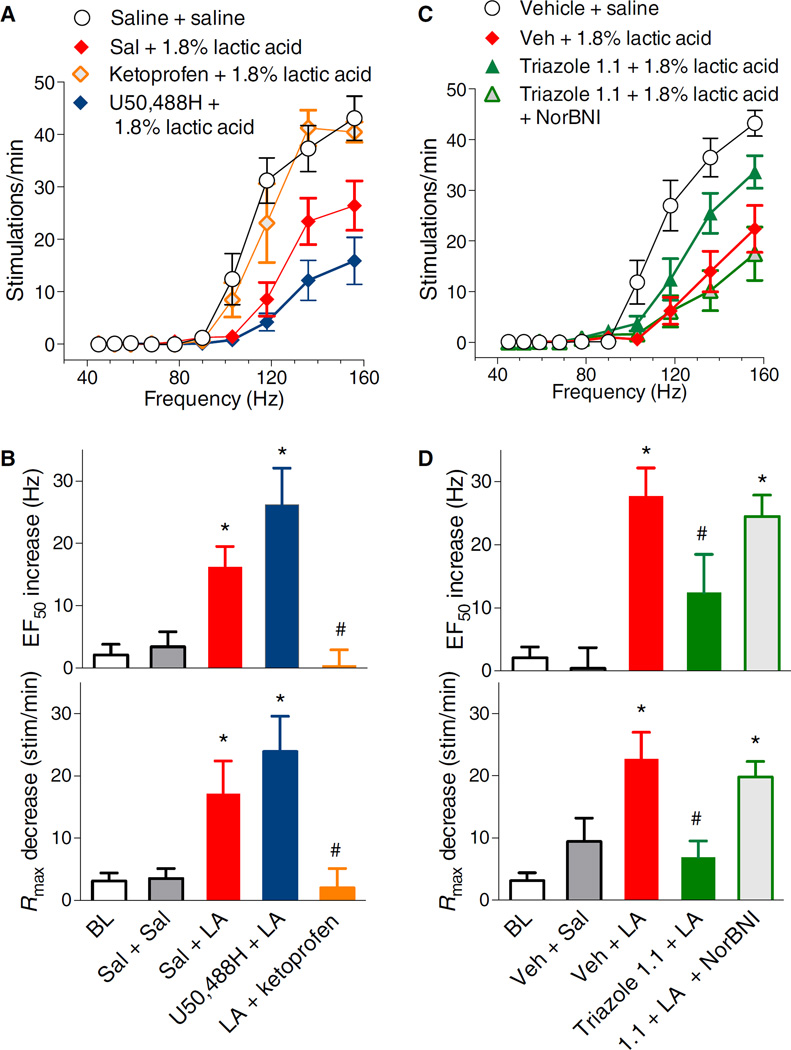
Fig. 6. Effects of ketoprofen, U50,488H, and triazole 1.1 on suppression of VTA ICSS by acute abdominal pain
(A) Intraperitoneal injection of 1.8% lactic acid (LA) decreased the maximal stimulations per minute (F2,36 = 5.9, P = 0.006) and produced a rightward shift in frequency-rate curves (EF50) (F2,36 = 9.3, P = 0.0006) that was reversed by ketoprofen (1 mg/kg, sc) (EF50: F2,30 = 8.5, P = 0.001; Rmax: F2,30 = 4.6, P = 0.02 compared to lactic acid) but not by U50,488H (6 mg/kg, sc) (EF50: F2,34 = 8.2, P = 0.001; Rmax: F2,34 = 5.4, P = 0.009 compared to saline). (B) The effects on EF50 (top) and Rmax (bottom) are summarized. One-way ANOVA for drug effect indicates significance: *P ≤ 0.05 compared to saline + saline; #P ≤ 0.05 compared to saline + 1.8% lactic acid. (C) Triazole 1.1 (24 mg/kg, ip) attenuated the response to 1.8% lactic acid injection (EF50: F2,26 = 9.7, P = 0.0007; Rmax: F2,26 = 4.3, P = 0.02) in a NorBNI (32 mg/kg, ip, 24 hours prior) reversible manner. (D) The effects on EF50 (top) and Rmax (bottom) are summarized. One-way ANOVA for drug effect indicates significance: *P ≤ 0.05 significantly different from vehicle + saline, #P ≤ 0.05 significantly different from vehicle + 1.8% lactic acid. n = 8 to 13 rats for all groups and all graphs in (A) to (D). Baseline (BL) data were obtained from all sessions before pharmacological manipulations and averaged for each subject, with the data shown being the between-subject means ± SEM.

Comment in

References

    1. Zhou L, Stahl EL, Lovell KM, Frankowski KJ, Prisinzano TE, Aubé J, Bohn LM. Characterization of kappa opioid receptor mediated, dynorphin-stimulated [35S]GTPγS binding in mouse striatum for the evaluation of selective KOR ligands in an endogenous setting. Neuropharmacology. 2015;99:131–141. - PMC - PubMed
    1. Chavkin C, James IF, Goldstein A. Dynorphin is a specific endogenous ligand of the kappa opioid receptor. Science. 1982;215:413–415. - PubMed
    1. Mansour A, Khachaturian H, Lewis ME, Akil H, Watson SJ. Anatomy of CNS opioid receptors. Trends Neurosci. 1988;11:308–314. - PubMed
    1. Kivell B, Prisinzano TE. Kappa opioids and the modulation of pain. Psychopharmacology (Berl) 2010;210:109–119. - PubMed
    1. Cowan A, Kehner GB, Inan S. Targeting itch with ligands selective for κ opioid receptors. Handb. Exp. Pharmacol. 2015;226:291–314. - PubMed

Publication types