


Developmental Origins of Cardiometabolic Diseases: Role of the Maternal Diet
- PMID: 27899895
- PMCID: PMC5110566
- DOI: 10.3389/fphys.2016.00504
Developmental Origins of Cardiometabolic Diseases: Role of the Maternal Diet
Abstract
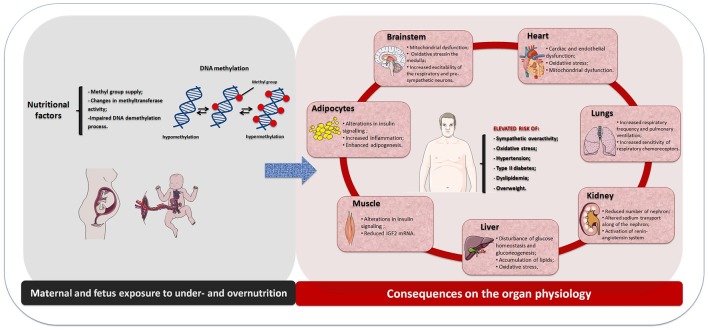
Developmental origins of cardiometabolic diseases have been related to maternal nutritional conditions. In this context, the rising incidence of arterial hypertension, diabetes type II, and dyslipidemia has been attributed to genetic programming. Besides, environmental conditions during perinatal development such as maternal undernutrition or overnutrition can program changes in the integration among physiological systems leading to cardiometabolic diseases. This phenomenon can be understood in the context of the phenotypic plasticity and refers to the adjustment of a phenotype in response to environmental input without genetic change, following a novel, or unusual input during development. Experimental studies indicate that fetal exposure to an adverse maternal environment may alter the morphology and physiology that contribute to the development of cardiometabolic diseases. It has been shown that both maternal protein restriction and overnutrition alter the central and peripheral control of arterial pressure and metabolism. This review will address the new concepts on the maternal diet induced-cardiometabolic diseases that include the potential role of the perinatal malnutrition.
Keywords: cardiometabolic control; developmental plasticity; perinatal nutrition; protein restriction.
Figures
References
-
- Antony G. M., Laxmaiah A. (2008). Human development, poverty, health & nutrition situation in India. Indian J. Med. Res. 128, 198–205. - PubMed
Publication types
LinkOut - more resources
Full Text Sources
Other Literature Sources
